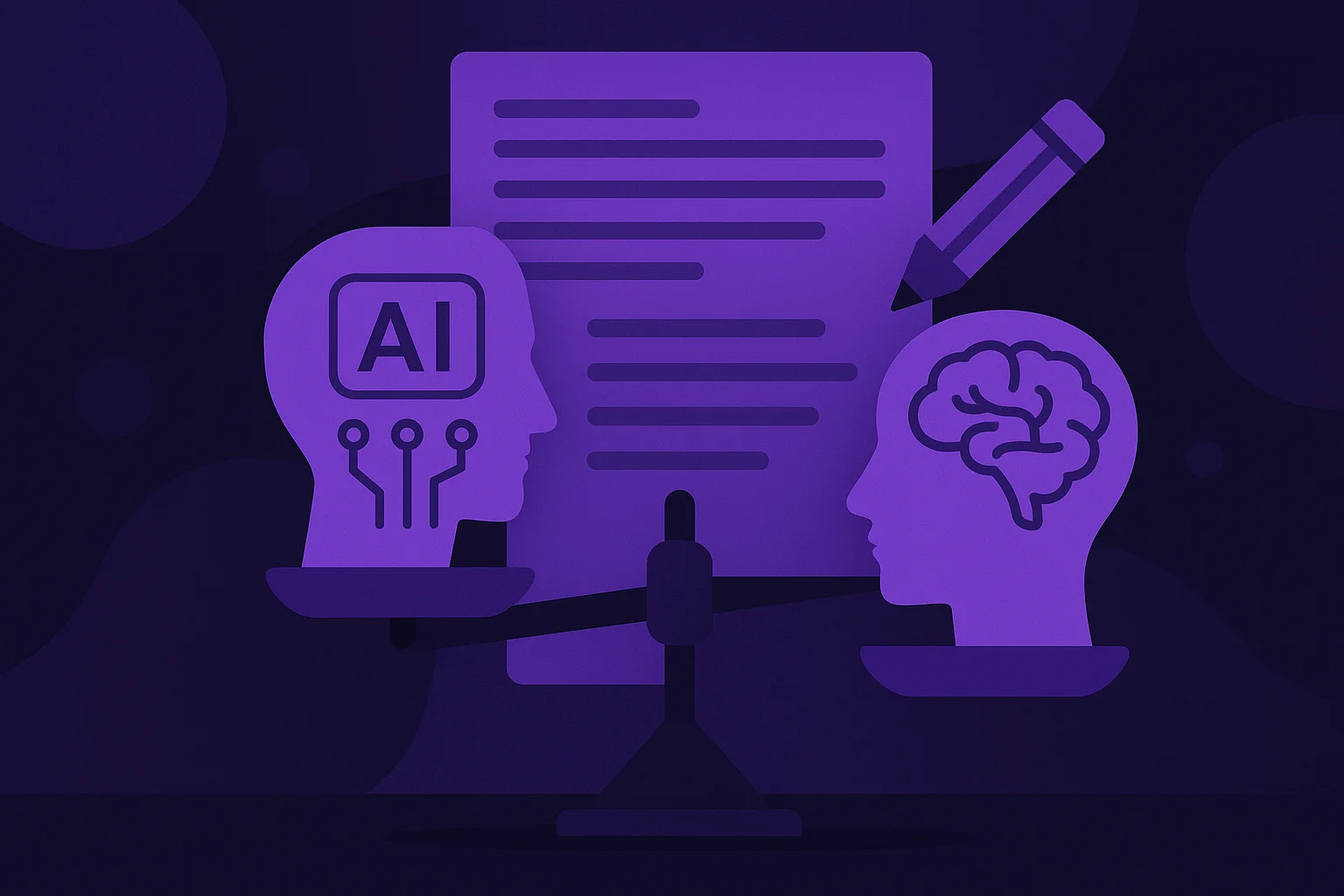
Artificial intelligence (AI) content generators have rapidly transformed the digital landscape, becoming an integral part of modern content creation. As businesses strive to keep up with the ever-increasing demand for fresh, relevant, and engaging material, AI-driven tools offer the promise of greater efficiency, scalability, and innovation. Yet, this technological revolution also brings forth essential questions about the balance between automation and human creativity, as brands work to maintain authenticity and emotional resonance with their audiences.
With 82% of businesses projected to utilize AI for content creation by 2025, and the global AI market expected to reach $1.8 trillion by 2030, the impact of these tools is undeniable. However, as organizations embrace automation, the challenge lies in finding a harmonious blend of AI-driven efficiency and the irreplaceable spark of human ingenuity.
The Rise of AI Content Generators
The adoption of AI in content creation is accelerating at an unprecedented pace. Not only are businesses leveraging these tools to keep up with content demands, but they are also seeing substantial returns on their investments. According to recent statistics, organizations using AI writing tools report a 59% increase in content creation speed and a 77% rise in output volumes. This increased productivity allows marketing teams to focus more on strategic planning and creative direction.
AI's growing capabilities are evident in the results of blind reader tests, where 84% of participants could not distinguish between AI-generated and human-authored content. This demonstrates a remarkable leap in the quality and sophistication of automated writing tools, further cementing their place in the content marketing ecosystem.
As AI-optimized content delivers a 32% higher engagement rate and a 47% better conversion rate, it is clear why so many businesses are integrating these technologies into their workflows. The promise of higher returns and greater efficiency continues to drive the adoption of AI content generators across industries.
Efficiency vs. Authenticity: A Delicate Balance
While the efficiency gains from AI content generation are significant, maintaining authenticity remains a central concern for brands. Over 65% of consumers claim they can identify AI-generated content, with 58% expressing a preference for human-written material, particularly for emotionally charged topics. This highlights the ongoing importance of the human touch in crafting messages that resonate on a deeper level with audiences.
Brands face the challenge of using AI tools to streamline operations without sacrificing the unique voice and authenticity that set them apart. Studies indicate that overreliance on automation can result in generic, impersonal content, potentially weakening brand identity and audience connection.
To address these challenges, high-performing marketing teams are increasingly adopting a hybrid model. In fact, 62% of top teams favor a combination of AI efficiency and human creativity, recognizing that the optimal content strategy requires both elements working in tandem.
The Human-AI Collaboration Model
The most successful content strategies often emerge from a collaborative approach that harnesses the strengths of both AI and human creators. Research shows that while AI and humans perform similarly in creative tasks, teams that collaborate with AI outperform those working independently. This synergy results in higher quality content and greater satisfaction among content creators.
However, the design of this collaboration is critical. Studies suggest that models incorporating human creative input, rather than relying solely on AI-generated material, deliver superior output quality and improved user satisfaction. This underscores the importance of thoughtful integration and clear role delineation between human and machine contributors.
As content-related job roles evolve, marketing professionals are increasingly required to develop new skills centered around AI collaboration. By 2025, 73% of content jobs are expected to focus on working alongside AI, highlighting the need for ongoing professional development and adaptation.
Challenges and Limitations of AI Content Creation
Despite its advantages, AI content generation is not without its hurdles. One of the most persistent challenges is aligning AI-generated content with a brand’s unique voice and identity. Nearly half of marketers (48%) report difficulties in this area, while 52% of companies face initial integration challenges with AI tools.
Another important consideration is content diversity. While AI can enhance overall creativity and output, it may inadvertently reduce the diversity of ideas and narratives. Research indicates that AI-assisted stories tend to be more similar to each other than those crafted by humans alone, potentially limiting the breadth of perspectives and originality in brand storytelling.
As organizations continue to refine their AI strategies, addressing these challenges will be essential. This may require more advanced customization options, ongoing human oversight, and creative interventions to ensure content remains both distinctive and authentic.
AI’s Impact on Creative Industries and Future Trends
The influence of AI extends far beyond marketing, with creative industries projected to generate $100 billion in value from AI by 2030. As AI-driven content strategies are expected to grow by 35% annually, and 65% of digital marketers plan to adopt generative AI by 2025, the role of AI in creative work will only continue to expand.
Yet, the future success of these technologies depends on their ability to augment rather than replace human creativity. The most effective content strategies will be those that leverage AI for scalability and efficiency while preserving the human elements of empathy, originality, and emotional connection.
Emerging trends point to increasing sophistication in human-AI collaboration design, with brands exploring new workflows, creative processes, and quality control mechanisms. These advancements will shape the next generation of content marketing, emphasizing the balance between automation and authenticity.
Best Practices for Balancing Automation and Human Creativity
To navigate the evolving landscape of AI content generation, brands should prioritize strategies that blend automation with human input. This begins with defining clear roles for AI and human contributors, ensuring that automation supports rather than overshadows creative expression.
Regularly reviewing and refining AI-generated content is essential for maintaining brand voice and aligning with audience expectations. Human editors play a crucial role in infusing personality, nuance, and emotional resonance, particularly for topics that require a more sensitive or empathetic touch.
Finally, ongoing training and upskilling of marketing professionals will be vital. As AI tools and workflows continue to evolve, teams must stay abreast of the latest developments and best practices to maximize the benefits of human-AI collaboration.
As the integration of AI content generators continues to accelerate, the challenge for brands is to strike a careful balance between efficiency and originality. The data shows that AI can dramatically enhance productivity, content quality, and engagement rates. However, the enduring value of human creativity, especially in building authentic connections, remains irreplaceable.
Ultimately, the future of content creation lies in a hybrid approach, where AI empowers human ingenuity rather than replaces it. By embracing the strengths of both automation and creativity, brands can unlock new levels of innovation while staying true to the qualities that resonate most with their audiences.