The rise of artificial intelligence (AI) content generators has transformed the landscape of digital creation. From marketers and publishers to musicians and designers, AI tools are now integral to content production workflows, promising increased efficiency, scalability, and creativity. Yet, as these technologies become more sophisticated, the delicate balance between automation and human originality comes into sharper focus.
While AI-generated content is everywhere, from blog articles and marketing copy to music and visual art, recent trends reveal a persistent demand for uniquely human creativity. As organizations and individuals navigate this evolving terrain, understanding how AI and human ingenuity can best collaborate is crucial for the future of content creation.
The Rapid Growth of AI Content Generation
The generative AI market is experiencing a meteoric rise, projected to reach $255.8 billion by 2033, up from $13.5 billion in 2023. This expansion is fueled by widespread adoption across industries, as enterprises seek to leverage AI tools for content creation, personalization, and monetization. In fact, approximately 62% of companies are now exploring or deploying generative AI solutions.
Content marketers are at the forefront of this shift, with 90% utilizing AI writing tools and 71% relying on them for ideation. The efficiency gains are hard to ignore: AI-generated content now accounts for 12% of all digital content published globally, with organizations reporting 59% faster creation rates and 77% higher output volumes.
Despite these advances, the proliferation of AI-generated content has brought new challenges, particularly regarding originality, quality, and trust. As businesses race to adopt these tools, finding ways to ensure authenticity and maintain audience engagement is increasingly important.
Human Creativity: The Enduring Competitive Edge
Even as AI becomes mainstream, the unique value of human creativity remains undeniable. According to the Freelancer Fast 50 Global Jobs Index, demand for creative freelancers, including writers, designers, and video editors, continues to surge. This trend underscores a market preference for work that resonates on an emotional level and offers genuine originality, qualities that AI, for all its sophistication, still struggles to replicate.
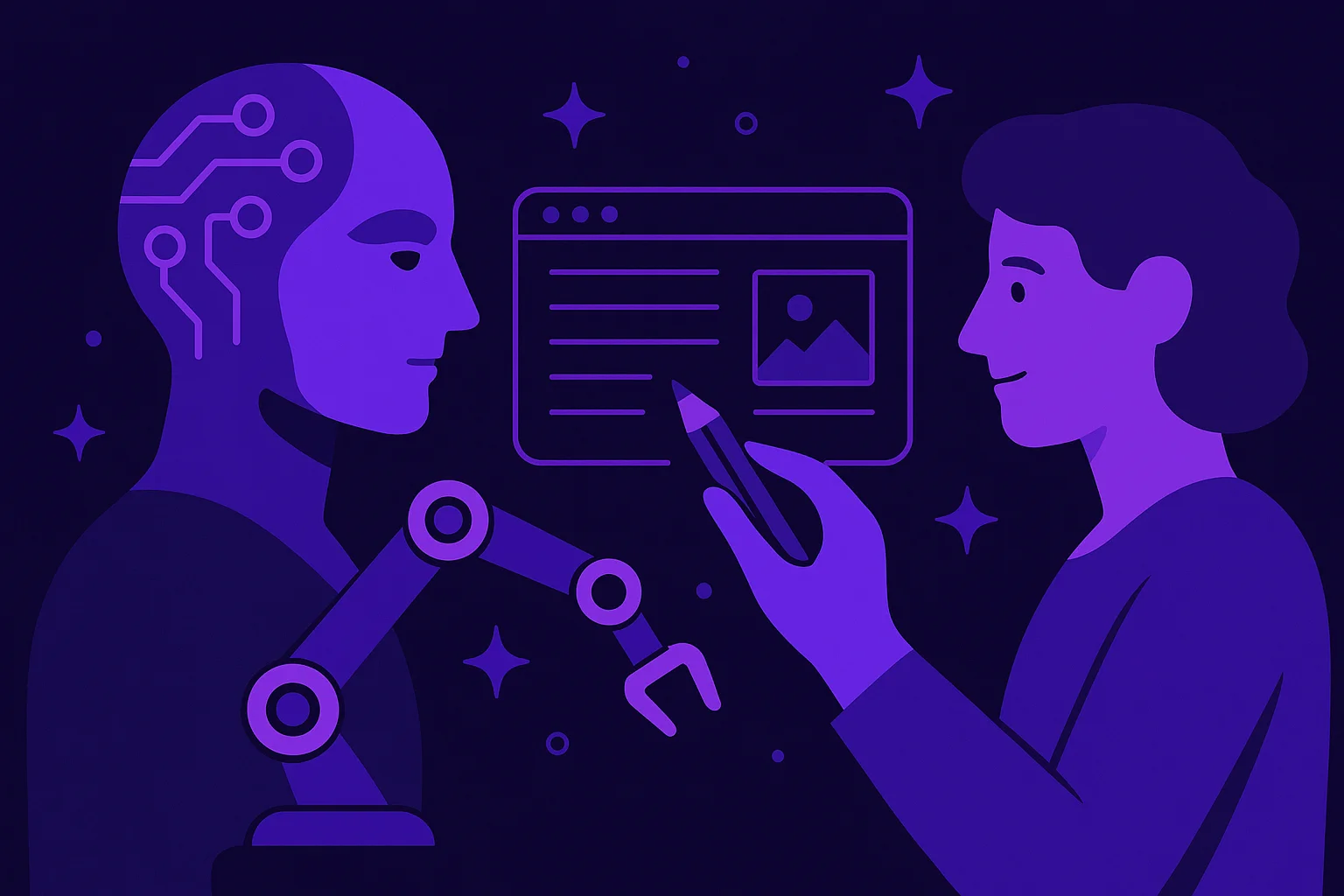
Studies, such as one published in Nature Human Behaviour, highlight the limitations of AI in generating diverse and novel ideas. While AI like ChatGPT can produce a high volume of suggestions, these often lack the diversity and depth of human brainstorming. As a result, many organizations are prioritizing hybrid approaches, where AI augments rather than replaces human talent.
This synergy not only preserves the authenticity of creative output but also leverages the speed and scalability that AI offers. By combining machine efficiency with human insight, content creators can deliver more impactful and memorable work.
AI's Impact on Content Quality and Engagement
AI tools are not just about speed, they’re also enhancing content quality and engagement. Research shows that AI-generated articles can reduce editorial workloads by 35% and improve content consistency by 20%. Businesses leveraging AI-powered content often see a 25% higher engagement rate and improved SEO rankings for 68% of users.
AI is also playing a significant role in content personalization, with over 65% of B2B marketers integrating AI into their strategies. AI-driven curation tools have increased engagement rates by 45% in tested campaigns and reduced blog post turnaround times by 20%.
However, despite these benefits, consumers remain cautious. While 73% of people are aware of AI-generated content, only 15% fully trust it. This gap highlights the ongoing need for transparency and the importance of human oversight in the content creation process.
Challenges: Originality, Ethics, and Trust
As AI tools become more prevalent, concerns about originality and ethics are increasingly pronounced. For instance, research indicates that outputs from generative AI tend to be more similar to each other than those created independently by humans. Over-reliance on AI can thus lead to a homogenization of ideas, potentially stifling innovation in the long term.
Ethical considerations are also at the forefront, particularly in fields like music production and visual art. Industry leaders are calling for transparent labeling and ethical standards, especially when AI is used to generate entire works or mimic human creators. In fact, 68% of organizations report significant ethical concerns with their generative AI projects, while 55% cite data privacy as a major challenge.
Building trust in AI-generated content will require a combination of transparency, collaboration, and ongoing human involvement. The majority of AI developers (92%) agree that working closely with human experts is essential for responsible deployment, while 69% of researchers believe transparency in model training data is critical for widespread acceptance.
The Future of AI-Human Collaboration
Looking a, the content industry is poised for even greater integration of AI technologies. The rise of multimodal AI startups, advancements in model capabilities, and the expanding use of AI in video, music, and gaming all point to a future where AI and humans co-create across a diverse array of media.
Still, the most successful organizations will be those that strike the right balance between automation and creativity. By treating AI as a collaborator, rather than a replacement, businesses and creators can harness the best of both worlds: the efficiency and scalability of machines, combined with the intuition and originality of humans.
Ultimately, as generative AI continues to evolve, so too will the ways in which we define and value creativity. The interplay between human talent and machine intelligence is not only reshaping the content landscape but also challenging us to rethink what it means to create.
Best Practices for Bridging Automation and Creativity
To maximize the benefits of AI content generators while preserving human creativity, several best practices are emerging. One key strategy is to use AI tools for ideation and drafting, but rely on human editors for final review and refinement. This approach ensures that content remains engaging, original, and aligned with brand values.
Another best practice is fostering collaboration between technical teams and creative professionals. By bridging the gap between data science and storytelling, organizations can develop AI solutions that better understand context, nuance, and audience preferences.
Finally, ongoing training and upskilling are essential. As AI tools evolve, equipping content creators with the skills to leverage these technologies, and to recognize their limitations, will be critical for maintaining a competitive edge in the digital marketplace.
The future of content creation lies at the intersection of automation and human ingenuity. While AI content generators offer unprecedented productivity and scale, they are most powerful when used to amplify, not replace, the creative spark that only humans can provide.
By embracing transparency, prioritizing ethical deployment, and fostering collaboration between machines and makers, organizations can ensure that the next era of content is not only efficient and engaging but also truly original and meaningful.