

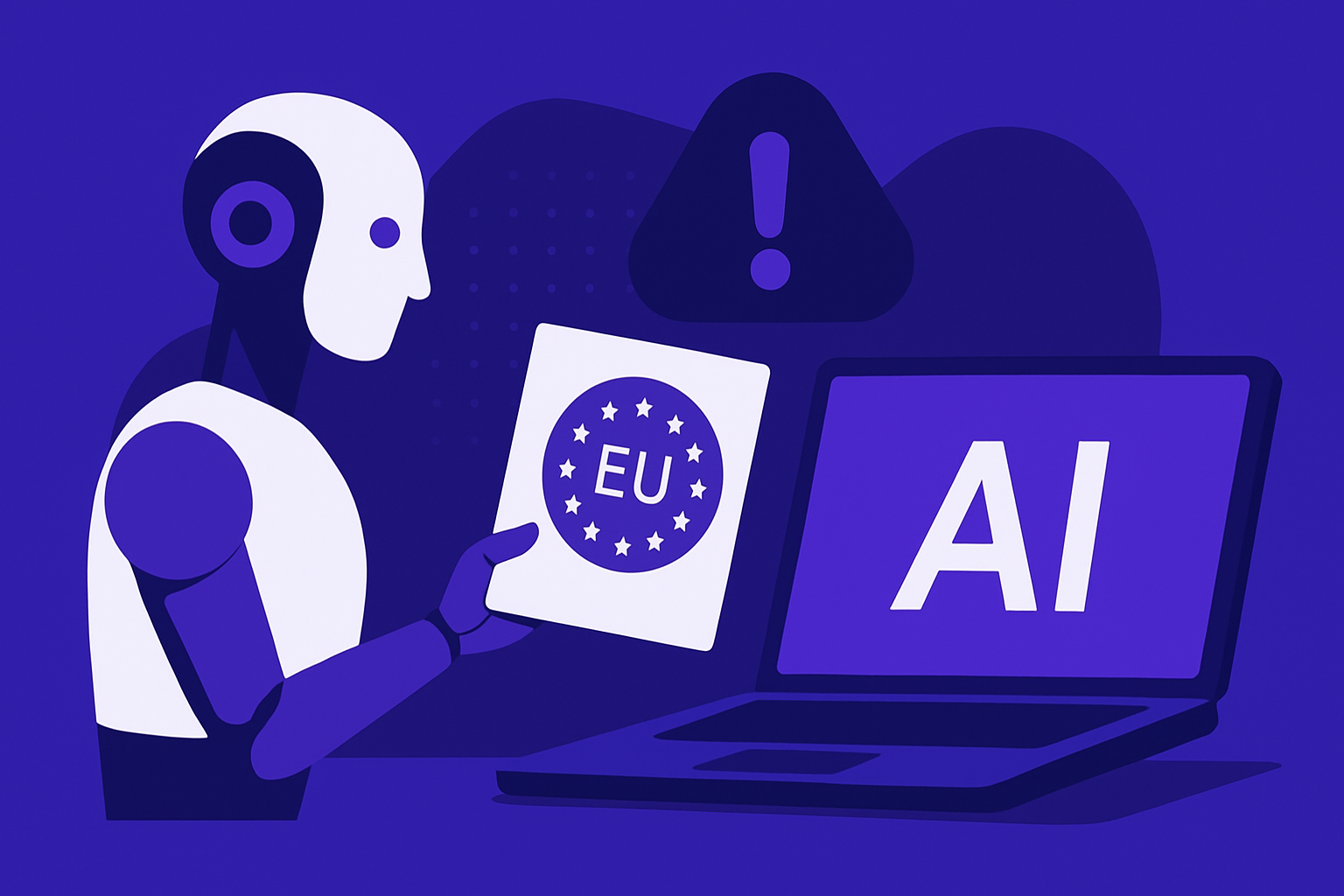
As artificial intelligence continues to reshape the digital landscape, regulatory bodies are racing to establish guardrails that ensure safety and transparency without stifling innovation. The European Union has taken a decisive step forward with its comprehensive AI Act, which imposes strict obligations on the developers of powerful generative models. Among the most pressing of these requirements is the mandate for content provenance, forcing companies to implement systems that clearly identify machine-generated text, images, and audio before they circulate online.
This legislative push arrives at a critical juncture, as the line between human creativity and algorithmic output becomes increasingly blurred. The looming deadline for compliance has sent shockwaves through the tech industry, prompting a scramble among major AI providers to develop reliable watermarking standards. The objective is to arm users with the ability to discern authentic media from synthetic fabrications, a capability that European lawmakers view as essential for the preservation of democratic integrity and public trust.
The regulatory framework and compliance timeline
The European Union’s AI Act has established a tiered system of regulation, but the rules governing general-purpose AI (GPAI) models are particularly stringent regarding transparency. Developers of these systems are now required to ensure that their outputs are machine-readable and detectable as artificial. This provision is designed to prevent the deceptive use of AI, such as deepfakes or misleading news articles, by creating a digital signature that travels with the content wherever it is shared.
The timeline for these changes is aggressive, reflecting the urgency with which EU officials view the threat of unchecked synthetic media. While different parts of the AI Act come into force at staggered intervals, the transparency and watermarking obligations for general-purpose AI providers are among the earlier deadlines to take effect. Companies that fail to meet these dates face the prospect of substantial fines, calculated as a percentage of their total global turnover, making non-compliance a financially devastating risk.
Furthermore, the regulation does not merely ask for a simple label but demands a robust technical solution that can withstand tampering. This legal pressure is forcing a transition from voluntary commitments, which many tech giants had previously agreed to, towards mandatory, legally binding standards. The shift signifies that the era of self-regulation for generative AI in Europe is effectively over, replaced by a concrete framework with clear accountability mechanisms.
Technical challenges in implementing watermarks
Implementing effective watermarking across different modalities of media presents a massive engineering challenge for AI companies. For image and audio generation, the technology involves embedding invisible noise or metadata patterns that are imperceptible to humans but easily read by detection software. However, creating a watermark that survives compression, cropping, or format changes without degrading the quality of the content remains a significant technical hurdle that researchers are still working to overcome.
Text generation poses an even more complex problem, as there are fewer places to hide a digital signature within a string of characters. Techniques often involve subtly altering the probability of word choices in a way that follows a mathematical pattern, but these methods are notoriously fragile. A user can often break a text watermark simply by paraphrasing the output, translating it into another language and back, or making minor manual edits, rendering the provenance data useless.
Standardization is another critical issue that the industry must address to meet the EU's requirements. If every AI provider uses a proprietary watermarking method that is incompatible with others, the ecosystem will become fragmented and difficult to police. There is a pressing need for an interoperable standard that allows social media platforms and browsers to universally detect and label AI content, regardless of which specific tool was used to generate it.
Impact on major technology providers
For the giants of Silicon Valley and rising AI startups alike, the EU watermark deadline necessitates a fundamental shift in product development cycles. Companies like OpenAI, Google, and Meta are investing heavily in provenance research, joining consortiums aimed at establishing open standards for digital authenticity. These corporations understand that the European market is too large to ignore, and the solutions they develop for the EU will likely become the default global standard for their products.
The financial implications extend beyond potential fines; there is also the cost of implementation and the potential impact on user experience. If watermarking technologies significantly slow down generation times or reduce the quality of the output, users may migrate to non-compliant, open-source models hosted outside the EU's jurisdiction. This creates a competitive tension where compliant companies must balance regulatory adherence with performance to maintain their market position.
Additionally, these providers face the challenge of retroactive application and the vast scale of existing content. While the law primarily focuses on new outputs, the broader expectation of responsibility means companies must constantly update their detection tools. They are effectively being asked to police the very technology they created, requiring ongoing resources dedicated to trust and safety teams that must stay one step a of bad actors trying to bypass watermarks.
Combating disinformation and protecting users
The primary driver behind the EU's insistence on watermarking is the protection of the information ecosystem against weaponized disinformation. In a year marked by significant elections and geopolitical instability, the potential for AI-generated propaganda to sway public opinion is a tangible threat. By mandating that synthetic content be clearly labeled, the EU hopes to create a