


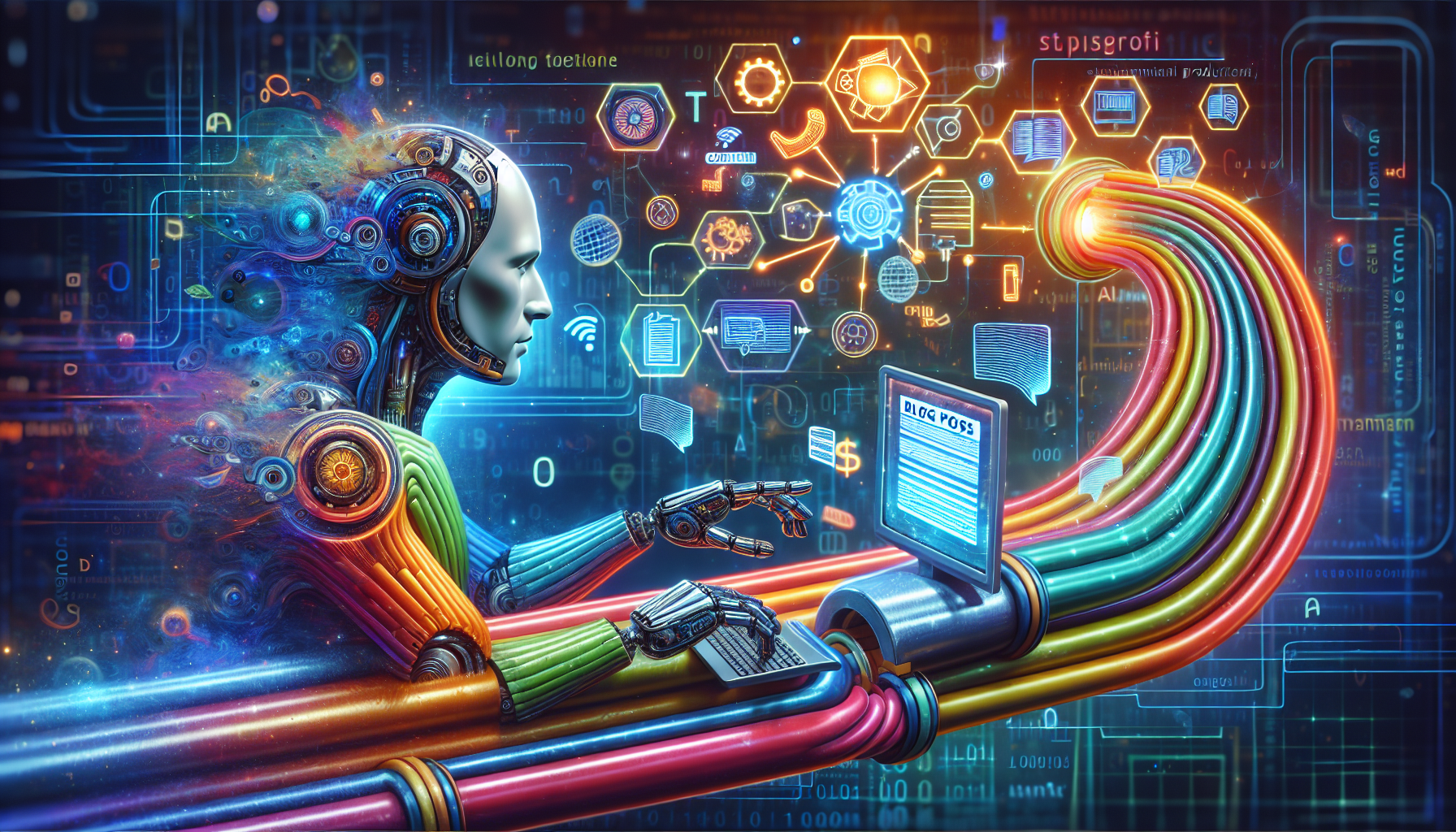
In the fast-paced digital landscape, blog production has evolved significantly, largely due to the integration of artificial intelligence (AI) into content creation workflows. The traditional process of brainstorming, writing, and publishing articles is being replaced with a more dynamic, efficient, and scalable approach, an AI content pipeline. This innovation is not only transforming productivity for marketing teams and content creators but also setting new standards for quality and consistency in blogging.
By leveraging AI at every stage of content production, organizations can streamline their operations, freeing up valuable time and resources. This article explores what an AI content pipeline entails, how to build it effectively, the benefits it offers, and the challenges to anticipate along the way.
Understanding the AI Content Pipeline
An AI content pipeline refers to the systematic use of artificial intelligence tools and technologies throughout each phase of blog creation. Instead of relying solely on human effort, AI assists with ideation, research, drafting, editing, and even distribution. This approach ensures that high-quality content can be produced rapidly and at scale.
The pipeline begins with idea generation, where AI analyzes trends, keywords, and audience preferences to suggest relevant topics. Once the topics are set, AI-driven tools can help outline articles, generate drafts, and recommend editorial improvements. This process greatly reduces the time spent on manual tasks.
Finally, AI can optimize content for SEO and stylistic consistency before assisting with scheduling and publishing. By automating repetitive steps, the pipeline maintains a steady flow of blog posts while keeping standards high and errors minimal.
Key Components of an AI Content Pipeline
Building an effective AI content pipeline involves several core components, each addressing a specific part of the content lifecycle. The first component is AI-powered research, where tools scan the web for trending topics, competitor content, and relevant statistics to inform the writing process.
The second component is automated content creation, utilizing natural language processing (NLP) models to draft articles or suggest outlines. These systems can generate initial versions, which serve as a foundation for further refinement by human editors.
The third critical component is optimization and distribution. AI helps ensure that blogs are SEO-friendly and adapts content for various platforms. Scheduling and analytics integrations complete the pipeline, offering insights to continually improve performance.
Benefits of Streamlining Blog Production with AI
One of the most significant advantages of an AI-powered content pipeline is increased efficiency. Tasks that once took hours or days can now be completed in a fraction of the time, allowing writers and marketers to focus on higher-level strategies and creative work.
AI also enhances content quality by suggesting data-backed improvements, identifying grammatical errors, and maintaining a consistent tone of voice. This leads to more engaging and credible blog posts, which in turn boost reader trust and retention.
Moreover, streamlining blog production with AI makes it easier to scale operations. Even small teams can produce large volumes of content while managing multiple campaigns, thus maximizing reach without compromising on standards.
Challenges and Considerations
Despite its advantages, implementing an AI content pipeline poses several challenges. One primary issue is ensuring originality and avoiding generic or duplicate content, as AI can sometimes rely too heavily on existing sources.
Another challenge is maintaining a human touch. While AI excels at automation and consistency, some creative aspects, such as storytelling or brand voice, require human intuition and expertise. Balancing automation with personalization is crucial for effective content.
Security and ethical considerations must also be addressed. Protecting intellectual property and respecting copyright laws are essential when using AI in content creation, as is ensuring transparency about AI-generated material with audiences.
Best Practices for Building an AI Content Pipeline
To get the most from an AI content pipeline, organizations should start by clearly defining their goals and identifying the stages where AI can add the most value. Not every task needs to be automated; strategic selection ensures optimal resource allocation.
Continuous training and fine-tuning of AI models are important to align output with brand guidelines and audience preferences. Regular monitoring and feedback loops help maintain quality and relevance as market trends evolve.
Finally, fostering collaboration between AI tools and human team members is key. Encouraging editors and writers to interact with AI-generated content leads to more authentic, innovative, and effective blog posts.
Measuring Success and Improving Over Time
Once an AI content pipeline is established, measurement becomes vital to demonstrate ROI and drive ongoing improvement. Key performance indicators (KPIs) such as publication frequency, engagement rates, SEO rankings, and conversion rates provide actionable insights.
Using analytics dashboards, organizations can track how AI interventions impact content performance. These insights allow for rapid experimentation and iteration, ensuring that the pipeline continues to meet business objectives.
Embracing a culture of continuous learning, where lessons from data are used to refine processes and tools, ultimately leads to sustained growth and competitive advantage in content marketing.
Integrating an AI content pipeline into blog production brings a wealth of opportunities for businesses and creators alike. By automating repetitive tasks, improving content quality, and enabling scalability, AI sets the stage for more agile and impactful blogging strategies.
As with any technological shift, success depends on thoughtful implementation. Balancing automation with human creativity ensures content remains authentic and engaging. The future of blog production is collaborative, with AI as a powerful partner, not a replacement, for human ingenuity.