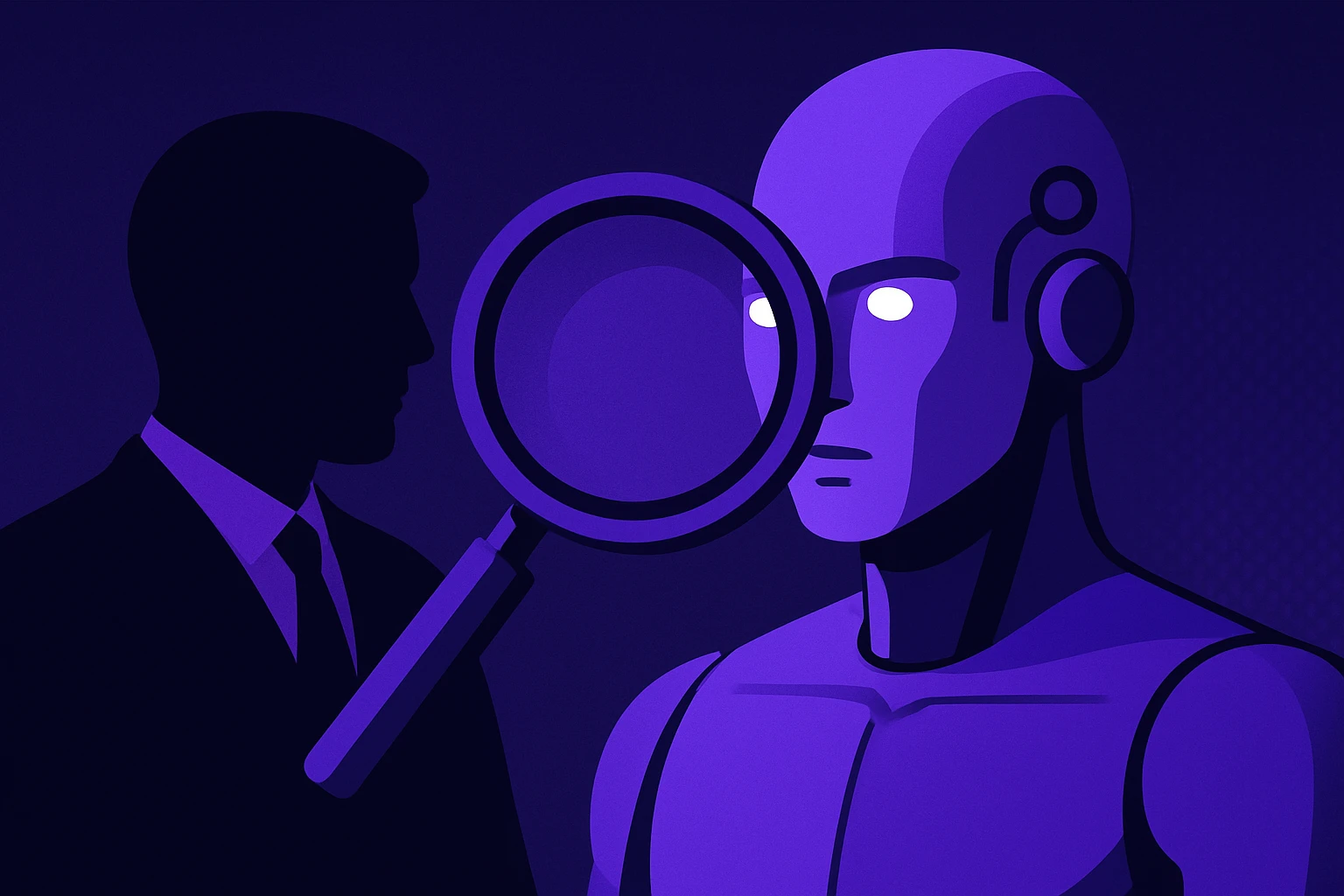


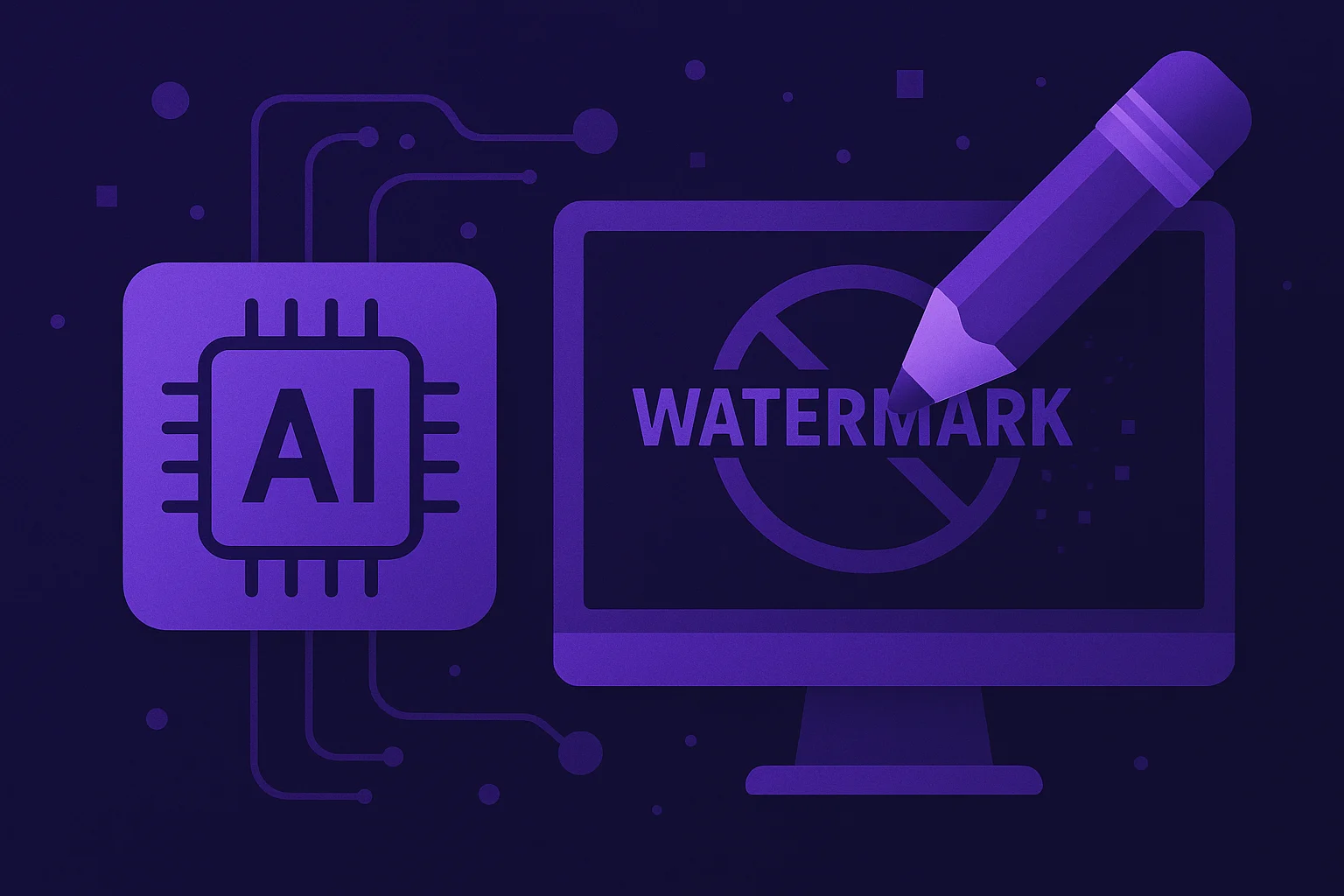
The rapid advancement of artificial intelligence has led to a corresponding urgency in developing methods to identify and protect digital content. As generative models become more capable of producing hyper-realistic images, companies and researchers have turned to steganography and hidden signals as a primary defense mechanism. These digital signatures are designed to be imperceptible to the human eye but easily readable by software, theoretically allowing for the tracking of provenance and the protection of intellectual property. However, recent studies and practical applications have unveiled a significant vulnerability in this ecosystem: the very technology used to create these images can also be used to scrub them clean of any identification.
The core issue lies in the nature of diffusion models, which generate images by iteratively refining random noise into coherent visual data. When an image containing a hidden signal is subjected to even minor edits using these diffusion-based tools, the complex mathematical relationships that constitute the watermark are often treated as noise or artifacts. Consequently, the AI smooths over or regenerates these pixels, effectively washing away the digital stamp. This phenomenon poses a critical challenge to the current consensus on AI safety, suggesting that the most popular method for labeling AI-generated content may be inherently flawed against the tools it aims to regulate.
The Mechanics of Diffusion and Destructive Regeneration
To understand why invisible watermarks are so fragile in the face of AI editing, one must first grasp the fundamental operation of diffusion models. These systems are trained to reconstruct data from noise, learning the statistical likelihood of pixel arrangements that form recognizable objects and textures. When a user inputs an image for editing, whether to change the lighting, alter the style, or expand the background, the model does not merely manipulate existing pixels like a traditional photo editor. Instead, it often encodes the image into a latent space and then reconstructs it, predicting what the pixels should look like based on its training data.
Invisible watermarks rely on precise, high-frequency perturbations at the pixel level that are statistically distinct from natural image noise. However, to a diffusion model, these subtle patterns do not carry semantic meaning. As the model performs its denoising process during an edit, it interprets the watermark as an anomaly or unnecessary interference. In its quest to produce the highest quality visual output, the model "fixes" the image by realigning the pixels to match its internal understanding of the subject matter, inadvertently treating the protection mechanism as damage to be repaired.
This process is known as destructive regeneration. Unlike cropping or compressing, which might degrade a watermark but leave traces behind, diffusion editing often replaces the watermarked pixels entirely with new, mathematically similar pixels. The visual content remains largely unchanged to the human observer, preserving the artistic intent, but the hidden data layer is completely overwritten. This obliteration happens not through malicious code, but through the standard, optimized function of the generative algorithm itself.
Vulnerability of Current Watermarking Standards
Current industry standards for watermarking have been developed with traditional robustness in mind, focusing on survival against JPEG compression, resizing, and color filtering. Technologies like those employed by major tech consortiums utilize spread-spectrum techniques or deep learning-based encoders to embed signals. While these methods are remarkably resilient against standard non-AI manipulations, they suffer from a specific blind spot regarding generative attacks. The assumption has always been that the pixel structure would remain fundamentally continuous, an assumption that generative AI breaks.
Research indicates that even robust watermarking methods fail when the image undergoes a "diffusive attack." This does not necessarily require complex hacking skills; standard features such as variations, in-painting, or image-to-image translation are sufficient to break the seal. Because the watermark is distributed across the image's texture, shifting the texture via a style transfer or a subtle variation disrupts the synchronized signal required for detection. The detector looks for a specific frequency pattern that simply no longer exists in the regenerated version.
Furthermore, the reliance on invisible watermarks creates a false sense of security for creators and platforms. Many organizations have rolled out these tools as a definitive solution to deepfakes and copyright infringement. However, the ease with which these markers are removed suggests that they serve better as a cooperative signal for honest actors rather than a hardened security measure against adversarial ones. If the standard can be bypassed by running an image through a publicly available image generator at a low denoising strength, its utility as a security enforcement tool is severely compromised.
The Democratization of Watermark Removal
Perhaps the most alarming aspect of this vulnerability is the accessibility of the tools required to exploit it. Removing a watermark no longer requires distinct technical knowledge of cryptography or signal processing. Any user with access to consumer-grade AI software can inadvertently or intentionally strip an image of its metadata credentials. Tools offering "magic erase" or "generative fill" capabilities are now standard in creative software suites, making this destructive capability ubiquitous.
For instance, a user might download a watermarked image and decide to upscale it or change the aspect ratio for a social media post. By using an AI upscaler or an out-painting tool, the user initiates a diffusion process that generates new pixels based on the surrounding context. In doing so, the continuity of the invisible watermark is broken. The user has not acted with malice, yet the result is a piece of media that is now untraceable and unflagged, indistinguishable from an original or unprotected work.
This democratization means that the barrier to entry for "laundering" AI images or stripping copyright protections from human art is practically non-existent. Automated scripts can be written to pass thousands of images through a diffusion loop, effectively scrubbing a dataset clean of protection before it is used to train new models. This creates a feedback loop where protections are bypassed at scale, rendering the initial investment in watermarking technology largely ineffective for mass-scale content governance.
Implications for Intellectual Property and Art
The erasure of invisible watermarks strikes a blow to the burgeoning movement of artists trying to protect their style and work from unauthorized training. Tools designed to "poison" data or add copyright signals rely on the persistence of these hidden perturbations. If AI diffusion editing erases invisible watermarks, then the defense strategies employed by visual artists are rendered temporary at best. An adversarial entity scraping the web for training data could simply employ a pre-processing step that diffuses and reconstructs images, neutralizing protections like Glaze or Nightshade before the training begins.
This reality complicates the legal landscape surrounding digital copyright. If the technological lock can be picked by the standard operation of a creative tool, proving willful infringement becomes more difficult. It raises questions about the liability of software developers whose tools serve as universal keys for unlocking protected content. The expectation of digital rights management (DRM) in the age of AI is shifting from a hard technological barrier to a cat-and-mouse game where the offense currently holds a significant advantage.
Moreover, this creates a crisis of provenance for commercial stock photography and news agencies. These entities rely on watermarking not just for payment enforcement, but to certify the authenticity of a photo. If a bad actor can take a genuine photo, manipulate the context, and simultaneously scrub the authentication watermark using a diffusion editor, the ability to prove that an image is "real" or "licensed" evaporates. This destabilizes the commercial foundation of digital asset licensing.
The Future of Adversarial Defense
In response to the weakness of current methods, the field is moving toward more aggressive and semantic-level watermarking. Researchers are exploring methods that embed the watermark not in the high-frequency noise, but in the semantic structure of the image itself. The theory is that if the watermark is tied to the shape of an eye or the curve of a horizon, the diffusion model, which strives to preserve semantic content, will be forced to preserve the watermark as well. However, this approach risks degrading the visual quality of the image, creating a trade-off between security and fidelity.
Another avenue being explored is the concept of multi-layered security, combining invisible watermarks with cryptographic hashing and blockchain registration. While diffusion editing can erase the pixel-level signal, it cannot alter a ledger entry that records the image's existence at a certain point in time. However, this does not solve the problem of the image being modified and recirculated as a new, orphan work. It merely proves the original existed, not that the derivative is unauthorized.
Ultimately, the arms race between generation and detection is accelerating. As diffusion models become better at understanding physics and lighting, they also become better at identifying and removing anomalies that do not fit the scene, including watermarks. The future may lie not in static hidden signals, but in active, evolving patterns that anticipate the transformation processes of specific AI models. Until then, the editing capabilities of generative AI remain a potent solvent for today's digital ink.
The revelation that AI diffusion editing erases invisible watermarks fundamentally alters the trajectory of digital safety and copyright enforcement. It highlights a paradox where the sophistication of generative AI is both the creator of new content and the destroyer of the mechanisms designed to manage it. As long as diffusion models function by reconstructing reality from noise, any signal hidden within that noise remains vulnerable to being wiped out during the creative process.
Moving forward, stakeholders must acknowledge that pixel-level watermarking is not a silver bullet. A robust solution will likely require a combination of legal frameworks, cryptographic provenance standards like C2PA, and continued evolution in steganography. Relying solely on invisible patterns that can be scrubbed away by a simple "remix" button is a strategy that fails to account for the transformative power of modern artificial intelligence.