


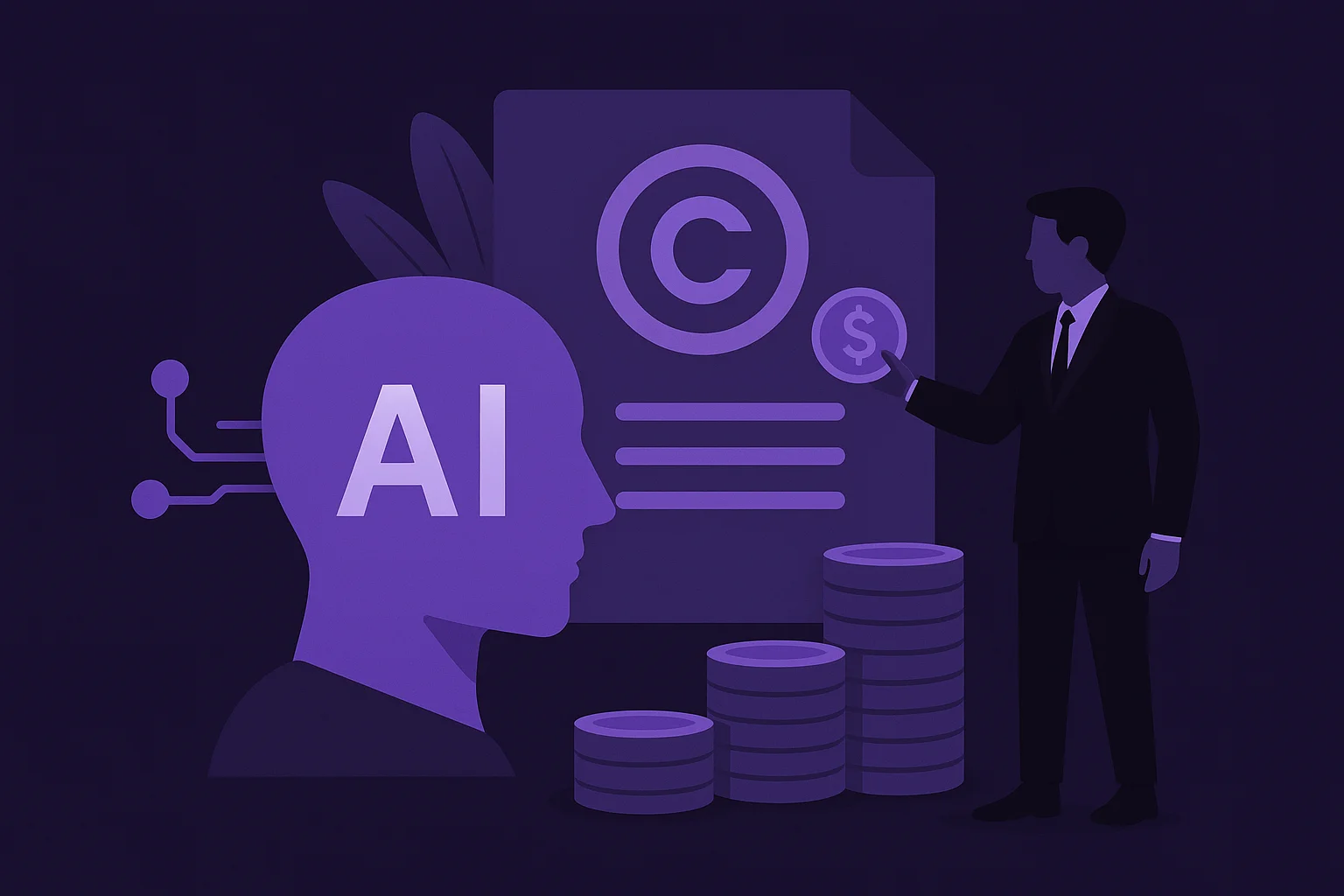
The rapid ascent of generative artificial intelligence has undeniably revolutionized industries, offering unprecedented tools for creation, analysis, and automation. However, this technological leap has not been without its challenges, particularly in the realm of intellectual property. As AI models are trained on colossal datasets often scraped from the internet, questions of copyright infringement have moved from theoretical discussions to concrete legal battles, placing immense financial strain on burgeoning AI companies.
Facing a wave of lawsuits from artists, writers, and media organizations who claim their copyrighted works were used without permission or compensation, AI firms are increasingly turning to a critical lifeline: their well-funded investors. These strategic infusions of capital are not just for research and development; they are becoming essential for covering the escalating costs of litigation and, more importantly, funding substantial settlement agreements to resolve these high-stakes disputes and clear the path for continued innovation.
The Proliferation of Copyright Claims Against AI
The core of the copyright dilemma stems from the training process of large language models (LLMs) and generative AI systems. These models learn by analyzing vast quantities of data, including text, images, audio, and code, much of which is readily available online. While AI developers argue this constitutes fair use, content creators contend that their works are being ingested, processed, and subsequently used to generate new content that can compete directly with their original creations, all without proper licensing or remuneration.
This foundational dispute has led to a flurry of legal actions. Prominent cases have been filed against major AI players, including OpenAI, Stability AI, Microsoft, and Google, by a diverse group of plaintiffs ranging from individual authors and visual artists to news organizations and stock photo agencies. These lawsuits seek not only damages for past infringement but also injunctions to prevent future unauthorized use, threatening to disrupt the very business model of generative AI.
The legal landscape is further complicated by the novelty of these issues. Existing copyright laws were not drafted with AI training in mind, leaving courts and legal experts to grapple with interpreting old statutes in a new technological context. This legal uncertainty often favors settlement as a pragmatic solution, even for well-resourced companies, to avoid unpredictable and potentially precedent-setting judicial outcomes.
Investor Capital as a Strategic Legal Lever
In this litigious environment, investor backing has emerged as a crucial strategic asset for AI firms. Venture capitalists and large corporate investors, having poured billions into these promising technologies, have a vested interest in protecting their investments. Allowing protracted legal battles to drain resources, tarnish reputations, or even halt operations due to injunctions is antithetical to their goals of exponential growth and market dominance.
Consequently, investor funds are increasingly being earmarked not just for scaling operations or advancing research, but specifically for legal defense and, critically, for financing settlement agreements. These settlements can run into the millions, or even tens of millions, of dollars, representing a significant financial outlay. For investors, this expenditure is often viewed as a necessary cost of doing business, a form of risk mitigation that ensures the underlying AI technology can continue to develop and eventually yield substantial returns.
Moreover, the willingness of investors to fund settlements sends a strong signal to the market and potential plaintiffs. It suggests that AI companies are serious about addressing copyright concerns, albeit through financial compensation, and are prepared to allocate significant capital to resolve these issues rather than engaging in endless, costly litigation. This proactive approach can help maintain investor confidence and project an image of stability in a rapidly evolving sector.
The Calculus of Settlements: Risk Aversion and Market Access
For AI firms, the decision to settle often involves a complex calculus balancing legal risk, financial cost, public perception, and market access. Lengthy court battles are notoriously expensive, not just in legal fees but also in executive time and potential reputational damage. A high-profile loss in court could set a detrimental legal precedent, invite a deluge of similar lawsuits, and potentially force a fundamental change in how AI models are trained, crippling their competitive edge.
Settlements, by contrast, offer a degree of control and finality. While costly, they can cap financial exposure and prevent the establishment of adverse legal precedents. They also allow AI companies to continue operating and innovating without the cloud of ongoing litigation. This is particularly appealing in a fast-paced industry where market leadership can be fleeting; any significant delay or operational restriction can allow competitors to gain an insurmountable advantage.
Furthermore, some settlements may include licensing components or agreements that pave the way for future collaborative models with content creators, rather than relying solely on fair use arguments. This forward-looking approach can transform adversaries into partners, opening up new avenues for data acquisition and content monetization that are both legally sound and mutually beneficial, ultimately securing the firm's long-term market access.
Shaping Future Copyright and Licensing Frameworks
The trend of AI firms utilizing investor capital for copyright settlements is inadvertently playing a significant role in shaping the future landscape of intellectual property law and licensing. Each settlement, whether public or confidential, contributes to an evolving understanding of how AI technologies interact with existing legal frameworks. These agreements often provide a practical, if informal, roadmap for how similar disputes might be resolved in the absence of clear statutory guidance.
Beyond simply resolving disputes, these financial outlays are also catalyzing a broader discussion about standardized licensing models for AI training data. Content creators and their representatives are increasingly advocating for collective licensing schemes, similar to those in music or photography, where AI companies would pay into a fund or directly license data for training purposes. The substantial sums involved in recent settlements underscore the economic imperative for AI firms to engage with such models.
Ultimately, the investor-backed settlement strategy is pushing the industry towards a more structured approach to data acquisition. It highlights the recognition that while technological innovation is paramount, it must eventually operate within, or help redefine, established legal and ethical boundaries. This financial pressure is a powerful catalyst for the development of new, scalable, and equitable systems for content creators to be compensated for their contributions to the AI revolution.
The landscape where artificial intelligence intersects with intellectual property is still nascent, complex, and fraught with legal uncertainties. However, the emergence of investor-funded settlements marks a significant turning point, underscoring the high stakes involved for both AI innovators and content creators. It highlights a strategic pivot by AI firms to mitigate risk and secure their operational future, even if it means substantial financial outlays funded by their backers.
As these legal and financial strategies continue to unfold, they will undoubtedly influence future legislative efforts, establish new industry norms, and redefine the relationship between technology and creativity. The resolutions reached today, fueled by investor capital, are not just about closing individual cases; they are collectively charting the course for a sustainable and legally sound ecosystem for generative AI, ensuring both innovation and fair compensation can coexist.