Marketing platforms are starting to treat AI-answer visibility as a core reporting category, and that shift is changing how teams measure digital performance. Instead of relying only on traffic, rankings, and conversions, marketers now want to know whether their brand appears inside responses generated by ChatGPT, Gemini, and Perplexity. This is where AEO dashboards are gaining traction.
Recent launches from HubSpot and Webflow show that answer engine optimization is moving into the mainstream. What was once discussed as an SEO experiment is now being built directly into major marketing platforms, with dashboards designed to show brand visibility, citation frequency, sentiment, and share of voice over time.
The shift from SEO dashboards to AEO dashboards
For years, marketing teams used dashboards to monitor search rankings, website sessions, and lead generation. Those metrics still matter, but buyer behavior is evolving as more research happens inside conversational AI interfaces. When users ask AI tools for recommendations, comparisons, or explanations, the old model of measuring only clicks from search engines starts to look incomplete.
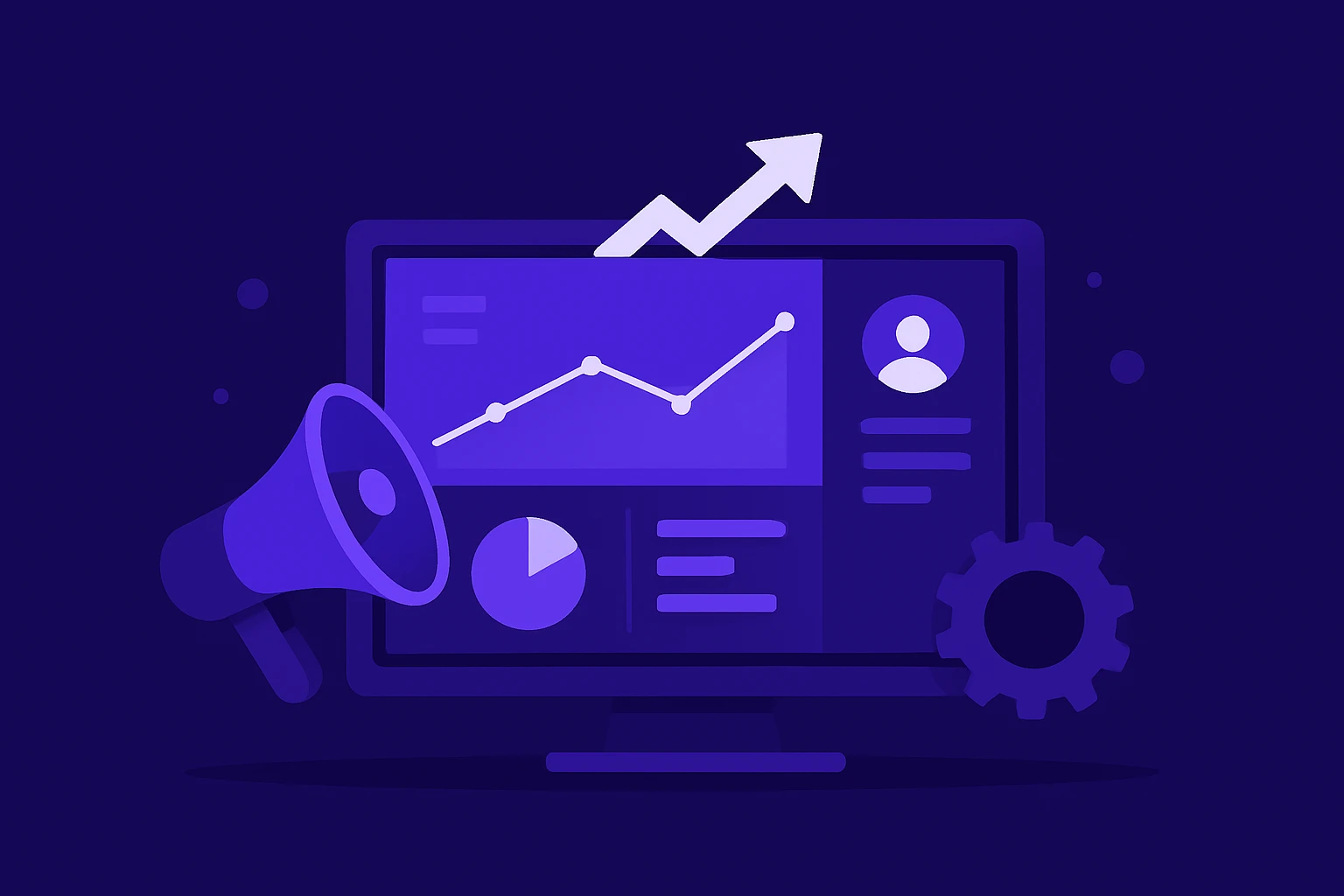
That gap is helping explain why marketing platforms add AEO dashboards. These dashboards are designed to show whether a brand is being mentioned, cited, or recommended in AI-generated answers. Rather than focusing solely on blue-link search results, they extend measurement into the environments where many prospects are now discovering information.
The category is increasingly being framed as a mainstream measurement layer. HubSpot defines AEO as improving how often a business appears in AI-generated answers across platforms such as ChatGPT, Gemini, and Perplexity, and its dashboard approach emphasizes trendlines over time rather than one-off wins.
HubSpot brings AEO into Marketing Hub
HubSpot recently launched HubSpot AEO inside Marketing Hub, making AEO reporting part of a larger marketing operating system. According to the company, the product includes an AEO dashboard with a brand visibility score, trend tracking, competitive share-of-voice metrics, and citation analysis across ChatGPT, Gemini, and Perplexity.
HubSpot says the tool was informed by its own testing in answer engine optimization. The company describes a brand visibility dashboard that helps marketers understand how frequently they appear in AI answers, while also surfacing citation and source analysis. This matters because appearing in an answer is only one part of the story; understanding which sources influence that answer can guide future content and authority-building work.
The launch also reflects a practical business need. Recent reporting says HubSpot introduced AEO in response to declining organic search traffic and increased buyer research inside conversational AI. One report noted a customer example in which nearly 15% of leads came from AI traffic, giving marketers a strong reason to want AEO measurement directly inside their existing platform.
Webflow positions AEO as a closed-loop enterprise solution
Webflow also entered the space with Webflow AEO, presented as a closed-loop answer engine optimization solution for enterprise marketing teams. The company says the product is designed to help brands get discovered, understood, and cited by AI answer engines, signaling a broader transition from SEO-only visibility tools to AI-answer visibility platforms.
This positioning is important because it shows AEO is no longer being treated as an edge tactic. By integrating it into a platform already used by marketing and web teams, Webflow suggests that AI-answer visibility should be part of the normal workflow for enterprise digital operations. In other words, AEO is being operationalized, not just discussed.
Together, Webflow and HubSpot provide strong evidence that major marketing platforms are productizing AI-answer visibility. Both companies publicly announced AEO offerings in April 2026, reinforcing the idea that AEO dashboards are becoming a platform feature rather than a standalone niche product.
The metrics that define modern AEO dashboards
The most notable development is not simply that new products exist, but that they are converging around a shared set of metrics. Core AEO dashboard measurements now commonly include brand inclusion, citation frequency, share of voice, and sentiment. These metrics aim to answer a simple question: how visible and trusted is a brand inside AI-generated responses?
HubSpot’s materials explicitly mention a brand visibility score, trend tracking, competitive landscape analysis, share-of-voice metrics, sentiment analysis, and citation analysis. This expands the dashboard model beyond traditional traffic reporting. Marketers are not just counting visits anymore; they are evaluating how AI systems interpret, reference, and position their brand relative to competitors.
Another key dimension is source attribution. Marketing dashboards are expanding beyond traffic and ranking to include the sources AI tools draw from when generating answers. That makes citation and source analysis especially valuable, because it helps teams identify which publishers, owned assets, or third-party references are shaping their AI presence.
Why leadership wants directional progress
One reason AEO dashboards are spreading so quickly is that executives want a way to monitor change over time, even when the discipline is still evolving. HubSpot’s 2026 AEO metrics guide says centralized dashboards make it easier for marketers to report AEO impact and prove progress to leadership. This is less about claiming perfect attribution and more about showing directional movement.
That framing matters in emerging categories. Leadership teams often understand that early-stage channels may not offer the same level of mature attribution as paid media or standard web analytics. Still, they need evidence that the company is improving its presence where future buyers are searching. Trendlines, share-of-voice charts, and visibility scores offer a practical reporting format.
As a result, AEO dashboards are increasingly positioned as executive communication tools. They give marketing leaders a way to explain whether the brand is becoming more visible in AI environments, whether competitors are gaining ground, and whether citation quality is improving over time.
A crowded market is forming around monitoring-first tools
The rise of in-platform AEO reporting is happening alongside a broader market expansion. A 2026 market roundup says many products now track whether AI engines cite a brand and display the results in a dashboard. This suggests that the AEO category is rapidly filling with monitoring-focused tools built around measurement first.
That pattern is telling. In many emerging marketing categories, analytics arrives before optimization becomes standardized. Teams first need to see what is happening, then they can decide how to act. AEO software appears to be following that path, with vendors competing to provide visibility dashboards, citation monitoring, and comparative benchmarks.
For buyers, this means the market may soon split into two layers: standalone monitoring tools and broader marketing platforms with native AEO dashboards. The latter may prove especially appealing because they connect AI visibility reporting to existing campaign, content, and lead-generation workflows.
Different names, one dashboard use case
The terminology around AEO is still fragmented. HubSpot notes that the discipline can also be called AI search optimization, generative engine optimization, AI visibility optimization, LLM optimization, or AI answer optimization. While the labels vary, the underlying measurement problem remains largely the same.
Marketers need a consistent way to understand whether their brand shows up in AI answers, how often it is cited, which sources are influencing those answers, and how competitors compare. That is why the dashboard use case is converging even as the naming does not. The vocabulary may still be unsettled, but the reporting needs are becoming clearer.
This convergence is one of the strongest signals that the category is maturing. When different companies use different terminology but build similar dashboards, it usually means the market has identified a common operational need. In this case, that need is ongoing visibility measurement inside answer engines.
What this means for marketing teams next
As marketing platforms add AEO dashboards, teams will likely treat AI-answer visibility as a standard part of performance management. The question will no longer be whether AI discovery matters, but how it should be measured alongside established channels such as organic search, paid media, email, and social.
In practical terms, marketers can expect dashboards to become more integrated with content strategy, digital PR, brand monitoring, and analytics workflows. Citation analysis may influence editorial priorities, while share-of-voice data may shape competitive strategy. Over time, AEO reporting could become just as routine as checking keyword rankings once was.
The larger takeaway is that platform vendors are validating a new layer of digital measurement. With HubSpot and Webflow both launching AEO products, AI-answer visibility is becoming a recognized reporting category inside mainstream marketing technology, not just an experiment at the edge of SEO.
The emergence of these tools shows that AEO dashboards are moving from novelty to necessity. As buyer journeys continue to shift into conversational AI, marketers need visibility into where and how brands appear in machine-generated answers, and platforms are responding by embedding that insight directly into their products.
For organizations planning their next analytics stack, the message is clear: the dashboard of the future will not only report on traffic and rankings. It will also explain AI visibility, citations, sentiment, and competitive presence across answer engines. That is why the move to add AEO dashboards may become one of the defining platform trends in modern marketing.