

Enterprise AI has reached an inflection point: the challenge is no longer proving that large language models work, but operationalizing them securely, reliably, and at scale. In late February 2026, that shift was underscored by a new alignment between a fast-moving European model maker and one of the world’s largest enterprise services firms.
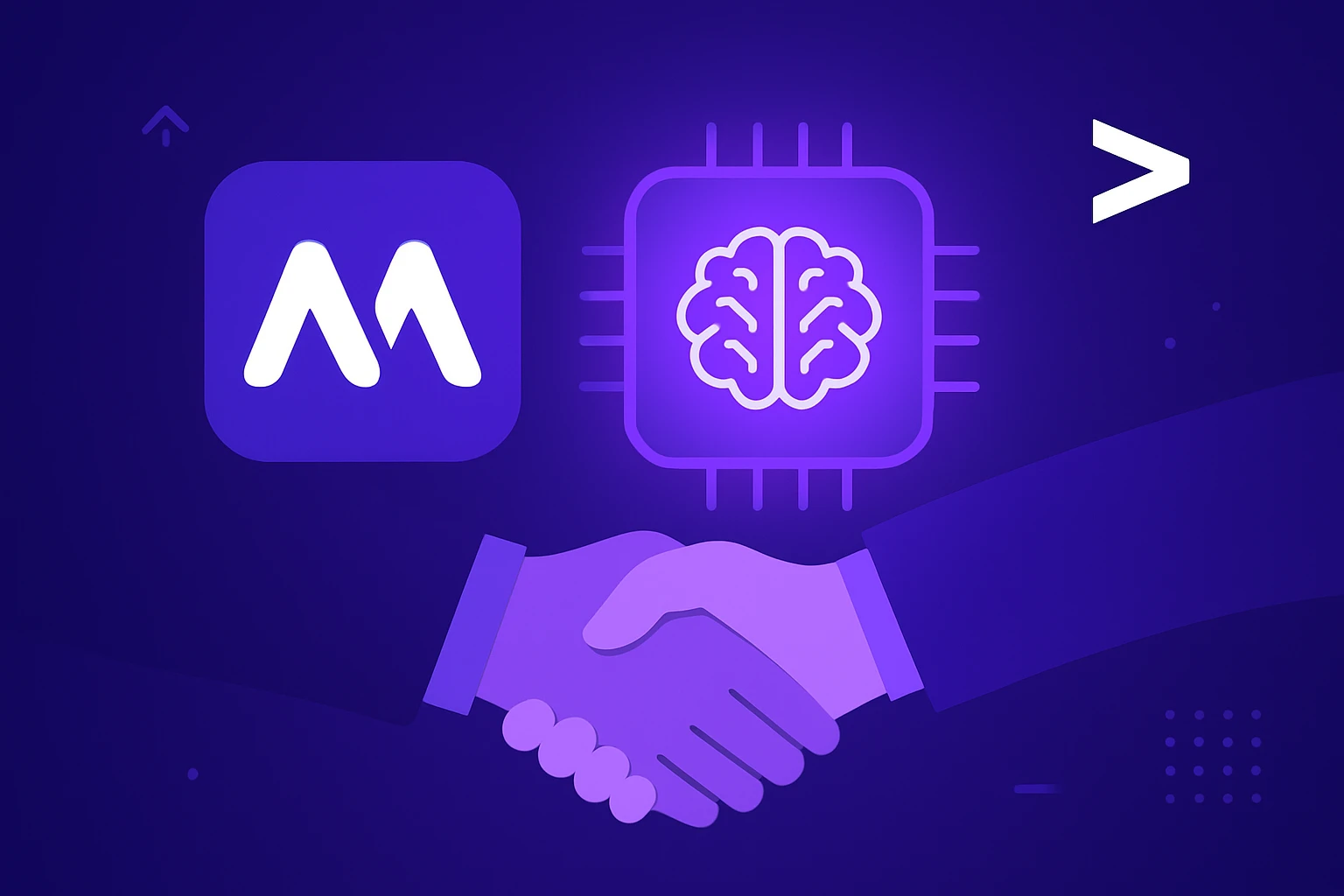
On 26 February 2026, Accenture and Mistral AI announced a “multi-year strategic collaboration” designed to help organizations “rapidly move to secure, large-scale AI deployments aligned with regional requirements,” spanning Europe and global markets. The partnership’s framing, performance, governance, sovereignty, enablement, and measurable value, signals where enterprise buyers are placing their bets next.
1) What Accenture and Mistral AI Announced
The core announcement is a multi-year strategic collaboration between Accenture and Mistral AI to scale advanced AI for enterprises. Both companies position the work as a pathway from experimentation to repeatable, production-ready deployments that fit regional and industry expectations.
According to the companies’ statements, the collaboration focuses on co-developing and delivering “enterprise-grade AI solutions” across sectors. The intent is to tackle “real industry challenges” by combining Mistral’s “enterprise-grade AI products” with Accenture’s capabilities to “architect, govern and scale AI.”
Several press and trade recaps, including TechCrunch, highlighted that financial terms and the precise duration were not disclosed. Still, the public language is clear about the ambition: this is meant to be a long-horizon partnership aimed at enterprise outcomes rather than a one-off integration.
2) Why This Partnership Matters for Enterprise AI in 2026
Enterprises are under pressure to convert pilot projects into durable systems that can withstand audits, security reviews, and operational demands. ETEnterpriseAI summarized the partnership’s focus as moving clients from pilots to “production-grade deployments,” with particular relevance for regulated sectors.
Accenture brings the implementation muscle that many organizations lack: reference architectures, operating models, governance frameworks, and the ability to industrialize AI across business units. Mistral contributes model capabilities and enterprise products positioned around controllability and high performance.
Together, the pairing reflects a broader market reality: model quality alone is not enough. Buyers want an end-to-end path from use-case discovery to controlled rollout, measurement, and continuous improvement, without losing sight of compliance and regional requirements.
3) The “Sovereign AI” and Ownership Angle
A notable theme in the coverage is sovereignty, especially in Europe. Consultancy.eu framed the collaboration as reinforcing a “sovereign AI in Europe” positioning, aligning with rising demand for data residency, legal clarity, and operational control over AI systems.
Accenture EMEA CEO Mauro Macchi was quoted emphasizing that customers want “world class performance” alongside “complete ownership.” He also highlighted “sovereign models” and the ability to scale across “industries, geographies and business functions,” tying sovereignty to practical enterprise expansion rather than a purely political goal.
This matters because for many CIOs and CISOs, the procurement question is shifting from “Which model is best?” to “Which deployment option preserves control over data, prompts, logs, and fine-tuned weights, while meeting local requirements?” The partnership’s stated intent is to meet those expectations with governance and scale built in.
4) From Co-Development to Sector Solutions: What “Enterprise-Grade” Means Here
The collaboration is described as co-developing and delivering enterprise-grade solutions across industries. That phrasing suggests more than API access: it implies solution patterns, guardrails, integrations, and operational playbooks tailored to sector constraints.
In practical terms, “enterprise-grade” tends to include identity and access management, audit logging, policy enforcement, data handling controls, model evaluation, and safe integration into workflows. Accenture’s contribution, “architect, govern and scale AI”, maps directly to these requirements.
Mistral AI CEO Arthur Mensch was quoted describing the focus as “performance, control, and customization,” and linking the partnership to the “ROI of AI.” The implication is that customization (fine-tuning, configuration, or agent design) must translate into measurable business value, not just impressive demos.
5) Accenture Becomes a Mistral Customer: Internal Rollout as a Signal
One of the most concrete details is that Accenture is not only a delivery partner, it is becoming a Mistral customer. The company stated it will equip staff with Mistral models and products, including “Mistral AI Studio,” and embed the technologies into its own operations to support client solutions.
Multiple recaps, including TechCrunch, Tech.eu, Verdict, and Dataconomy, emphasized the internal adoption angle. Tech.eu added that Accenture staff will get access to Mistral AI Studio to develop AI agents and applications, hinting at a broader enablement strategy across teams.
For enterprise buyers, internal deployment by a global services firm can be an important credibility marker. It suggests the tools are being stress-tested in complex, multi-tenant environments where security, compliance, and operational consistency are non-negotiable.
6) Training, Certification, and Change Management: The Often-Missing Layer
A recurring point across the announcement and follow-on coverage is enablement. Accenture says the partnership includes “dedicated training and certification programs,” alongside change-management support, so clients can deploy, fine-tune, and operate Mistral-powered solutions at scale.
AI Business and other trade write-ups echoed this emphasis, positioning training and certification as a lever for scaling responsibly. In many organizations, the biggest bottleneck is not access to models, but the shortage of people who can run evaluations, manage prompt and data risks, and operate systems after launch.
Certification also signals standardization: shared practices for governance, lifecycle management, and production operations. If executed well, this can help enterprises reduce dependency on ad hoc experimentation and instead build repeatable, auditable delivery pipelines for AI features.
7) Governance and Regional Requirements: Turning Constraints into Deployment Readiness
Accenture’s announcement language stressed that the collaboration is designed to help organizations move to “secure, large-scale AI deployments aligned with regional requirements.” This is a direct response to the reality that compliance, privacy, and risk expectations differ across jurisdictions and industries.
ETEnterpriseAI highlighted governance frameworks and sovereign models as core elements, especially for regulated sectors. In practice, governance can include model risk management, documentation, controls for sensitive data, red-teaming, and monitoring for drift or misuse, capabilities that become critical as AI moves into customer-facing or decision-support roles.
Mistral’s positioning around control and customization, paired with Accenture’s governance and scaling capabilities, is aimed at turning “constraints” into deployment readiness. For enterprises, that readiness is the difference between a pilot that impresses a few stakeholders and a platform that survives procurement, audit, and day-two operations.
The Accenture, Mistral AI partnership is best understood as a blueprint for the next phase of enterprise AI: controlled, compliant scaling with a clear path to measurable value. The companies’ messaging converges on the same buyer priorities, performance, ownership, governance, and customization, packaged for repeatable deployment across industries.
Whether the collaboration becomes a defining model for “sovereign” enterprise AI will depend on execution: robust solution delivery, credible certification programs, and successful internal rollout inside Accenture using tools like Mistral AI Studio. But as of the 26 February 2026 announcement, the intent is unmistakable: help organizations move beyond pilots and into secure, production-grade AI that can deliver real ROI.