

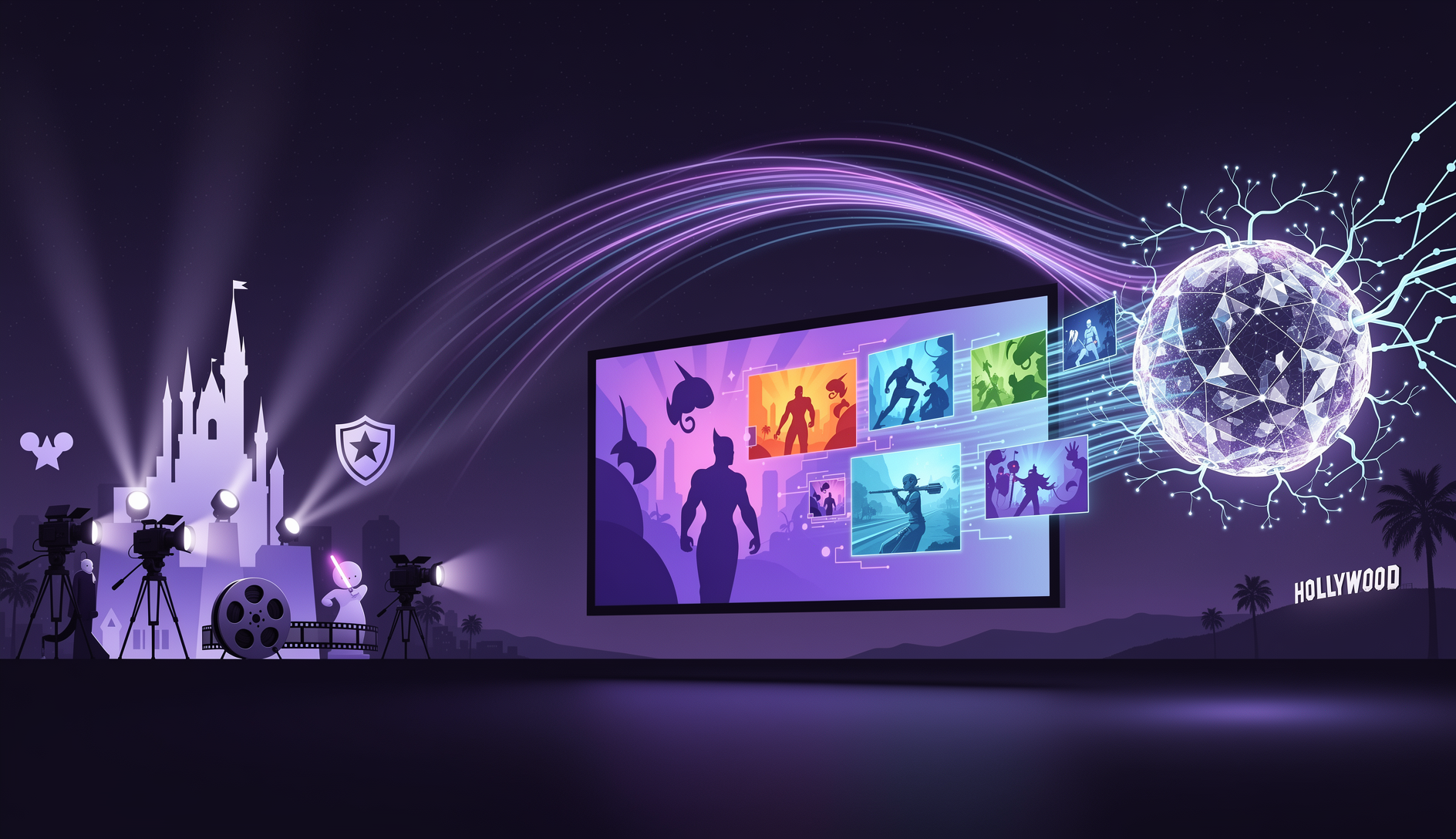
When Walt Disney Co. announced a $1 billion investment in OpenAI, the line that captured imaginations was simple: Disney characters are coming to Sora. In one move, Mickey Mouse, Elsa, Darth Vader, and Iron Man stepped into the frontier of AI‑generated video, marking the first time a major Hollywood studio has officially licensed its iconic IP to an AI platform. The deal, spanning three years, is already being described as a landmark in the uneasy relationship between entertainment and artificial intelligence.
Under the partnership, more than 200 characters across Disney, Pixar, Marvel, and Star Wars will be approved for use inside Sora and ChatGPT Images, with a tightly controlled set of tools that focus on short‑form, social‑style content. Rollout is expected to begin in early 2026, and a curated selection of fan‑created videos will even make its way onto Disney+. For both companies, the collaboration signals a decisive bet that AI can extend storytelling rather than simply disrupt it, if it is wrapped in strict guardrails and clear commercial terms.
Inside the $1 Billion Disney, OpenAI Partnership
Disney’s $1 billion investment in OpenAI is more than just a financial bet; it is the foundation of a sweeping commercial partnership centered on Sora, OpenAI’s AI video generator. The deal gives Disney equity in one of the most closely watched AI companies in the world, along with warrants that allow it to purchase additional OpenAI shares over time. Those warrants deepen the long‑term alignment between the two companies and ensure Disney participates in any upside if Sora and related products scale globally.
At the heart of the agreement is a three‑year licensing arrangement that makes Disney the first major studio to formally license its characters and worlds to Sora. Until now, most large entertainment companies have been hesitant to allow AI tools anywhere near their most valuable IP, wary of copyright erosion and brand misuse. By contrast, this deal is framed as a flagship template for how Hollywood can collaborate with AI firms under tightly negotiated terms.
The partnership also positions Disney as a major OpenAI customer. Beyond the content licensing, Disney plans to use OpenAI’s APIs to build new digital products and features, including innovations for Disney+, and to deploy ChatGPT internally to support employee productivity and creative workflows. In other words, Disney isn’t just selling access to its characters; it is embedding generative AI into both its consumer experiences and its back‑office operations.
From Mickey to Vader: What Fans Can Actually Create in Sora
The marquee feature of the deal is Sora’s new access to a library of more than 200 Disney‑related characters, props, and environments. Fans will be able to generate short, social‑style videos that feature classic animated icons like Mickey Mouse, Ariel, Belle, Cinderella, Simba, Moana, and Elsa, along with characters from Toy Story, Inside Out, and other Pixar franchises. The scope extends well beyond animation to include Marvel superheroes such as Iron Man, Black Panther, Deadpool, and Groot, as well as Star Wars legends like Darth Vader, Han Solo, Yoda, and Stormtroopers.
These characters will come with a curated set of costumes, props, vehicles, and iconic environments, allowing users to stage mini‑stories in familiar worlds, think Arendelle, the Pride Lands, or the Death Star, without needing any animation skills. Sora will translate natural‑language prompts into short videos, turning “Elsa surfing a wave of snow in Times Square at sunset” from an idea into a shareable clip in seconds. The emphasis is on playful, personal, and experimental storytelling that complements, rather than competes with, studio‑produced films and series.
Importantly, the agreement specifies that this is not an open‑ended sandbox for anything goes. The content focus is tightly defined: short‑form, user‑generated, social‑style videos and still images, not feature‑length productions or pseudo‑official sequels. In practice, that means Sora becomes a fan‑creation layer sitting on top of Disney’s IP, enabling a new form of participatory storytelling that still respects the commercial and creative boundaries of the original works.
Guardrails, Exclusions, and the Battle Over Talent Likeness
A central pillar of the Disney, OpenAI deal is what it explicitly forbids. The agreement bars the use of real actors’ likenesses or voices, even when those actors are strongly associated with beloved characters. Users will be able to generate videos with stylized character IP, such as an animated version of Belle or a comic‑style Iron Man, but they will not be able to convincingly mimic the face or voice of the performers who brought those characters to life on screen.
That restriction responds directly to one of Hollywood’s biggest concerns about generative AI: the potential to replicate and reuse an actor’s identity without consent or compensation. After a period of intense labor negotiations that put AI rights at the center of SAG‑AFTRA and WGA discussions, Disney’s insistence on excluding talent likenesses underscores its desire to avoid another flashpoint. The result is a clear line: the characters are in play, but the people behind them are not.
Beyond actor protections, the partnership includes robust trust‑and‑safety commitments. OpenAI has agreed to implement additional safety measures, age‑appropriate policies, and “reasonable controls” tailored to Disney’s brand and its large child audience. Disney will retain significant oversight over how its characters are used on Sora, including the ability to set content guidelines and shape enforcement mechanisms. In effect, Disney is extending its long‑standing content standards into the AI realm, aiming to prevent the kind of off‑brand, disturbing, or inappropriate mashups that have plagued unlicensed AI tools.
Sora, ChatGPT Images, and Disney+: How the Ecosystem Fits Together
The integration of Disney IP into OpenAI’s products unfolds across three main surfaces: Sora, ChatGPT Images, and Disney+. On Sora, users will be able to generate short videos with the approved character set, pushing the boundaries of fan creativity while staying within a controlled runtime and scope. On ChatGPT Images, users will be able to create still images leveraging the same licensed characters, props, and worlds, effectively turning the conversational AI into a Disney‑flavored illustration studio for fans, marketers, and creators.
The third surface is perhaps the most surprising: Disney+. As part of the partnership, Disney plans to feature a curated selection of Sora‑generated fan videos on its streaming platform. These clips will not sit alongside blockbuster movies and series as interchangeable content, but rather as a showcase of what responsible AI‑enabled creativity can look like. Disney frames this as a way to “extend the reach” of its storytelling, building a feedback loop in which fans can play with the company’s worlds and, occasionally, see their interpretations elevated to an official platform.
This three‑way integration also helps delineate roles. Sora and ChatGPT Images function as creation tools, empowering users to generate video and image content on demand, while Disney+ remains the destination for professionally curated viewing. The arrangement preserves the premium aura of Disney’s core productions but opens a new, clearly labeled lane for experimental and participatory content. The entire system is scheduled to go live beginning in early 2026, giving both companies time to refine guardrails, user interfaces, and curation workflows before exposure reaches mainstream audiences.
Responsible Innovation: What Iger and Altman Are Signaling
Disney CEO Bob Iger has framed the OpenAI partnership as an industry‑defining moment. He describes the rapid advance of AI as “an important moment for our industry” and emphasizes that Disney’s goal is to “thoughtfully and responsibly extend the reach of our storytelling through generative AI, while respecting and protecting creators and their works.” That language is carefully calibrated: it acknowledges AI’s disruptive power while anchoring the collaboration in respect for existing creative ecosystems and IP rights.
OpenAI CEO Sam Altman, for his part, presents the deal as proof that AI companies and creative leaders can collaborate “responsibly to promote innovation that benefits society, respect the importance of creativity, and help works reach vast new audiences.” In other words, the partnership is being held up not just as a commercial win but as a model for a more cooperative relationship between Silicon Valley and Hollywood, after years of mistrust over piracy, platform power, and data usage.
Together, Iger and Altman are sending a message to other studios, tech firms, regulators, and creators: there is a middle path between wholesale resistance to AI and unregulated free‑for‑all. Licensing, safety guardrails, talent protections, and shared economic upside can coexist with experimentation and fan engagement. Whether that message convinces skeptics will depend on how the rollout unfolds, but the rhetoric around “responsible AI” is already shaping expectations across the industry.
Disney’s Dual Strategy: Partner with OpenAI, Pressure Google
The timing of Disney’s OpenAI announcement is striking when viewed alongside its posture toward other tech giants. On the same day the company unveiled its billion‑dollar investment and licensing agreement, it also sent a cease‑and‑desist letter to Google, accusing it of “massive” copyright infringement. Disney alleges that Google trained AI models on Disney content and enabled the generation of infringing material via YouTube and related services, without proper consent or compensation.
This dual strategy, collaborate with one AI leader while threatening legal action against another, highlights how Disney is navigating the AI landscape. With OpenAI, Disney has a structured, paid licensing deal that gives it oversight, control, and financial participation. With Google, it is signaling that any unlicensed use of its content for model training or generative outputs will be fought aggressively. The contrast is intentional: Disney is making it clear that cooperation is available, but only on terms it finds acceptable.
For the broader industry, this sends a powerful signal. Studios and rights holders may be willing to experiment with AI if they receive transparent terms, meaningful control, and a share of the economic value. At the same time, they are prepared to litigate against companies that they view as exploiting their catalogs without permission. The OpenAI deal thus functions not only as a business arrangement but also as a negotiating benchmark, and a warning, to the rest of Big Tech.
Market Impact and Competitive Stakes in AI Video
Financial markets have responded positively to Disney’s AI pivot. Following news of the $1 billion investment in OpenAI and the Sora licensing deal, Disney’s stock price ticked up roughly 2, 2.5%. Analysts interpret the move as a sign that investors are increasingly looking for clear, monetizable AI strategies from media and entertainment companies, particularly those that can unlock new revenue streams and operational efficiencies rather than merely cutting costs.
For OpenAI, the partnership represents a significant competitive asset in the race to dominate AI‑generated video. Exclusive or first‑of‑its‑kind access to Disney’s character library gives Sora a powerful differentiator against rival AI platforms from Google, Meta, Anthropic, and others. In family and franchise entertainment, arguably the most brand‑sensitive and loyalty‑driven segment of media, being the only AI video generator with official Disney, Pixar, Marvel, and Star Wars characters is a formidable advantage.
At the same time, OpenAI’s strengthened relationship with Disney could create a halo effect as it approaches other studios and rights holders. If the Sora integration proves both safe and commercially successful, it may encourage similar deals across the industry, accelerating the legitimization of AI‑assisted fan content. But it may also intensify competitive pressures, with other tech companies racing to secure their own exclusive partnerships or develop alternative strategies that do not depend on marquee IP.
The arrival of Disney characters in Sora marks a turning point in how Hollywood approaches AI. Rather than treating generative tools only as threats to be contained, Disney is reframing them as canvases for guided fan creativity, so long as the company retains control over its characters, protects talent, and enforces rigorous trust‑and‑safety standards. Sora and ChatGPT Images will not be churning out unofficial Frozen sequels or full‑length Marvel crossovers anytime soon, but they will offer millions of fans a sanctioned way to play in those universes.
As early 2026 approaches, all eyes will be on how this experiment unfolds: whether the guardrails hold, whether creators feel respected, and whether audiences embrace AI‑enabled storytelling that still bears the Disney stamp. If it works, the OpenAI partnership could become the template for how studios worldwide tap AI while defending their brands and IP. If it stumbles, it will serve as a cautionary tale. For now, one thing is clear: with Mickey, Moana, and Darth Vader stepping into Sora, the future of entertainment will be co‑written not just by studios and filmmakers, but by fans and algorithms as well.