

Canonical tags have long been associated with SEO, duplicate-content management, and search engine indexing. In 2026, that familiar HTML element is taking on a broader operational role. Recent Cloudflare announcements suggest that <link rel="canonical"> is no longer just a hint for search engines, but increasingly a practical control signal for certain AI crawlers, especially those used for model training.
This shift matters because AI crawling volume is no longer theoretical. Cloudflare reported that bots in its AI Crawler category visited developers.cloudflare.com 4.8 million times in the last 30 days, and that these bots consumed deprecated content at roughly the same rate as current content. In that environment, website owners are looking for ways to tell automated systems, in machine-readable form, which URL should be treated as the authoritative source.
Canonical tags are becoming a control plane for AI crawlers
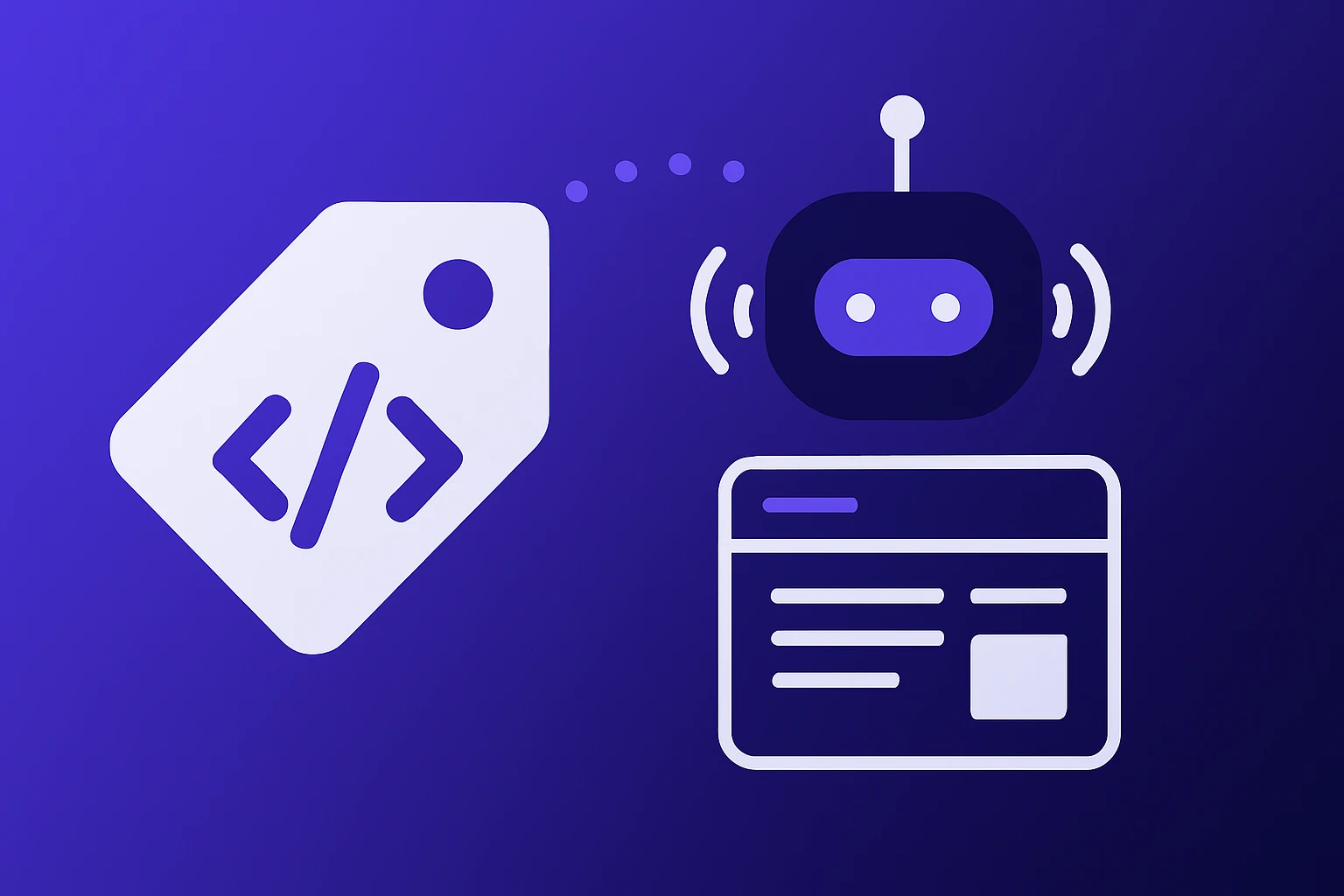
Cloudflare’s April 17, 2026 launch of “Redirects for AI Training” marks a notable change in how canonical tags can be used. According to the company, the feature reads existing canonical tags and, for verified AI training crawlers, turns them into enforced HTTP 301 redirects toward the authoritative URL. In Cloudflare’s framing, canonical tags effectively “become HTTP 301 redirects” for those bots.
That is a major evolution from the traditional SEO interpretation of canonicalization. Historically, canonical tags have been treated as strong preference signals that help search engines consolidate duplicate URLs. With edge enforcement, however, the canonical tag can become part of routing logic. That turns metadata into infrastructure and makes canonical markup operationally significant beyond indexing.
This does not mean that all crawlers everywhere now treat canonicals the same way. Cloudflare’s implementation is a product-specific enforcement layer for verified AI training bots. Still, it demonstrates a new pattern: websites can use existing canonical markup as an input to control how at least some AI crawlers reach and consume content.
What the standards say about canonicalization
Cloudflare describes the canonical tag as an HTML element defined in RFC 6596 that tells search engines and automated systems which URL is the authoritative version of a page. That standards-based framing is important because it connects recent AI-crawler behavior to long-established web conventions rather than inventing an entirely new mechanism.
Google Search Central remains the clearest mainstream reference for canonicalization practice. Google states that redirects are the strongest canonicalization signal, while rel="canonical" link annotations are also strong signals. Sitemap inclusion is weaker. This hierarchy helps explain why enforced redirects may succeed in situations where advisory markup alone is inconsistently followed.
At the same time, Google is explicit that canonicalization is still a preference system, not a guarantee. Its documentation says canonical methods help Google identify the best version of a page, but Google may choose a different canonical if it believes another URL is more appropriate. That distinction matters when discussing AI crawlers, because canonical tags can be influential without being universally binding.
Why advisory signals may fail with AI training bots
Cloudflare says that AI training crawlers did not reliably honor softer signals such as deprecation banners, noindex, or canonical tags alone. In the company’s observed environment, deprecated documentation continued to be crawled at the same rate as current content. This suggests that human-visible warnings and advisory metadata may not be enough to keep stale material out of training pipelines.
That observed behavior is one reason Cloudflare introduced redirect-based enforcement for verified AI training crawlers. Instead of hoping a bot interprets a banner or respects a canonical preference, the edge can respond with a 301 and move the crawler directly to the preferred destination. The practical idea is simple: train on the current page, not the stale one.
It is important to treat this as an operational observation, not a universal standard. Cloudflare’s statements reflect what it saw from certain AI bots and how it chose to respond. The broader web still includes many crawler types with different policies, capabilities, and levels of compliance.
Which bots are in scope
Cloudflare’s policy language distinguishes among several AI-related bot categories. Its AI Crawler category includes bots that crawl for AI model training, and the company specifically names GPTBot, ClaudeBot, and Bytespider in that context. It separates those bots from AI Assistant and AI Search categories, which may have different purposes and treatment.
That distinction matters because not every automated visitor behaves the same way or should be handled with the same rule set. A bot collecting data for model training presents different content-governance concerns from a bot powering search previews or an assistant fetching fresh answers. If you are building policies around canonical tags, you need to know which crawler class you are trying to influence.
In practice, this means canonical tags may become part of a layered machine-access strategy. One layer handles search indexing, another handles AI training crawlers, and another may govern assistant or retrieval traffic. The same canonical URL can remain the authoritative content signal, but the enforcement mechanism may differ by crawler type.
Implementation details that still matter
Even if canonical tags are being repurposed for AI crawler control, the implementation basics still come from established search guidance. Google recommends using absolute canonical URLs rather than relative ones, because relative paths can create long-term problems. If canonicals are going to drive redirects or downstream automation, precision becomes even more important.
Google also supports two main methods for publishing canonical information: the HTML link element in the <> and the HTTP Link er. Both can express canonical intent. For organizations serving HTML, PDFs, feeds, or other asset types, er-based canonicalization can be useful where editing page markup is difficult or impossible.
Consistency is equally critical. Google warns against sending conflicting canonical signals across methods such as sitemaps and rel="canonical". If one system says URL A is canonical and another says URL B, machines receive less clarity. In a world where canonicals may affect both indexing and AI-crawler routing, inconsistent signals can create both SEO and operational risk.
Canonical tags are not a substitute for robots controls
One common mistake is to blur the line between canonicalization and crawl blocking. Google’s documentation clearly says not to use robots.txt for canonicalization. Robots rules are about crawl access, not about declaring which duplicate URL should be treated as authoritative.
Google’s robots guidance also emphasizes that robots.txt is primarily a crawl-control mechanism, not an indexing-control mechanism. Preventing a bot from fetching a URL is different from telling a search engine or automated system which version of a resource should represent the content. These are separate problems, and they require separate tools.
There is another technical nuance here. Google’s 2025 “Robots Refresher” explains that robots meta tags and X-Robots-Tag ers only work if the crawler can access the URL. If robots.txt blocks the page entirely, the bot may never see those directives. For site owners managing AI crawlers, that reinforces the need to think carefully about layering: crawl permissions, canonical intent, and redirect enforcement all serve different functions.
What Google’s duplicate-URL model tells us
Google Search Console documentation explains canonicalization through duplicate groups. When multiple URLs contain essentially the same content, Google analyzes the group and chooses one canonical URL. Alternate URLs are usually not shown in search results except in specific circumstances. This model is useful because it frames canonicalization as consolidation around authority.
Applied carefully, that logic helps explain why canonical tags could matter to AI systems as well. If several URLs represent versions of the same page, an automated consumer ideally wants the current, authoritative one. That does not create a formal AI-agent standard, but it does make canonical tags a sensible input for crawlers trying to reduce duplication or avoid stale content.
However, we should not overstate the analogy. Google’s canonical guidance is still about Google Search indexing, not an official AI-agent policy. Extending canonicalization concepts from search engines to AI crawlers is an inference based on broader crawler behavior and on product implementations like Cloudflare’s, not on a universal rule issued by Google for AI bots.
Why adoption is rising quickly
One reason canonical tags are well positioned to become an AI-crawler signal is simple: they already exist at large scale. Cloudflare says the <link rel="canonical"> tag is present on 65,69% of web pages and is automatically generated by platforms such as EmDash, WordPress, and Contentful. That installed base makes canonical tags attractive as a ready-made input for automated systems.
For infrastructure providers, reusing existing markup is far easier than asking the entire web to adopt a new AI-only standard overnight. If millions of websites already declare an authoritative URL, then products can build on that signal immediately. This lowers friction for publishers and speeds up deployment.
The result is a broader trend: canonical tags are becoming infrastructure, not just metadata. When a tag can influence search consolidation, edge redirects, crawler routing, and content-governance workflows, it stops being a minor SEO detail and starts functioning as part of the web’s machine-readable control surface.
For publishers, the practical takeaway is to treat canonical implementation with more rigor than before. Use absolute URLs, place canonical declarations correctly in the <> or HTTP er, and keep signals consistent across templates, sitemaps, and platform layers. If AI crawlers are part of your traffic and content strategy, canonicals may now affect not just discoverability, but also which pages automated systems actually consume.
The larger strategic lesson is that advisory metadata is increasingly being converted into enforceable behavior by intermediaries and platforms. Canonical tags are still not a universal command, and they remain a preference signal in Google’s search ecosystem. But with products like Cloudflare’s edge enforcement, they are clearly evolving into a practical control signal for AI crawlers as well.