

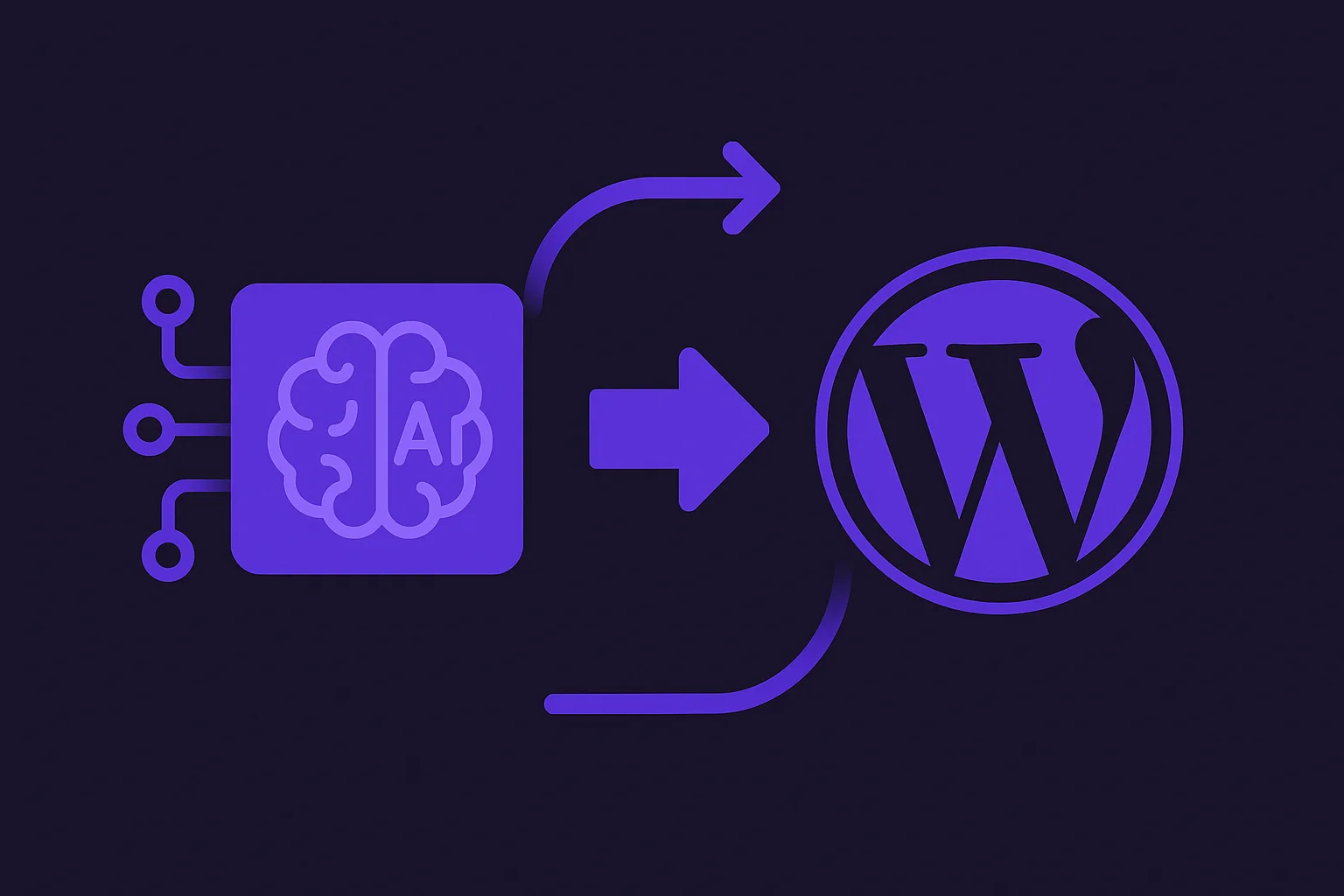
Artificial intelligence is transforming how WordPress websites are designed, managed, and scaled, offering unprecedented opportunities to automate complex tasks and streamline day-to-day operations. What was once a collection of manual, time-consuming activities content production, SEO optimization, customer support, data synchronization can now be orchestrated through intelligent automation. Modern AI workflow automation tools enable WordPress site owners to significantly increase productivity while maintaining high standards of quality and consistency.
By embedding AI directly into WordPress workflows, organizations can move beyond basic task automation toward systems capable of contextual understanding, adaptive decision-making, and continuous optimization. These solutions can generate SEO-optimized content, analyze user behavior, classify incoming requests, and manage customer interactions through advanced conversational interfaces. The result is a more resilient and scalable website architecture that reduces operational friction and maximizes return on investment.
The integration of AI into WordPress workflows represents a fundamental shift in website management. Instead of relying on static rules and predefined triggers, AI-driven workflows can interpret natural language, identify patterns in large datasets, and execute multi-step processes autonomously. This level of sophistication, once reserved for enterprise-grade platforms, is now accessible to WordPress users of all sizes.
Understanding AI workflow automation for WordPress
AI workflow automation for WordPress refers to the orchestration of interconnected tasks powered by artificial intelligence models that can analyze inputs, make decisions, and execute actions across the website ecosystem. Unlike traditional automation tools that rely solely on conditional logic, AI workflows can adapt dynamically based on context, intent, and historical data.
This advanced approach enables WordPress sites to handle complex decision-making processes automatically, such as determining the most relevant content to publish, prioritizing customer inquiries, or segmenting leads based on behavioral signals. AI workflows can continuously learn from interactions, improving accuracy and relevance over time.
Native integration within WordPress ensures seamless operation without the overhead of external platforms or complex middleware. By leveraging plugins and built-in connectors, AI workflows can interact directly with posts, pages, forms, users, and metadata, maintaining performance and simplifying maintenance.
These comprehensive capabilities make it possible to design sophisticated workflows through intuitive visual interfaces, reducing dependency on custom development and allowing non-technical teams to deploy automation initiatives efficiently.
Essential AI-powered content creation and SEO automation
Content creation remains one of the most resource-intensive aspects of website management. AI-powered workflows significantly reduce this burden by assisting with topic ideation, content drafting, optimization, and publishing. By integrating AI models directly into the WordPress editor, teams can generate high-quality content aligned with brand guidelines and audience intent.
These workflows can analyze target keywords, search intent, and competitive content to produce articles that are both informative and optimized for search engines. Metadata such as titles, meta descriptions, headings, and internal links can be generated automatically, ensuring consistency and SEO best practices at scale.
Seamless integration eliminates the need to switch between multiple tools during the content creation process. Writers and editors can remain within the WordPress environment while AI handles repetitive and analytical tasks in the background.
This approach positions SEO optimization as an integral component of content production rather than a post-publication task, resulting in faster publishing cycles and improved organic performance.
Intelligent chatbot integration and customer support automation
AI-powered chatbots have become a cornerstone of modern customer support strategies. When integrated into WordPress workflows, these chatbots can manage a wide range of interactions, from answering frequently asked questions to guiding users through complex processes.
These chatbots are capable of maintaining natural conversation flows by leveraging contextual understanding and historical interaction data. They can escalate issues to human agents when necessary, ensuring that critical cases receive appropriate attention without overwhelming support teams.
Advanced workflows allow chatbots to access internal knowledge bases, product documentation, and user-specific data. This comprehensive approach ensures responses are accurate, personalized, and contextually relevant.
By automating first-line support and routine inquiries, organizations can reduce response times, improve customer satisfaction, and reallocate human resources to higher-value tasks.
Advanced form processing and lead generation workflows
Forms are critical touchpoints for lead generation, feedback collection, and user engagement. AI-enhanced workflows can analyze form submissions in real time, classifying leads based on intent, sentiment, and likelihood of conversion.
Instead of routing all submissions through static pipelines, AI workflows can trigger personalized follow-ups, assign leads to appropriate teams, or enrich contact data automatically using external data sources.
This intelligent approach significantly improves conversion rates by ensuring timely, relevant responses while enhancing the overall user experience through personalized interactions.
Multi-model AI integration and workflow orchestration
Modern AI workflow platforms support integration with multiple AI models, enabling organizations to select the most appropriate technology for each specific task. For example, one model may be optimized for content generation, while another excels at data classification or conversational AI.
This multi-model strategy allows for more nuanced and task-specific responses, improving overall workflow effectiveness and accuracy.
Extensive model support ensures flexibility and future-proofing, allowing workflows to evolve as new AI capabilities emerge. Users are not locked into a single provider and can adapt their automation stack to changing requirements.
Visual workflow builders abstract technical complexity, making advanced AI orchestration accessible to non-technical users and democratizing enterprise-grade automation within WordPress.
Data integration and business process automation
AI workflows become significantly more powerful when connected to external systems such as CRMs, marketing platforms, analytics tools, and e-commerce solutions. These integrations enable end-to-end business process automation across the entire digital ecosystem.
Through APIs and prebuilt connectors, AI workflows can synchronize data, trigger actions across platforms, and maintain consistency between WordPress and third-party tools.
This extensive connectivity ensures that AI workflows can interact with virtually any business application, creating a unified and automated operational framework.
Performance optimization and technical SEO automation
Beyond content and user interactions, AI workflows can continuously monitor and optimize technical SEO and performance metrics. Automated audits can detect issues related to page speed, structured data, indexing, and mobile usability.
This proactive approach ensures that technical SEO elements remain optimized as the site evolves, without requiring constant manual reviews.
By addressing performance bottlenecks and SEO issues automatically, organizations can maintain high search visibility and user experience at scale.
Implementation best practices and getting started
Successful implementation of AI workflows in WordPress requires a structured approach. It is recommended to begin by identifying high-impact, repetitive tasks that are well-suited for automation. Clear objectives and measurable KPIs help ensure that workflows deliver tangible business value.
Transparent and predictable pricing models make AI workflow automation accessible to organizations of all sizes, enabling experimentation without financial uncertainty.
Starting with a single workflow and iterating gradually allows teams to build internal expertise while minimizing risk. As confidence and results grow, additional workflows can be layered to address more complex use cases.
The future of WordPress management lies in intelligent automation that adapts to specific operational needs and scales with business growth. By implementing AI workflows strategically, organizations can focus on high-value initiatives while routine processes run autonomously. As AI technology continues to mature, WordPress sites equipped with intelligent workflows will benefit from increased agility, efficiency, and long-term competitive advantage.