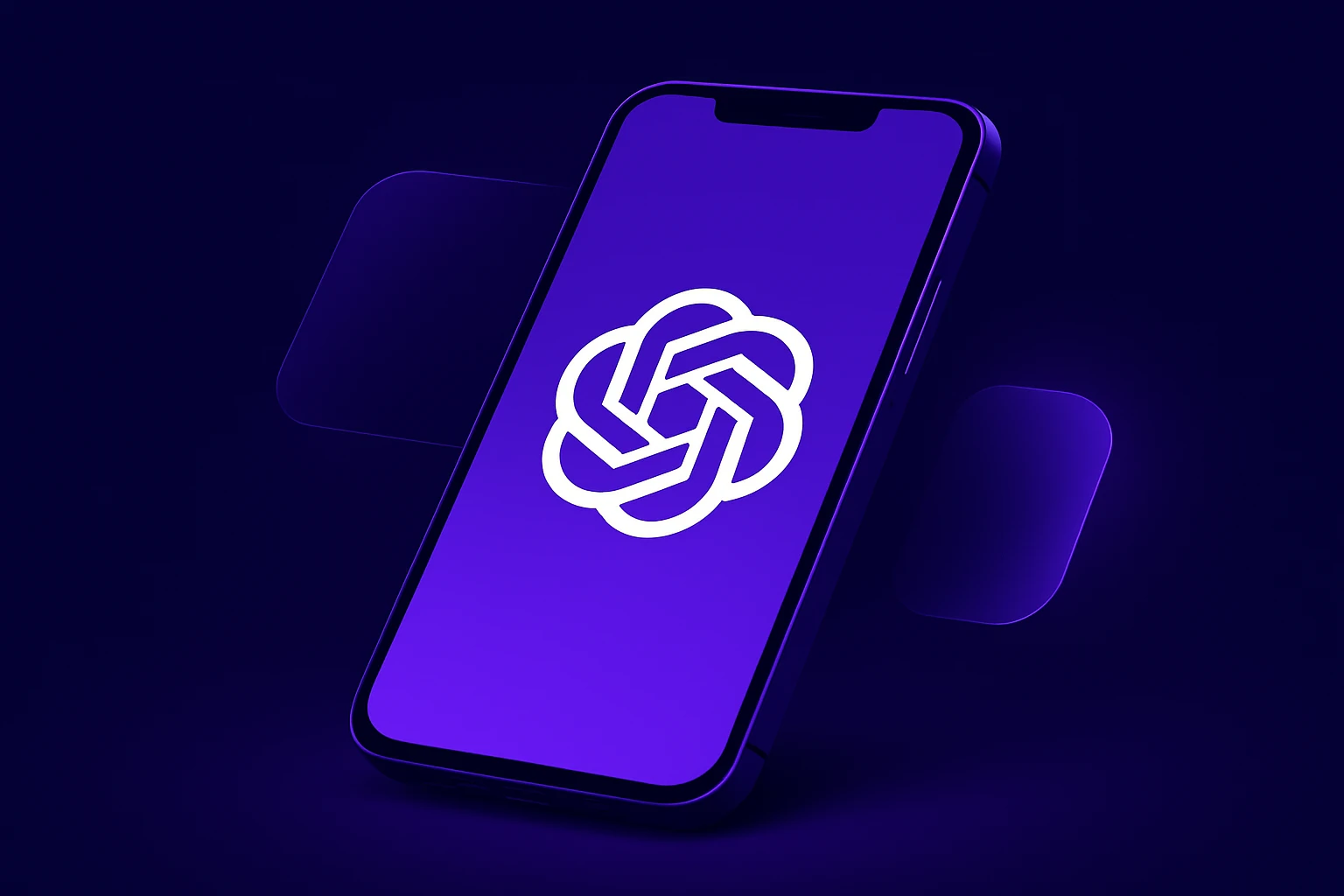
OpenAI has not officially unveiled an AI-first phone on its newsroom pages as of 01/05/2026. In fact, the company’s recent official communication has focused on new models, enterprise tools, workspace agents, Codex, and product updates such as GPT-5.5 and ChatGPT Images 2.0. That makes the current wave of discussion less about a confirmed launch and more about a set of credible signals pointing toward a broader hardware ambition.
The phrase OpenAI teases AI-first phone captures this moment well: there is no formal product announcement yet, but recent reporting suggests the company may be exploring a smartphone built around AI agents instead of the familiar app grid. If that direction becomes real, it could mark one of the most important shifts in consumer technology since the rise of the modern smartphone.
A rumor with real momentum
The strongest recent indication arrived in reporting dated April 27, 2026, which said OpenAI may be working on a smartphone where AI agents replace traditional apps. Rather than tapping icons one by one, users would ask an assistant to complete tasks across services, from travel booking to messaging. That idea fits neatly with how OpenAI has been describing the future of AI in software.
Importantly, the same reporting suggested that such a device is not imminent. While the rumor generated excitement, the timeline appeared long, with mass production speculated for a later date rather than an immediate rollout. That matters because it frames the project as strategic research and development, not a near-term consumer launch.
Even so, the report has drawn attention because it goes beyond vague hardware speculation. It outlines a possible smartphone concept, a software model centered on agents, and a shortlist of potential manufacturing and chip partners. In other words, it reads less like fantasy and more like an early look at a serious product direction.
Why OpenAI would rethink the smartphone
The rumored AI-first phone is being discussed as a direct challenge to the app-centric smartphone model. For nearly two decades, phones have revolved around opening apps, switching between interfaces, and manually coordinating tasks. OpenAI’s software trajectory points toward a different experience, where users state an intention and AI handles the execution.
That concept aligns with OpenAI’s own language around agentic computing. In its April 8, 2026 enterprise post, the company said customers are moving from using AI to assist with tasks toward managing teams of agents that do tasks for them. A phone built on that logic would not simply run AI features inside apps; it would treat AI as the operating layer itself.
In practical terms, this could mean asking a device to plan a trip, compare options, send confirmations, update a calendar, and message contacts without the user opening separate services manually. If OpenAI can make that reliable, the phone would become less of an app launcher and more of an action engine. That is the core appeal behind the AI-first phone narrative.
The companies reportedly involved
According to the April 2026 report, the rumored phone could be developed with MediaTek, Qualcomm, and Luxshare. Those names are notable because they map onto key parts of the smartphone supply chain: chips, connectivity, and manufacturing scale. Their inclusion suggests that any hardware effort, if real, is being considered with mainstream production in mind.
Qualcomm is a particularly significant name in this context because of its deep role in premium smartphones and on-device AI processing. MediaTek also brings major mobile silicon expertise, especially in power efficiency and broad handset deployment. Luxshare, meanwhile, has become an increasingly important manufacturing partner in advanced consumer electronics.
Still, none of this amounts to official confirmation from OpenAI itself. These reported partnerships should be treated as part of a developing story, not settled fact. Yet they help explain why industry observers are taking the rumor seriously: a next-generation AI device would require exactly this kind of ecosystem support.
Jony Ive and the design dimension
OpenAI’s hardware push gained major credibility after its May 2025 acquisition of Jony Ive’s io startup, a deal widely reported at about $6.5 billion. That move signaled that OpenAI was not merely experimenting with accessories or side projects. It was investing heavily in design talent and product development capacity at a scale associated with major platform bets.
Ive’s involvement matters because his reputation is tied to redefining how consumers interact with technology. If OpenAI is seriously trying to move beyond the app grid, then industrial design and interface design become inseparable. An AI-first device would need to feel intuitive, calm, and distinctly different from the phone habits people have today.
That design philosophy has been echoed by Sam Altman, who has described OpenAI’s upcoming hardware vision as more “peaceful and calm” than the iPhone. That is a revealing phrase. It suggests the company is not chasing a spec race or simply building another slab phone, but exploring how AI might reduce friction, notifications, and screen-driven overload.
Phone, earbuds, or something else?
One reason the story remains fascinating is that OpenAI’s hardware ambitions have never appeared limited to a phone alone. Earlier reporting described the company’s first device as a screen-free, pocketable product. Later reports even suggested earbuds could arrive before any smartphone, showing that the hardware strategy may be broader than a single form factor.
In June 2025, legal filings tied to a trademark dispute revealed that OpenAI and io had been researching in-ear hardware devices for about a year. That detail is important because it shows the company was already evaluating multiple categories, including wearables, well before the latest phone rumors intensified.
A January 2026 TechCrunch report went further, saying the first OpenAI device could be earbuds, reportedly codenamed “Sweet Pea,” with an announcement expected in the second half of 2026. If that turns out to be true, the so-called AI-first phone may represent only one branch of a larger plan to build a family of AI-native devices.
What OpenAI has officially said
OpenAI has still not officially announced an AI-first phone. That remains the most important fact in the entire conversation. On the company’s public site, the emphasis is clearly on software and services: advanced models, image generation, enterprise features, and a growing suite of agent-focused tools.
However, there has been one notable public signal regarding hardware timing. In January 2026, OpenAI Chief Global Affairs Officer Chris Lehane said the company was on track to announce its first hardware device in the second half of 2026. That statement did not identify the product category, but it confirmed that hardware is no longer just external speculation.
When combined with OpenAI’s official focus on workspace agents, Codex, and enterprise automation, that comment paints a coherent picture. The company is building software that acts more autonomously, and it appears to be preparing hardware that could showcase that software in a more native way. Whether that first device is a phone is still uncertain, but the strategic direction is becoming easier to read.
The long timeline and what it means
Reported timing around OpenAI hardware has shifted repeatedly. Some 2025 reports suggested a 2026 launch window for a new device, while April 2026 coverage indicated that a smartphone, if it exists, may not enter mass production until 2028. That gap highlights the difference between announcing a hardware concept and scaling it into a global product.
This longer timeline should not be surprising. Reimagining the smartphone around AI agents would require more than attractive industrial design. It would demand a reliable operating system model, strong privacy protections, high-quality voice and multimodal interaction, battery efficiency, partner integration, and enough user trust to let AI act on someone’s behalf.
In that sense, a delayed schedule could actually be a sign of seriousness. If OpenAI wants to build a new generation of AI-powered computers rather than just another handset, it may need years of iteration. Reuters-linked coverage throughout 2026 has framed the company’s hardware strategy in exactly those broader terms.
Why an AI-first phone matters to the industry
If OpenAI eventually ships its own hardware, one major implication is data. A company that controls the device can potentially gain more direct usage data than one that only provides software on third-party phones. That could help OpenAI improve personalization, task execution, agent behavior, and system-level context awareness over time.
There is also a platform question. Today, smartphone ecosystems are largely governed by app stores and operating systems owned by incumbent giants. An AI-first phone centered on agents could weaken the dominance of the app model by making services accessible through intent-based commands rather than branded destinations. That would have consequences for developers, advertisers, and platform gatekeepers alike.
For consumers, the promise is simplicity. Instead of juggling travel apps, messaging tools, shopping platforms, calendars, and maps, users might hand off workflows to an assistant that completes them end to end. The challenge, of course, is trust: the system would need to be accurate, transparent, and controllable enough for people to rely on it in daily life.
For now, the phrase OpenAI teases AI-first phone should be understood as a reflection of credible momentum rather than official confirmation. The company has not announced such a device on its newsroom pages, but multiple reports, executive comments, and product signals point toward an ambitious hardware future built around AI agents.
Whether the first OpenAI device turns out to be a phone, earbuds, or another screen-light product, the larger idea is already clear. OpenAI appears to be exploring a world in which AI does not simply live inside apps, but becomes the main interface to computing itself. If that vision succeeds, the AI-first phone may be remembered not as a rumor, but as an early sign of a post-app era.