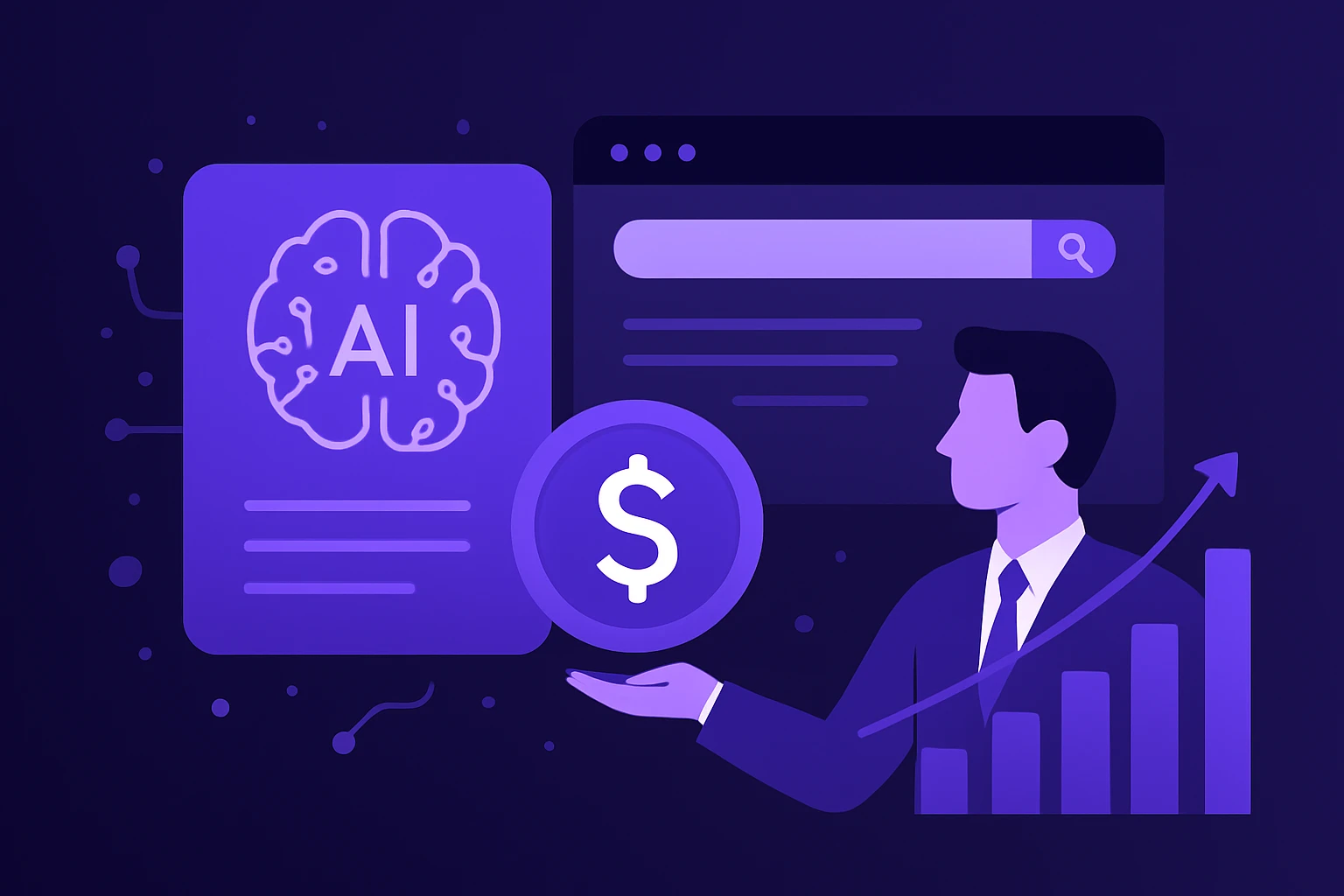



Search behavior has changed faster than many content teams expected. People are no longer relying only on classic lists of blue links. They are increasingly getting synthesized responses from AI interfaces that summarize, compare, and recommend sources before a click ever happens. That shift means brands must optimize not just for traditional rankings, but for inclusion inside AI-generated answers.
The scale of this change is already significant. Google said in March 2025 that AI Overviews were used by more than 1 billion people, and by May 2025 it said AI Overviews were driving over 10% increase in usage for the types of queries where they appear. At the same time, OpenAI made ChatGPT search available to everyone in regions where ChatGPT is available, while Microsoft launched Copilot Search in Bing and described Bing as an AI-powered search and answer engine. In other words, optimize for AI answer engines, not just search, is no longer a futuristic recommendation. It is a practical strategy for visibility.
AI answer engines are now a mainstream discovery layer
The first reason this shift matters is simple: AI answer engines are no longer experimental. Google described AI Overviews as “one of our most popular Search features, now used by more than a billion people.” That is not a niche interface. It is a mainstream discovery surface that now sits between users and websites for a large set of informational queries.
This trend is not limited to Google. OpenAI said ChatGPT search became available to everyone in supported regions on February 5, 2025, and framed it as a way to provide fast, timely answers with links to relevant web sources. Microsoft followed the same path in April 2025 with Copilot Search in Bing, presenting Bing as an answer engine with cited sources and inline links. The “answer engine” category now clearly spans multiple platforms.
Perplexity also illustrates how large this behavior has become. The company has said its answer engine handles more than 1.5 billion questions globally each month. When users ask for explanations, comparisons, recommendations, and product guidance in these systems, visibility depends less on rank alone and more on whether your content is selected, summarized, and cited.
Google is redesigning search around conversation, not keywords
Google’s recent product direction makes the change even clearer. In 2025 and 2026, Google described AI Mode as its most powerful AI search experience, designed for follow-up questions, richer responses, and links to dig deeper. That language signals a move away from search as a one-query, one-results-page behavior and toward an interactive answer experience.
Google has also continued expanding and upgrading that experience. In August 2025, the company said AI Mode expanded to over 180 new countries and territories in English, dramatically increasing the number of markets where AI-answer visibility matters. In November 2025, Google announced Gemini 3 in Search and said difficult questions would be routed to that model. Then in January 2026, Google said Gemini 3 became the default model for AI Overviews and enabled follow-up questions directly from the overview.
For marketers and publishers, the implication is straightforward. If search engines are moving from keyword matching toward multi-step conversational assistance, then content must be built to satisfy a topic in one pass. Pages that only chase a phrase repeatedly may underperform against pages that define, explain, compare, and anticipate the next question clearly.
Citations are becoming a core product feature
One of the most important developments in AI search is that citations are no longer an afterthought. They are part of the product experience. Google says AI Overviews provide a snapshot of key information with links, and AI Mode provides responses with links to relevant, reliable information. OpenAI similarly emphasizes web-linked answers, and its framing is explicit: “ChatGPT can now search the web in a much better way than before” and provide “fast, timely answers with links to relevant web sources.”
Microsoft is even more direct. Its positioning for Copilot Search stresses that sources are prominently cited and that users can click every link used to generate an answer. Microsoft’s own language captures the category well: “Bing is your AI-powered search and answer engine.” This means link attribution is becoming central to how answer engines establish trust and how users verify what they read.
That is why source-ready content matters. If an AI system is more likely to cite pages that are easy to parse, easy to attribute, and rich in useful facts, then formatting and clarity become strategic advantages. A page should make it obvious what claim is being made, what evidence supports it, and what a user should understand in a few seconds.
Answer engine optimization is emerging as a real discipline
The industry has started to put names around this shift, including answer engine optimization, AEO, and GEO. These labels are appearing in recent 2025 publications and studies focused on optimizing for AI-generated answers rather than only traditional search rankings. The terminology may still evolve, but the underlying need is already clear: content teams need frameworks for winning citations, not just positions.
The academic world is beginning to study this directly as well. A 2025 arXiv paper titled AI Answer Engine Citation Behavior suggests the field is now mature enough for empirical analysis of how these systems choose and cite sources. That is a notable milestone. It means optimization for answer engines is moving from anecdotal advice toward measurable patterns and testable hypotheses.
For brands, this creates a familiar but updated challenge. In classic SEO, teams tracked rankings, impressions, and click-through rates. In answer engine optimization, they must also ask whether their pages are being referenced inside summaries, whether a brand is named in AI answers, and whether content is structured in a way that makes citation more likely across Google, ChatGPT, Bing, and other AI-first interfaces.
What source-ready content looks like in practice
Content built for AI answer engines should answer the question directly and early. Because Google’s AI Overviews and AI Mode are designed for multi-part questions and follow-ups, direct answers, concise definitions, and useful sub-answers matter more than keyword repetition. A strong page should help an answer engine extract the main response, supporting details, and context without confusion.
Structure matters just as much as substance. Clear ings, short explanatory blocks, explicit comparisons, bulleted processes, and factual statements that can stand alone all improve machine readability. If a model is scanning many documents to assemble a response, pages that present information in a clean, attributable format are easier to quote, summarize, and cite accurately.
Authority also needs to be visible on the page itself. That can include named authors, dates, original research, examples, product details, methodology, and references to credible evidence. Answer engines are trying to produce reliable responses with links, so pages that demonstrate expertise and trustworthiness in a concrete way are better candidates for inclusion in those cited answer paths.
Brand discovery now happens inside summaries
A major strategic change is that brand discovery increasingly happens before the click. Google’s 2025 messaging around AI in Search ties these experiences to discovery and higher-quality clicks. That means users may first encounter a brand name, product, or point of view inside an AI-generated summary rather than on a conventional results page.
This matters across the funnel. Forrester reported in October 2025 that 19% of US online adults had used ChatGPT in the past month to search for products they were interested in buying, while 3% had used Perplexity. Product discovery is no longer confined to retail search bars or standard search listings. It is happening in conversational interfaces where synthesized recommendations can shape awareness and consideration very early.
If your brand is absent from those summaries, you may lose visibility even when your site would have ranked well in traditional search. Conversely, if your content is consistently cited or your brand is named in AI answers, you can influence perception before users ever visit your website. That makes answer-engine inclusion a top-of-funnel branding issue as much as a traffic issue.
The next stage is agentic search and task completion
AI answer engines are also becoming more agentic. In August 2025, Google said AI Mode added capabilities such as helping with restaurant reservations. That indicates these systems are moving beyond summarizing information and toward helping users complete tasks. The answer engine is evolving from retrieval interface to action layer.
This has important consequences for content strategy. When users are trying to accomplish something, they need more than general information. They need steps, constraints, pricing, availability, comparisons, FAQs, and next actions. Content that supports decisions and workflows will have more value than content that merely repeats broad explanations already common on the web.
As these systems become better at follow-ups and execution, the winning pages will likely be those that combine clarity with utility. They should help both the user and the model move from question to decision. In that environment, optimization means making your content actionable, precise, and easy to connect to a real-world task.
Traditional SEO still matters, but it is no longer sufficient on its own. Search visibility now includes whether your pages can be selected as evidence, cited in summaries, and surfaced in AI-first experiences across Google, OpenAI, Microsoft, and other answer engines. To optimize for AI answer engines, not just search, is to recognize that the modern results page is increasingly an answer interface.
The practical path forward is not mysterious. Publish content that answers real questions completely, structure it so facts are easy to extract and attribute, and make trust signals visible. As answer engines continue expanding globally, improving citations, and moving toward task completion, the brands that win will be those whose content is not just rankable, but referenceable.