


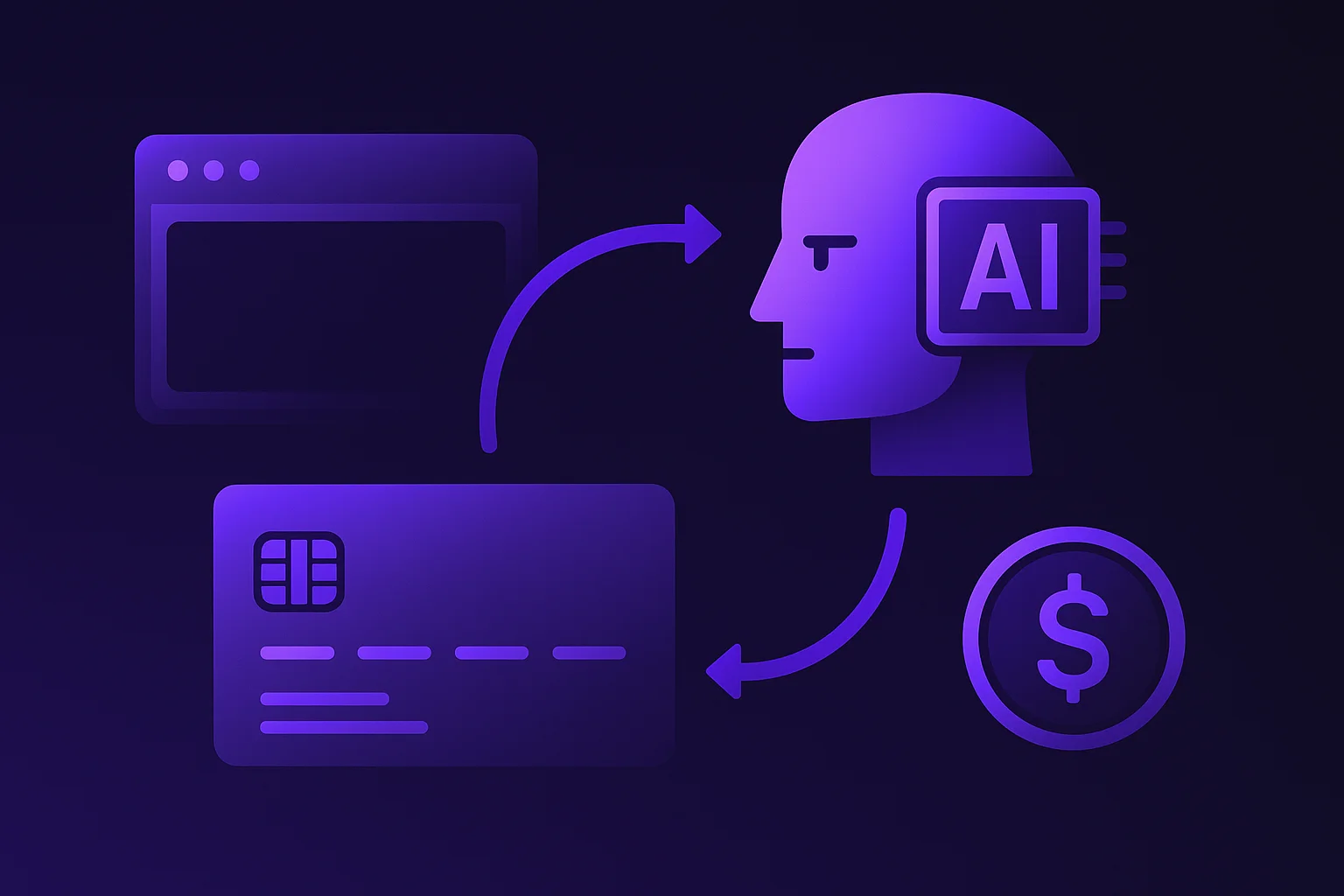
The digital landscape is undergoing a profound transformation, driven by the emergence of agentic AI , intelligent entities capable of autonomous action and decision-making. These agents are no longer confined to analytical tasks; they are increasingly interacting with real-world systems, performing complex operations with minimal human intervention. This evolution paves the way for a revolutionary shift in how financial transactions are conducted, giving rise to what can be termed "AI payments."
This new paradigm signifies a future where payments are not merely executed by humans through digital interfaces, but are initiated, managed, and optimized by sophisticated AI agents. These agents, embedded within an interconnected "agentic internet," are poised to redefine efficiency, security, and personalization in the financial sector, promising a seamless and intelligent flow of capital across various platforms and services.
Understanding the Agentic Internet
The concept of the agentic internet refers to a decentralized network where autonomous AI agents can interact, communicate, and execute tasks independently, without constant human oversight. Unlike traditional web interfaces that require direct user input for every action, agentic systems empower AI programs to observe, plan, and act on their own, often across multiple platforms and services. This level of autonomy is critical for enabling the next generation of digital interactions, from managing complex supply chains to personalizing individual user experiences.
These AI agents are not simple scripts; they are endowed with varying degrees of intelligence, learning capabilities, and goal-oriented behaviors. They can interpret complex data, make decisions based on predefined parameters or learned patterns, and adapt their strategies over time. The agentic internet provides the operational environment for these agents, offering the necessary protocols, APIs, and security frameworks for them to operate effectively and collaboratively across diverse digital ecosystems.
In essence, the agentic internet is a foundational shift from a human-centric web to an AI-centric web, where much of the routine digital work and complex data orchestration can be offloaded to intelligent automated entities. This transformation promises to unlock unprecedented levels of efficiency and innovation, particularly in areas requiring rapid decision-making and continuous operation, such as financial transactions.
AI Agents: The New Architects of Transactions
The integration of AI agents into payment systems heralds a new era of financial transactions. These agents can be programmed to perform a multitude of payment-related tasks, from initiating recurring bill payments and managing subscriptions to executing complex trades and optimizing investment portfolios. Their ability to monitor various data streams, market conditions, personal spending habits, contractual obligations, allows for proactive and intelligent payment decisions that often surpass human capabilities in speed and accuracy.
For consumers, AI agents can act as personal financial assistants, automatically identifying the best payment methods, optimizing for rewards or lower fees, and even negotiating terms with service providers. Imagine an AI agent that pays your utility bill at the most opportune moment to maximize interest on your savings, or one that automatically rebalances your portfolio based on real-time market shifts and your predefined risk tolerance. This level of automation moves beyond simple scheduled payments to truly intelligent financial management.
In the business realm, AI agents can revolutionize accounts payable and receivable, automating invoice processing, reconciliation, and fraud detection. They can manage complex B2B payment flows, ensuring compliance with contractual terms, optimizing cash flow by timing payments strategically, and even identifying discrepancies before they become significant issues. This dramatically reduces administrative over and enhances the financial agility of enterprises.
The Promise of Automated Financial Flows
The primary benefit of agentic internet-enabled AI payments is the unparalleled increase in efficiency. By automating routine and complex financial tasks, businesses and individuals can save significant time and resources. Transactions can be executed with greater speed, often in milliseconds, removing the delays associated with manual processing and human intervention. This acceleration is crucial for high-frequency trading, supply chain finance, and global commerce where timing can directly impact profitability.
Beyond speed, AI payments offer enhanced accuracy and reduced error rates. Human error is a significant contributor to financial discrepancies, but AI agents, when properly designed and trained, can perform tasks with meticulous precision, adhering strictly to rules and parameters. This reduction in errors not only saves costs but also improves the reliability and trustworthiness of financial operations, building confidence among all stakeholders.
Furthermore, AI agents can personalize financial services to an unprecedented degree. By analyzing individual spending patterns, financial goals, and market opportunities, agents can tailor payment strategies, recommend optimal financial products, and even proactively suggest ways to improve financial health. This level of personalized, always-on financial assistance transforms banking and payment experiences from reactive to predictive and empowering.
Security and Trust in an Autonomous Payment World
As AI agents gain more autonomy over financial transactions, the questions of security and trust become paramount. Robust security protocols are essential to protect against fraud, cyberattacks, and unauthorized access. This includes advanced encryption, multi-factor authentication specifically designed for agent interactions, and continuous monitoring for anomalous behavior that could indicate a breach or compromise. The underlying infrastructure must be resilient and capable of withstanding sophisticated threats.
Building trust also involves implementing transparent and auditable systems. Users and regulators need to understand how AI agents make decisions and execute payments. This requires clear logging of agent actions, explainable AI (XAI) capabilities where appropriate, and mechanisms for human oversight and intervention. Establishing accountability frameworks is crucial, defining who is responsible when an autonomous agent makes an error or is exploited.
Furthermore, the integrity of data that AI agents rely upon is critical. Data privacy and protection must be integrated by design, ensuring that sensitive financial information is handled in compliance with stringent regulations like GDPR and CCPA. Secure data sharing protocols and privacy-preserving AI techniques will be vital for fostering an environment where autonomous agents can operate effectively without compromising user data.
Navigating Regulatory and Ethical Frontiers
The advent of AI payments introduces significant challenges for existing regulatory frameworks. Current financial regulations are primarily designed for human-mediated transactions, and their applicability to autonomous AI agents performing financial operations needs careful re-evaluation. Regulators will need to address issues such as liability in case of errors or misuse, compliance with Know Your Customer (KYC) and Anti-Money Laundering (AML) laws for non-human entities, and the potential for market manipulation by highly sophisticated AI trading agents.
Ethical considerations are equally pressing. The potential for algorithmic bias in payment decisions, discrimination based on AI-derived profiles, and the concentration of financial power in the hands of a few dominant AI platforms are serious concerns. Developers and policymakers must collaborate to establish ethical guidelines and safeguards that ensure fairness, transparency, and consumer protection as AI agents become more prevalent in financial services.
Establishing clear frameworks for governance, accountability, and explainability will be key to fostering public trust and ensuring the responsible deployment of AI payments. This includes developing industry standards, certifying AI payment systems, and potentially creating new regulatory bodies or adapting existing ones to oversee the unique challenges posed by agentic financial operations. International cooperation will also be essential, given the global nature of finance and AI development.
The Infrastructure Underpinning AI Payments
The successful deployment of AI payments relies on a robust and scalable technical infrastructure. This includes advanced API platforms that allow AI agents to securely connect and interact with various banking systems, payment gateways, and financial institutions. These APIs must offer granular control, high availability, and strong authentication mechanisms to support autonomous operations at scale. The standardization of such APIs will be crucial for interoperability across the agentic internet.
Blockchain and distributed ledger technologies (DLT) are also poised to play a significant role. Their inherent properties of immutability, transparency, and decentralized verification can provide a secure and tamper-proof foundation for AI-driven payment records and smart contracts. AI agents could leverage DLT for executing complex multi-party agreements, managing digital assets, and ensuring the verifiable settlement of transactions without intermediaries, further enhancing trust and efficiency.
Furthermore, the infrastructure must support massive data processing capabilities for real-time analytics and machine learning. Cloud computing resources, edge computing for localized processing, and advanced cybersecurity tools are all integral components. The ability to process vast amounts of financial data instantly allows AI agents to make informed decisions and detect anomalies in real-time, providing both operational efficiency and enhanced security for the entire payment ecosystem.
Future Implications: A Self-Driving Financial Ecosystem
Looking a, the agentic internet and AI payments are set to culminate in a truly self-driving financial ecosystem. Imagine a future where your personal AI agent automatically manages your investments, pays all your bills, optimizes your tax filings, and even suggests dynamic insurance policies tailored to your real-time risk profile. For businesses, this means fully automated treasury management, predictive financing based on real-time business performance, and frictionless global trade with AI agents managing cross-border payments and compliance.
This future also holds the promise of entirely new financial products and services. Micro-payments executed by agents for every digital interaction or data point, dynamic pricing models that adjust in real-time based on demand and supply, and highly personalized financial advice delivered continuously are just a few possibilities. The traditional boundaries between banking, investment, and everyday commerce will blur, with AI agents acting as the seamless glue integrating these functions.
The journey towards a fully agentic financial world will be iterative, requiring continuous innovation in AI algorithms, cybersecurity, regulatory adaptation, and public education. However, the foundational pieces are rapidly falling into place, promising a future where financial operations are more intelligent, efficient, and integrated than ever before, ultimately empowering individuals and businesses with unprecedented financial autonomy and agility.
The integration of agentic AI with payment systems represents a monumental leap forward in the evolution of financial technology. By empowering autonomous AI agents to initiate, manage, and optimize transactions, the agentic internet promises to unlock unparalleled levels of efficiency, security, and personalization across the global financial landscape. This transformation will redefine how individuals and businesses interact with their finances, moving towards a proactive, intelligent, and seamless experience.
While the path to a fully agentic financial ecosystem presents significant challenges related to security, regulation, and ethics, the potential benefits are too profound to ignore. Continued innovation, collaborative policy-making, and a commitment to responsible AI development will be crucial in harnessing the power of agentic internet to create a more efficient, inclusive, and intelligent future for payments worldwide.