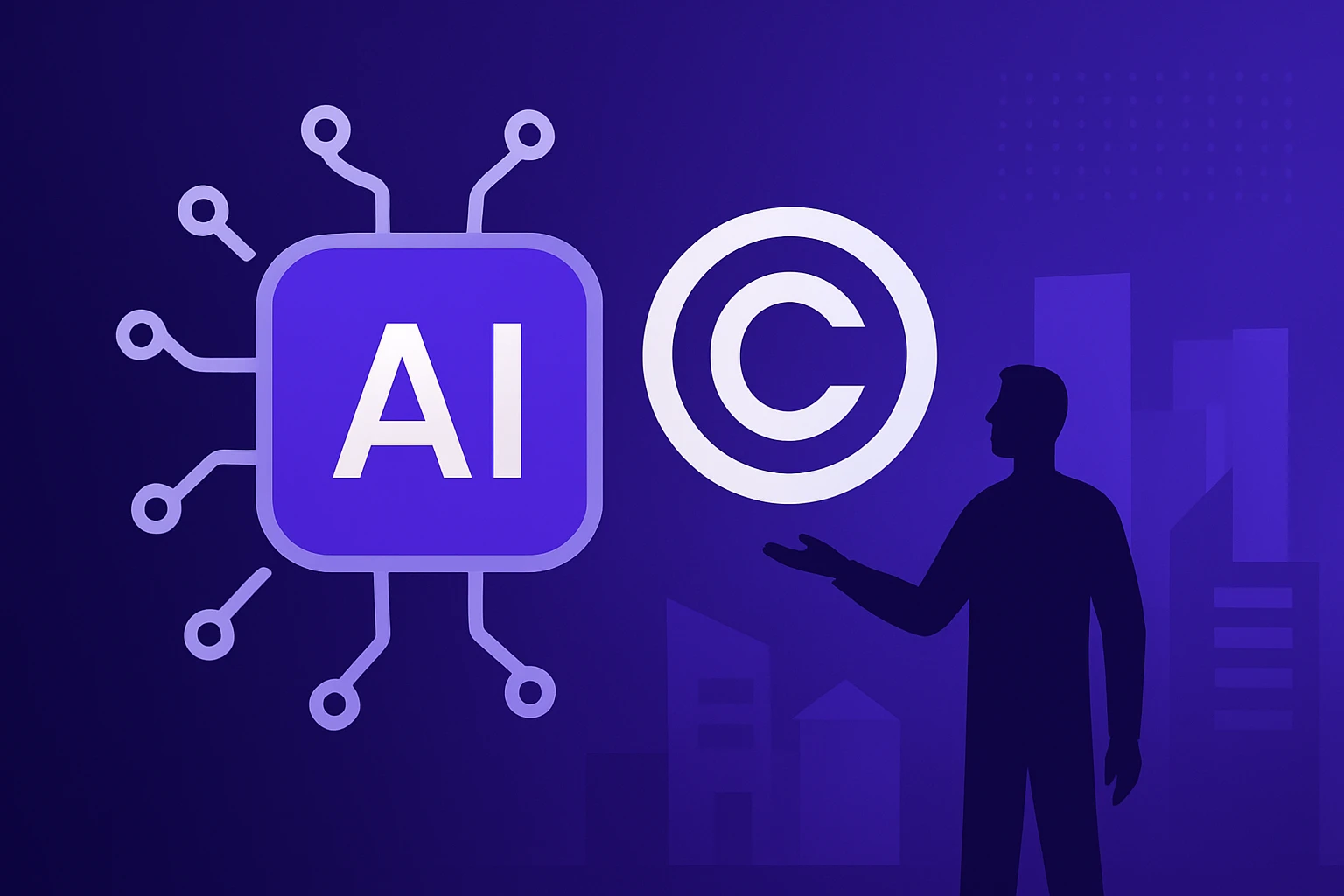
The final court approval of Anthropic’s $1.5 billion settlement with authors marks a defining moment in the fast-moving conflict between artificial intelligence and copyright law. In San Francisco, a federal judge signed off on what multiple reports describe as the largest copyright settlement in U.S. history and the largest copyright class action ever certified. That scale alone makes the agreement impossible for publishers, writers, AI developers, and legal observers to ignore.
The case has become central to the debate over how AI companies acquire and use training data. At its heart were claims that books were taken from shadow libraries and used to train Claude, Anthropic’s chatbot. Even as Anthropic has pointed to a court ruling that AI training on books is fair use under copyright law, the settlement shows that the handling and sourcing of data can still create massive legal exposure.
A landmark settlement with national impact
The approval of Anthropic’s $1.5 billion author settlement immediately elevated the dispute into a national benchmark for AI copyright litigation. News coverage has consistently framed the agreement as unprecedented, both in dollar value and in its significance for future claims involving generative AI systems. That framing matters because settlements often signal how industries price legal risk before a full appellate roadmap exists.
For authors, the resolution is being cast as a milestone victory against AI piracy. Lawyers for the class have emphasized that the case was not merely theoretical or symbolic; it produced a concrete recovery on a scale rarely seen in copyright disputes. In a legal environment where many creators fear being overwhelmed by well-funded technology companies, that outcome sends a powerful message.
For AI companies, the settlement is equally instructive. It suggests that even when a company believes parts of its conduct are defensible under fair use, the broader litigation threat can still become extraordinarily expensive. In practical terms, the Anthropic settlement reshapes AI copyright expectations by making data provenance and acquisition methods central business issues rather than secondary compliance details.
What the authors accused Anthropic of doing
The claims focused on allegations that Anthropic misused books to train Claude. Reuters reported that authors accused the company of using their works without permission, while Bloomberg Law said the settlement addressed the downloading of millions of pirated books. That distinction is important: the dispute was not simply about reading publicly available text on the internet, but about allegedly obtaining copyrighted books through unlawful channels.
Reporting tied the controversy to shadow libraries including LibGen and Pirate Library Mirror. These repositories have long been flashpoints in publishing and copyright enforcement because they host or distribute books outside authorized licensing structures. By linking the case to mass downloading from such sources, the authors positioned their claims around piracy and acquisition conduct as much as around machine learning itself.
This framing gave the case unusual force. AI training lawsuits often become abstract debates about transformation, innovation, and fair use, but allegations involving pirated collections make the facts more concrete and more politically resonant. That helps explain why the settlement is now widely viewed as a precedent-setting AI copyright payment rather than just another private dispute.
The legal divide between training and data sourcing
One of the most consequential aspects of the case is the distinction between training activity and the way training materials were obtained. Anthropic deputy general counsel Aparna Sridhar said the company reached the settlement after a court’s landmark ruling that training AI on books is fair use under copyright law, “which remains the law today.” That statement reflects Anthropic’s effort to preserve a legal principle even while paying a massive sum to resolve surrounding claims.
In other words, the settlement does not necessarily erase the fair use argument for model training. Instead, it highlights that a company may still face major liability if the underlying dataset was assembled through alleged piracy or improper copying. This legal divide could become one of the most important doctrines shaping the next wave of AI copyright cases.
Anthropic’s public communications fit that broader positioning. Its help center says commercial products do not train models on customer data by default, signaling sensitivity to concerns about how information enters training pipelines. The company also maintains a copyright reporting channel through its legal and copyright agent, showing that AI developers are increasingly building formal processes to manage intellectual property disputes before they escalate into line litigation.
The economics of the payout
The size of the settlement has drawn almost as much attention as the legal theory behind it. According to AP, authors will receive about $3,000 per book. That per-book figure gives creators and rights holders a tangible benchmark for what large-scale AI-related copyright claims might yield when resolved through class litigation rather than individual negotiations.
At the same time, the gross number does not tell the whole story. Bloomberg Law reported that about $122 million of the settlement is allocated to attorneys’ fees and litigation costs, while Law360 put fees at roughly $101.5 million. Those figures underline the reality that giant copyright cases generate substantial payouts not only for class members but also for the legal machinery required to prosecute them.
Still, the economics matter beyond this one case. A billion-dollar-plus settlement changes the internal math for AI companies evaluating the cost of licensing, settlement, and risk management. It also gives authors and publishers a stronger negotiating reference point when arguing that the unlicensed use of books in model development should not be treated as a low-cost regulatory gray area.
Why the court’s approval process mattered
Final approval did not arrive automatically. Earlier reporting noted that the presiding judge had questioned whether the proposed settlement was complete enough, suggesting that unresolved issues had to be addressed before the court would sign off. That scrutiny is typical of large class actions, but here it had extra significance because of the settlement’s historic size and likely influence on future AI disputes.
The judge’s caution reinforced the idea that courts are not simply rubber-stamping industry-defining deals. When a settlement is poised to affect thousands of authors and potentially shape norms for AI copyright enforcement, completeness and fairness become critical. Judicial oversight therefore served not only a procedural function but also a legitimacy function.
The class administration timeline also shows how far the process had advanced before the final ruling. The settlement website set a claim deadline of March 30, 2026, months before final approval in July 2026. That gap indicates that the machinery for compensating authors was already underway, reflecting a mature settlement structure rather than a last-minute compromise.
A new precedent for AI copyright disputes
Multiple outlets now describe the agreement as the largest AI-related copyright recovery or settlement to date. That language matters because legal precedent is shaped not only by court opinions but also by repeated market and media signals. When a settlement is broadly treated as the reference point for AI copyright liability, it influences how lawyers, investors, and executives assess comparable cases.
The Anthropic settlement reshapes AI copyright by encouraging a more granular view of responsibility. Future disputes may focus less on a single broad question,whether AI training is lawful,and more on narrower operational questions: Where did the data come from? Was it licensed? Was it copied from a pirated repository? Were there internal controls to prevent misuse? Those questions are easier for courts and regulators to operationalize.
This could also affect business strategy across the AI industry. Companies may invest more heavily in documented data supply chains, licensing deals, recordkeeping, and audit trails. In that sense, the settlement may function less as a one-off financial penalty and more as a catalyst for a compliance-first approach to model development.
What authors, publishers, and AI firms should watch next
Authors and publishers will likely see this outcome as proof that collective action can generate meaningful leverage against AI developers accused of using copyrighted works without authorization. Even if fair use remains a viable defense for some training practices, the case shows that creators can still obtain large recoveries when they can tie AI development to pirated inputs or unlawful mass copying.
AI companies, meanwhile, should view the settlement as a warning against informal data acquisition habits that may have once seemed standard in the race to build large models. The legal and reputational costs of relying on questionable repositories may now outweigh any short-term technical benefits. A company’s public stance on data handling, customer data, and copyright complaint procedures will likely receive much closer scrutiny going forward.
Regulators and courts will also be watching whether this agreement becomes a model for resolving future disputes. If similar cases follow the same pattern, the industry may evolve toward a hybrid framework in which some training uses remain legally protected, but damages and settlements turn heavily on how datasets were assembled. That would be one of the clearest ways the Anthropic settlement reshapes AI copyright in practice.
The larger significance of this case is that it narrows the space for vague arguments about innovation to override concrete questions about ownership and sourcing. AI developers may still argue successfully that training can be transformative and lawful, but they will find it harder to dismiss the separate issue of whether the material was gathered through piracy or mass unauthorized copying. That distinction may define the next chapter of AI copyright law.
For the broader market, the settlement stands as both a financial reckoning and a governance signal. It tells creators that litigation can produce historic compensation, and it tells technology companies that scale does not shield them from copyright accountability. As a result, the Anthropic settlement reshapes AI copyright not just through its dollar amount, but through the compliance standards and legal narratives it is likely to leave behind.