

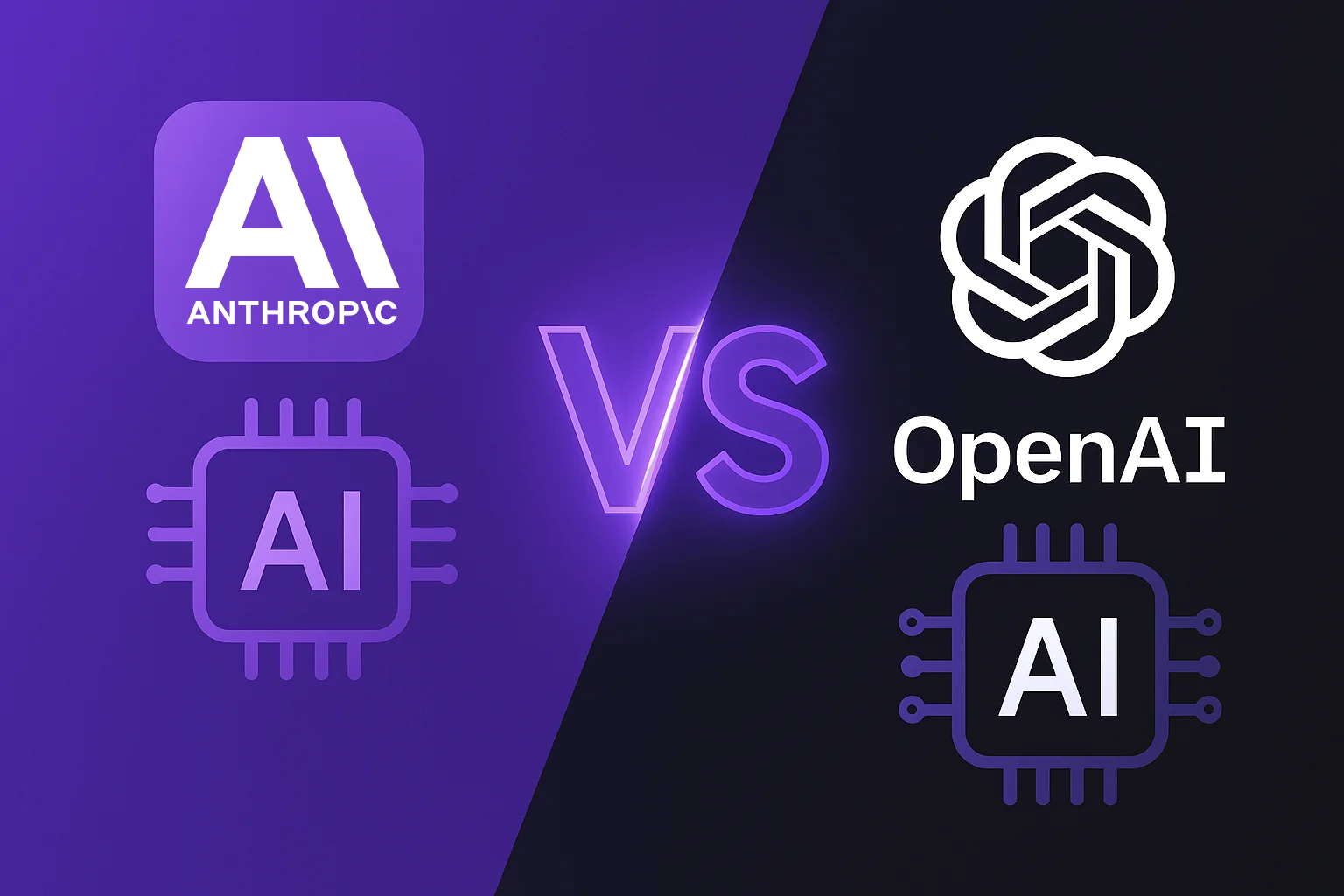
The world of artificial intelligence has evolved rapidly over recent years, with language models at the forefront of these advances. Among the leading companies competing for dominance are Anthropic and OpenAI, both recognized for their innovative approaches to building large-scale linguistic AI systems. Their models are shaping how individuals, businesses, and societies interact with technology, raising questions about safety, performance, and the future of communication.
As these two giants move forward, consumers, developers, and policymakers are paying close attention to their strengths and strategies. This article explores the key differences and similarities between Anthropic and OpenAI, highlighting what makes each company unique and how their language models may shape the next chapter of artificial intelligence.
Origins and philosophies
Anthropic was founded by former OpenAI employees who sought to prioritize safety and alignment in artificial intelligence. Its founding principles are based on responsible scaling and rigorous research aimed at making AI systems more interpretable and less likely to cause harm. Anthropic’s vision is shaped by concerns about the societal impact of advanced AI, advocating a cautious and transparent approach to development.
OpenAI, by contrast, began with the mission of ensuring that artificial general intelligence (AGI) benefits all of humanity. While also invested in safety, OpenAI’s philosophy emphasizes broad access and rapid innovation. Its initial commitment to open source has since evolved as concerns about misuse and competitiveness have intensified.
Both organizations agree on the transformative potential of AI, but differ in their core values. Where Anthropic adopts a more cautious, research-driven strategy, OpenAI pursues ambitious, mass-market deployments, creating a unique dynamic in the race to build the world’s most advanced language models.
Technological approaches
Anthropic’s primary model, Claude, is designed around the principles of constitutional AI, which aim to embed ethical guidelines directly into the training process. This approach relies heavily on careful prompt engineering, curated training data, and self-correction mechanisms. Anthropic invests substantial resources to ensure that its language models behave in a predictable and controllable manner.
OpenAI’s flagship product, ChatGPT, is built on the successful GPT (Generative Pretrained Transformer) architecture. OpenAI leverages reinforcement learning from human feedback (RLHF) and vast datasets to create a versatile and powerful conversational agent. The successive releases, such as GPT-3 and GPT-4, demonstrate a commitment to increasing model size and capability while addressing emerging risks.
Although both models rely on transformer architectures and massive datasets, Anthropic places greater emphasis on transparency and alignment, while OpenAI pushes the boundaries of scale and generality. This distinction affects their performance, risk profiles, and adaptability to different use cases.
Safety and ethics
One of Anthropic’s central claims is its commitment to safety-focused research. The company regularly publishes findings on interpretability, robustness against adversarial attacks, and the reduction of harmful behaviors. Anthropic actively collaborates with academic and industrial partners to develop best practices for safe AI deployment, aiming to set a benchmark in a largely unregulated field.
OpenAI also treats safety as a priority, investing in red-teaming teams, external audits, and responsible disclosure of results. Its alignment work, such as the development of safeguards against toxic content and misinformation, is ongoing. However, some critics argue that OpenAI’s commercialization efforts at times outpace its caution, raising concerns about the balance between innovation and security.
While both Anthropic and OpenAI publish research on ethical challenges, their divergence lies in execution. Anthropic’s model is conservative, slow to commercialize, and subject to extensive testing, whereas OpenAI favors accessibility and a wide range of experimentation. The resulting models reflect these philosophies, influencing user trust and adoption.
Commercialization and market impact
Anthropic has taken a methodical approach to deploying its language model, targeting enterprise customers and emphasizing robust and controllable solutions. Its partnerships focus on sectors where safety is critical, such as finance, healthcare, and customer support, positioning Claude as a reliable tool for sensitive applications.
OpenAI, for its part, has pursued a large-scale strategy through integrations with major platforms such as Microsoft Azure and consumer-facing tools. ChatGPT has achieved global recognition, serving millions of users and inspiring a new wave of AI-powered applications. OpenAI’s APIs are widely adopted in software, making its models ubiquitous in everyday digital interactions.
This divergence in commercialization strategies reflects each company’s underlying philosophy. Anthropic’s slower, trust-oriented approach builds credibility in regulated industries, while OpenAI’s rapid expansion has attracted a vast user base and fueled intense competition in the field of generative AI.
Community engagement and transparency
Anthropic prioritizes transparency with the research community, frequently publishing papers, sharing methodologies, and engaging in dialogue on AI risks and their mitigation. Its collaborative posture seeks to promote a culture of openness and accountability, encouraging critical scrutiny to improve its systems.
OpenAI was an early pioneer of open source but has reduced transparency around its latest models due to competitive pressures and risks of misuse. Nevertheless, OpenAI maintains an active blog, supports developer forums, and collaborates with academic institutions and civil society actors.
Community engagement is essential for both organizations, even though they approach it differently. Anthropic favors openness with a strong focus on safety, while OpenAI seeks to balance community contribution with commercial imperatives and the protection of proprietary information, reflecting broader trends in the AI industry.
The future of AI language models
As Anthropic and OpenAI continue to refine their technologies, the trajectory of AI language models remains uncertain yet full of promise. Future breakthroughs in alignment, efficiency, and interpretability will determine which approaches prevail in the coming years. Safety, fairness, and scalability will likely remain central priorities in both research and deployment.
The competitive dynamic between Anthropic and OpenAI drives innovation, pushing each to address weaknesses and strengthen advantages. Ongoing debates about responsible AI, regulatory frameworks, and the societal impact of language models will play a key role in shaping both companies and the industry as a whole.
Ultimately, the evolution of AI language models will be determined not only by technical prowess, but also by the choices made by stakeholders regarding safety, transparency, and ethics. The contrasting philosophies of Anthropic and OpenAI offer valuable lessons as the world adapts to an increasingly AI-mediated future.
The rivalry between Anthropic and OpenAI illustrates the critical choices facing artificial intelligence today. Their opposing approaches to safety, innovation, and commercialization highlight important trade-offs for the industry. Whether prioritizing slow and steady progress or rapid and widespread adoption, each path carries distinct challenges and advantages.
As end users, developers, and regulators observe this confrontation unfold, the decisions made today will have lasting consequences for technological advancement and societal well-being. Ultimately, the balance between caution and ambition will determine the role that AI language models play in transforming our world.