

Artificial intelligence has long been associated with the automation of repetitive and rules-based tasks, transforming industries by increasing efficiency and reducing manual labor. From assembly lines optimized by robots to automated customer service chatbots, AI's initial impact was largely defined by its ability to streamline operations and execute predefined processes at scale. This fundamental shift brought significant productivity gains and allowed human workers to reallocate their efforts to more complex challenges.
However, the landscape of AI capabilities has evolved dramatically, moving far beyond mere automation. Today, AI is emerging as a sophisticated partner, capable of engaging in complex reasoning, fostering creativity, enhancing strategic decision-making, and enabling entirely new forms of human-machine collaboration. This next frontier of AI integration promises not just incremental improvements but a fundamental redefinition of how work is done, how value is created, and how human potential is amplified.
The Evolution from Automation to Augmentation
The initial wave of AI adoption primarily focused on automating mundane and high-volume tasks that traditionally consumed significant human effort. This included everything from data entry and basic accounting to repetitive manufacturing processes. This automation effectively freed up human capital, allowing businesses to operate with unprecedented efficiency.
However, contemporary AI systems are designed to do more than just follow rules; they learn, adapt, and predict. This represents a significant leap from static automation to dynamic, AI-driven processes that can continuously optimize. AI is now not just executing but also thinking, analyzing, and self-improving, becoming an intelligent force that shapes modern enterprises.
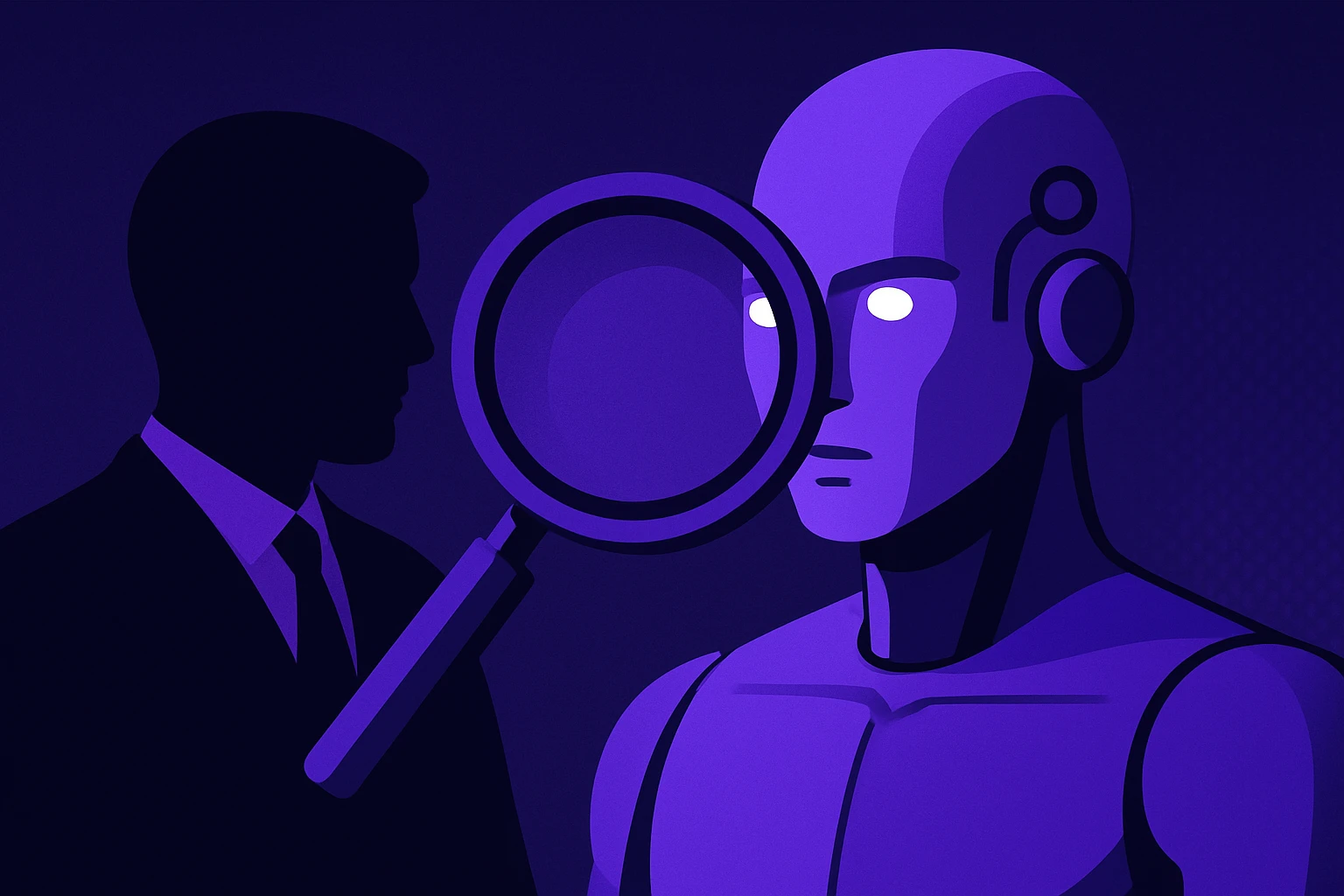
This shift signifies a transition from AI replacing simple human tasks to AI augmenting human capabilities. Instead of viewing AI as a competitor for jobs, the emerging paradigm sees AI as a powerful tool that expands human potential, enabling individuals to achieve more complex and strategic outcomes by offloading cognitive burdens and providing advanced analytical support.
AI as a Catalyst for Creativity and Innovation
Contrary to earlier perceptions that creativity was a uniquely human domain, AI is now actively participating in and accelerating creative processes. AI-driven innovation leverages machine learning, natural language processing, and predictive analytics to generate, refine, and implement novel ideas, acting as a thought partner for human creators.
For instance, in fields like music composition, AI algorithms can generate original pieces that complement human-composed melodies, while generative AI tools enable designers to explore dozens of variations on a concept in seconds. This partnership allows teams to overcome biases, discover unusual solutions, and process vast amounts of information that would overwhelm human capacity, significantly increasing ideation capacity and accelerating time-to-market for new products and services.
The integration of AI democratizes innovation, providing powerful tools that can transform ideas into workable products or processes with greater ease. It frees up human time and mental space, allowing individuals to focus on higher-level creative thinking and strategic development, leading to better choices and suggesting solutions humans might not have considered on their own.
Enhancing Complex Decision-Making
One of the most profound impacts of AI beyond automation lies in its ability to enhance and even automate complex decision-making processes. AI systems can analyze colossal datasets, identify intricate correlations, patterns, and trends that are imperceptible to human observation, and provide insights with enhanced accuracy and speed.
AI in decision-making ranges from decision support, where it offers predictive, diagnostic, or descriptive analytics to inform human choices, to decision augmentation, where it recommends multiple alternatives based on prescriptive analytics. In some highly structured environments, AI can even achieve full decision automation, consistently and rapidly making choices based on complex data inputs.
While AI excels at objective assessments and processing quantitative data, human intuition, contextual understanding, and subjective judgment remain crucial, especially in ethically sensitive or highly nuanced situations. The most effective approach involves leveraging AI to quickly review vast amounts of data and present clear, factual information, allowing human decision-makers to focus their mental energy on nuanced interpretations and final strategic choices.
The Rise of Human-AI Collaboration (Hybrid Intelligence)
The future of work is increasingly defined by the synergy between human and artificial intelligence, often referred to as hybrid intelligence. This collaboration moves beyond AI as a mere tool, positioning it as an active co-worker that learns alongside and amplifies human capabilities.
Hybrid intelligence combines AI’s speed, analytical rigor, and consistency with human insight, ethical reasoning, and emotional intelligence. Examples include AI co-pilots for coding, AI meeting assistants that summarize discussions and identify action items, and AI-powered research tools that quickly surface critical insights from massive datasets. This partnership is transforming professions from healthcare, where AI assists in diagnosis, to graphic design, where AI suggests variations on creative concepts.
For this collaboration to thrive, cultivating