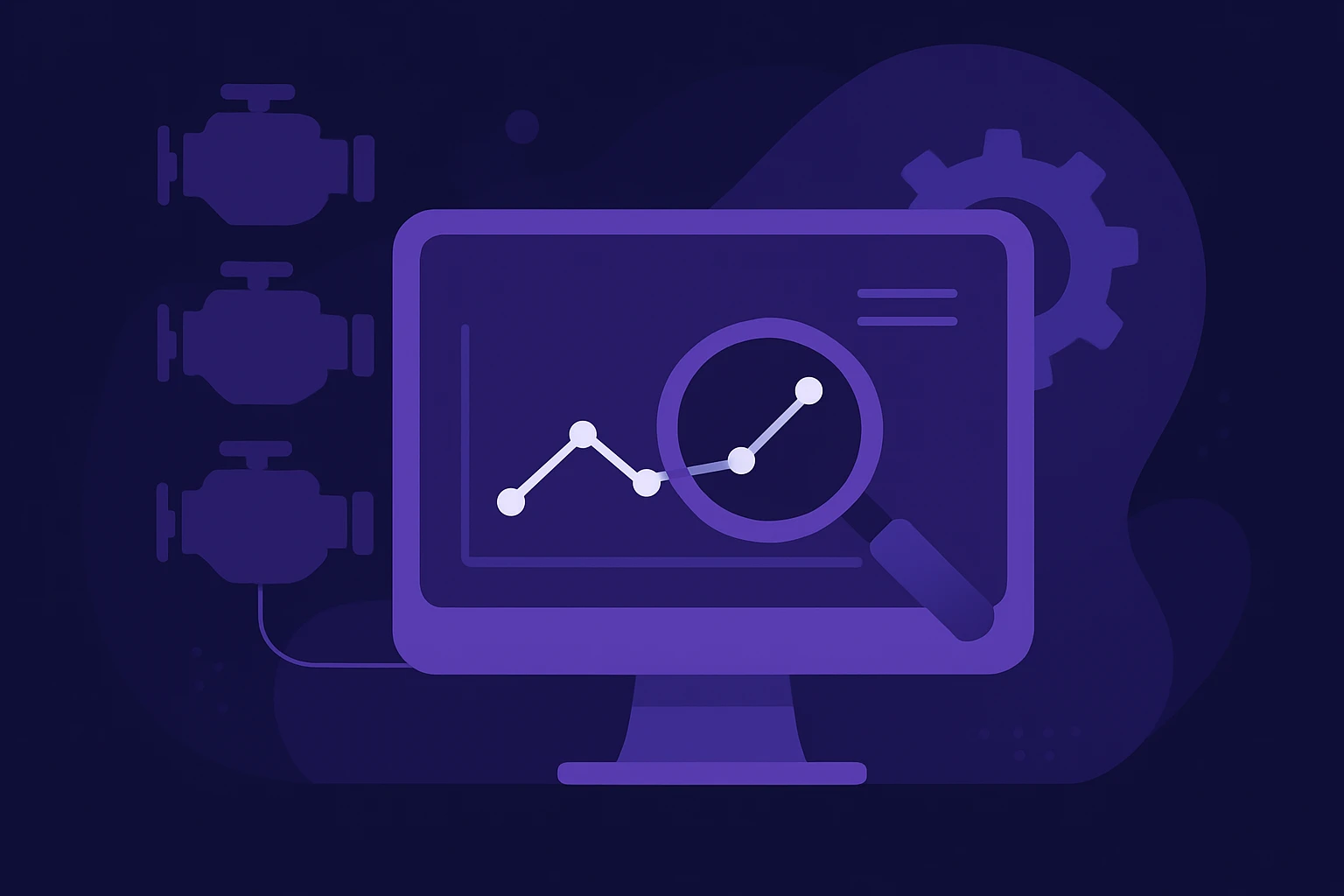


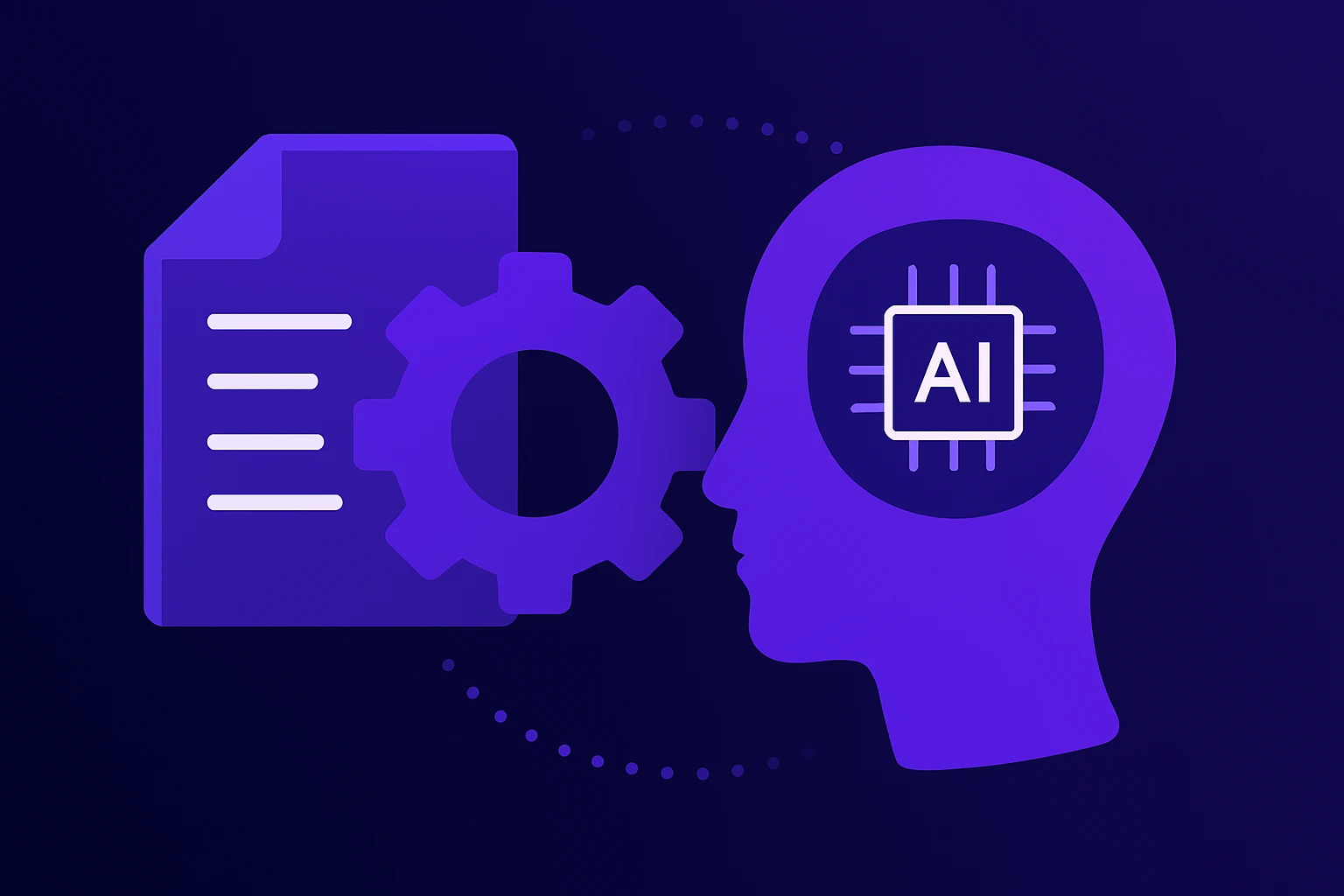
Content drift rarely arrives as a dramatic failure. More often, it appears gradually: terminology changes, source documents are updated, repositories are reorganized, and retrieval systems start returning context that is technically related but no longer fully correct. For teams running AI search, RAG pipelines, recommendation systems, or knowledge assistants, this makes automate content drift detection with AI a practical reliability requirement rather than a nice-to-have.
Recent guidance from cloud providers and observability platforms points in the same direction. Google Cloud recommends automated monitoring for feature drift, prediction drift, and performance degradation in production AI systems. AWS frames drift detection as essential to preserving accuracy and reliability over time, while newer observability approaches emphasize embedding drift and retrieval tracing for unstructured content. Together, these developments show that content drift can now be monitored continuously instead of discovered only after users complain.
Why content drift is now an operational problem
Traditional quality assurance assumes that if a model or content pipeline worked during testing, it will continue to work in production. That assumption breaks down when content changes after deployment. Knowledge bases evolve, APIs get deprecated, taxonomies shift, support documentation is rewritten, and archived pages disappear or move. In content-heavy AI systems, these changes alter the real inputs flowing into the model.
AWS’s Well-Architected Machine Learning Lens explicitly treats drift detection as part of reliability engineering. Its stated outcome is that teams can detect and mitigate data drift to preserve model accuracy and reliability over time. That framing matters because it changes drift monitoring from an optional analytics exercise into an operational control that should be documented, reviewed, and tied to intervention playbooks.
This is especially important for AI systems that depend on text, documents, or retrieval. AWS also notes that unstructured data such as text is harder to monitor than tabular inputs, which is why content drift often slips through standard dashboards. If your production system depends on articles, policies, release notes, or internal knowledge repositories, the data itself is changing in ways that basic row-level monitoring will not fully capture.
From data drift to content drift in production AI systems
One of the fastest ways to operationalize content drift is to borrow proven techniques from model monitoring. Google Cloud documents that Vertex AI Model Monitoring can automatically detect feature skew and drift for categorical and numerical input features. For content operations, this is useful when text or documents are transformed into production features such as topic labels, entity counts, sentiment signals, metadata fields, or retrieval scores.
Google Cloud’s AI and ML reliability guidance also recommends using model monitoring to detect performance degradation, data drift, and prediction drift. That recommendation is highly relevant when the content corpus changes after deployment. Even if the model itself has not changed, altered input distributions from new documents, edited pages, or shifted user queries can degrade downstream behavior.
BigQuery ML extends this pattern by supporting model monitoring for data drift and historical trend analysis, with visualization workflows through Vertex AI. That historical component is important because content drift is often gradual. A single snapshot may look acceptable, while trend data reveals a slow shift in document structure, metadata completeness, retrieval confidence, or prediction stability over weeks or months.
Why embeddings are central to unstructured content monitoring
For unstructured text, embeddings are one of the most practical signals for automation. Arize defines embedding drift as a way to track change in unstructured data, including changes in terminology and shifts in the context or meaning of words. That makes embeddings particularly useful for content repositories where semantic change matters more than simple keyword frequency.
Automated embedding drift monitors are valuable because they can detect when meaning changes before obvious business metrics collapse. Arize states that teams can automate drift tracking and receive alerts when embeddings have drifted. In practice, this means a documentation team could be warned when a product category starts being described with new language, when support content adopts a different vocabulary, or when policy text shifts semantically without changing many top-line keywords.
Observability platforms are increasingly treating this as a first-class production problem. Arize platform materials describe automated monitors for drift, data quality, and performance, including monitoring embeddings of unstructured data to proactively identify drift. Arize also notes that embeddings are not static because real-world concepts keep changing, which is exactly why content teams need ongoing semantic monitoring instead of one-time validation.
Retrieval drift happens even when answers still exist
Content drift is not only about whether facts are still correct. In retrieval systems, the bigger issue can be whether relevant information remains discoverable in the same way. A March 2026 paper on temporal drift in retrieval benchmarks found that technical corpora change through API deprecations and code reorganizations, and that relevant documents can migrate across repositories over time. That means the answer may still exist somewhere, while retrieval quality still degrades.
The same study found strong ranking correlation across corpus snapshots, with Kendall tau reaching as high as 0.978 at Recall@50. This is a useful reminder that drift does not always look like total retrieval collapse. A system may preserve some ranking stability while the corpus structure, link paths, and location of authoritative material change underneath it. Automated monitoring therefore needs to detect structural content change separately from outright failure.
Embedding-based observability can help surface this directly in vector search. Arize Phoenix documentation describes inspecting query distance to knowledge-base vectors and viewing embedding drift over time. If Euclidean distance rises against the baseline set, teams gain evidence that the live query or document space is diverging, even before users begin reporting that retrieval feels “off.”
Context drift is a major risk for RAG and AI agents
RAG systems and AI agents face a more complex problem than simple document freshness. A 2026 guide on context drift describes how staleness compounds across the pipeline until an AI system retrieves context that no longer means what it once did. This is why monitoring should include metadata freshness, schema history, glossary recency, and lineage rather than only checking whether a page still exists.
The same analysis cites Forrester’s 2025 characterization of agent drift as the silent killer of AI-accelerated development. That wording resonates because many failures in agentic systems are not caused by a broken model. Instead, they emerge from slowly changing context, outdated tools, revised definitions, or forgotten assumptions spread across many connected components.
Recent research on multi-turn systems reinforces this point. An October 2025 paper formalized context drift as turn-wise divergence from a goal-consistent reference model and argued that drift is temporal and poorly captured by static evaluation metrics. In other words, one-off QA checks can miss the gradual movement of an AI system away from user intent, which is why continuous drift detection is essential.
How to automate content drift detection with AI in practice
A practical architecture starts with event-driven monitoring. Google Cloud has described an event-triggered drift pattern in which drift analysis runs whenever an updated dataset becomes available. Applied to content operations, each content release, document sync, taxonomy update, or repository import can trigger an automated analysis job comparing the new state against a baseline.
That analysis should combine structured and unstructured signals. Structured monitoring can track changes in publication dates, source coverage, authoring patterns, entity distributions, taxonomy usage, and prediction outputs. Unstructured monitoring can track embedding drift, retrieval distance, summarization consistency, and semantic changes in key sections of the corpus. Arize also highlights multivariate drift, which is useful because content changes often emerge across combinations of fields rather than a single metric.
To make the workflow actionable, teams should define thresholds and responses for different drift classes. A mild freshness drift may trigger a review ticket. A retrieval drift spike may trigger re-indexing or query-set evaluation. A major semantic drift event may trigger human approval, benchmark reruns, or temporary suppression of affected content in production systems. The goal is not just to observe drift, but to automate the first layer of response.
Why output monitoring matters alongside content monitoring
Content drift should not be separated from output drift. A November 2025 arXiv study on financial workflows found that structured tasks remained stable while RAG tasks showed drift of 25% to 75%. This is a strong warning for retrieval-backed applications: even if your model endpoint is stable, changing context can significantly alter generated answers.
The same study also found that bigger models were not automatically more stable. Smaller models such as Granite-3-8B and Qwen2.5-7B reached 100% output consistency at temperature 0.0 in that setup, while GPT-OSS-120B showed only 12.5% consistency. For content teams, the lesson is simple: do not assume model size guarantees stability. Measure behavior empirically in your own environment.
This is one reason industry commentary now describes LLM output drift monitoring as an emerging software category. A 2026 market roundup highlighted cases where answer consistency dropped from 100% to 12.5% without being flagged. If content changes can alter retrieval and retrieval can alter outputs, then effective monitoring must connect corpus drift, retrieval drift, and answer drift in one operating model.
Building a response loop, not just an alert system
Drift detection becomes far more valuable when it drives corrective action. The 2025 multi-turn drift paper found that system behavior often moved toward stable, noise-limited equilibria rather than spiraling into runaway degradation, and that simple reminder interventions reliably reduced divergence. That suggests many drift issues can be mitigated with lightweight actions once detected early enough.
In a content environment, those actions might include refreshing retrieval indexes, regenerating embeddings, re-running chunking pipelines, updating glossary mappings, revising prompt instructions, or attaching freshness filters to retrieval. LlamaIndex documentation also emphasizes observability for retrieval and tool execution tracing, which helps teams diagnose whether the problem came from the corpus, the retriever, the orchestration layer, or the model response.
AWS guidance also advises teams to document drift patterns and interventions. This is a crucial discipline. Over time, organizations should build a playbook of recurring drift signatures, likely causes, and approved remediation steps. That turns content drift management from reactive troubleshooting into a repeatable production capability.
Strategic value for SEO, answer engines, and knowledge operations
Automated content drift detection is not only a model-reliability practice. It also has strategic value for search visibility and answer-engine performance. Recent industry analysis on semantic drift tracking argues that AI systems increasingly prioritize content with recent publication dates and regular updates, while outdated material is deprioritized in citation decisions. That means freshness signals can directly influence discoverability.
For teams managing large knowledge bases, product documentation hubs, or editorial libraries, this creates a new operational need. It is no longer enough to publish authoritative content once and assume the ecosystem will keep treating it as current. Continuous detection of stale, semantically outdated, or retrieval-degraded content helps protect both user trust and AI-mediated visibility.
Seen this way, content drift detection becomes a bridge between MLOps, content operations, and knowledge management. The same monitoring system can support reliability, reduce hallucination risk, improve retrieval quality, and identify high-priority content updates before performance metrics visibly drop.
As AI systems rely more heavily on evolving corpora, automating content drift detection will become standard practice. Official guidance from Google Cloud and AWS, combined with embedding-centric observability approaches from vendors like Arize, shows that the tooling already exists to monitor feature drift, prediction drift, embedding drift, retrieval change, and historical trends in a systematic way.
The most effective teams will treat drift as a continuous operational signal, not a periodic audit. By combining event-triggered analysis, semantic monitoring, retrieval observability, and documented interventions, organizations can detect when content changes break retrieval, distort context, or degrade outputs long before those problems become visible to users.