

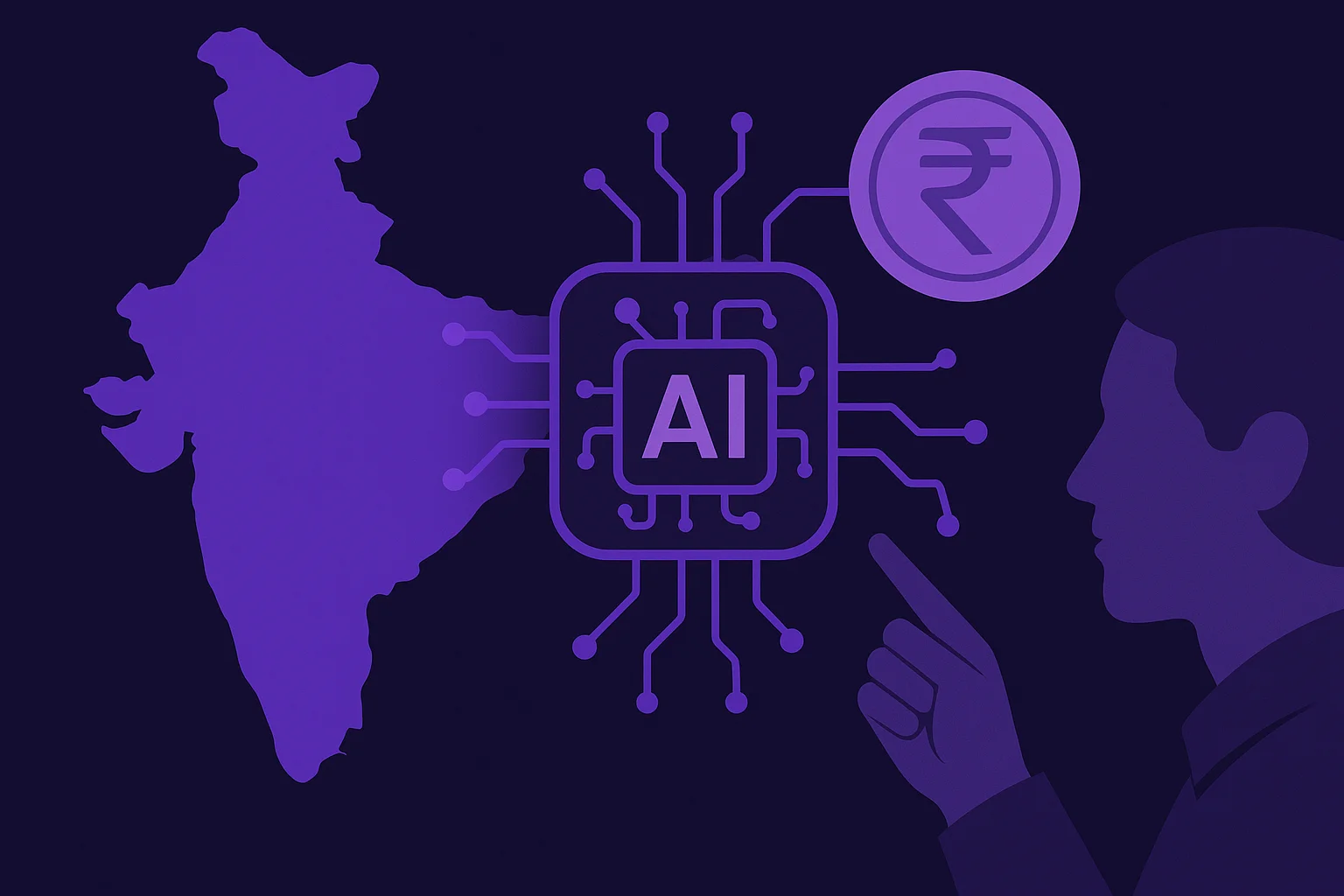
In a decisive move that could reshape the global landscape of artificial intelligence regulation, the Indian government has unveiled a groundbreaking proposal to mandate royalty payments for content used to train AI models. This initiative, speared by the Department for Promotion of Industry and Internal Trade (DPIIT), aims to address the growing disparity between the immense value generated by AI companies and the creators whose work fuels these systems. By rejecting the passive "fair use" arguments often cited by tech giants, India is positioning itself as a pioneer in enforcing strict copyright compliance in the digital age.
The proposed framework marks a significant departure from current global norms, favoring a centralized licensing regime over voluntary agreements or opt-out mechanisms. As generative AI continues to scrape vast amounts of data from the internet to build Large Language Models (LLMs), Indian policymakers are prioritizing the economic rights of news publishers, authors, and artists. This strategy not only seeks to secure financial compensation for domestic creators but also challenges the operational models of major international tech firms like OpenAI and Google within one of their largest growth markets.
The 'One Nation, One Licence' Framework
At the heart of India's new proposal is the concept of a mandatory blanket license, dubbed the "One Nation, One Licence, One Payment" model. Under this regime, AI developers would be granted automatic access to publicly available Indian content for training purposes, eliminating the need to negotiate individual deals with millions of creators. However, this access comes with a non-negotiable price tag: a statutory royalty payment that must be funneled into a central collection . This approach aims to balance the technological need for massive datasets with the legal obligation to compensate copyright holders.
To facilitate this, the government has proposed the establishment of a new entity, tentatively called the Copyright Royalties Collective for AI Training (CRCAT). This would be responsible for collecting royalties from AI companies and distributing them to the rightful owners of the content, ranging from large media houses to independent musicians and writers. The centralization of this process is designed to reduce the high transaction costs and legal complexities that would arise if every creator tried to sue AI companies individually.
Critically, the proposal suggests that these royalties could be linked to the global revenue of the AI companies, rather than just their earnings in India. This provision underscores the government's intent to capture a fair share of the value generated by these global platforms, arguing that Indian data contributes significantly to the overall intelligence and capability of models sold worldwide. By making the license mandatory, the state effectively removes the ability of AI firms to bypass payment while ensuring they cannot be blocked from accessing necessary data.
Rejection of Fair Use and Opt-Out Models
India's approach stands in stark contrast to the regulatory frameworks currently being debated or implemented in other major jurisdictions. In the United States, the legal battleground has largely focused on the doctrine of "fair use," with AI companies arguing that training models on copyrighted data is transformative and therefore exempt from licensing. India's proposal explicitly rejects this defense for commercial AI, establishing that the systematic exploitation of creative works for model training requires compensation.
Similarly, the Indian proposal dismisses the "opt-out" model favored by the European Union, where creators must actively flag their content if they do not want it used. Indian policymakers argue that an opt-out system places an unfair burden on creators to police the internet and protect their work against automated scrapers. Instead, the burden is shifted to the AI developers to pay for everything they use, ensuring that silence from a creator does not equate to free permission.
This rejection of Western regulatory styles highlights India's determination to forge its own path in digital governance. By dismissing the ambiguity of fair use and the impracticality of opt-outs, the government is betting on a "hybrid" model that guarantees access for innovation but mandates payment for equity. This effectively treats data as a raw material that must be paid for, much like electricity or hardware, rather than a free public resource.
Economic Implications for Media and Tech Giants
The financial implications of this proposal are profound for both the Indian media ecosystem and global technology giants. For news publishers and creative industries in India, who have long complained about their content being harvested without remuneration, this regulation offers a potential lifeline. It promises a new, steady stream of revenue that recognizes the value of high-quality, fact-checked journalism and original creative works in the age of misinformation and synthetic media.
For tech giants, the proposal introduces a significant new operational cost. Companies like Google, Microsoft, and OpenAI would face a statutory obligation to share a portion of their top-line revenue if they wish to continue operating legally in the Indian market. Given that India represents a massive user base and a critical source of diverse training data, withdrawing from the market is unlikely to be a viable option. Consequently, these firms may be forced to rethink their global compliance strategies.
Furthermore, the move could set a precedent for other emerging economies to demand similar revenue-sharing models. If India successfully implements a global revenue-linked royalty, it challenges the current Silicon Valley model of "move fast and break things," forcing a transition to a more regulated, partnership-based approach with content industries. This could squeeze profit margins for AI companies but ultimately lead to a more sustainable ecosystem where human creativity is financially supported.
Challenges in Implementation and Enforcement
Despite the clarity of the proposal's intent, the road to implementation is fraught with technical and logistical challenges. One of the primary hurdles will be the accurate tracking and attribution of data usage. Determining exactly which pieces of content were used to train a specific model, and to what extent they contributed to its output, is a technically complex task that the AI industry itself struggles to define transparently. The proposed collection will need sophisticated auditing tools to verify claims and distribute royalties fairly.
There is also the risk of industry pushback and potential negative effects on domestic innovation. Indian startups building their own LLMs might find the mandatory royalty payments to be a barrier to entry, potentially stifling the growth of a homegrown AI sector. Critics argue that while the regulation targets global giants, it must be carefully calibrated to avoid crushing smaller local players who lack the deep pockets of their American counterparts.
Finally, the definition of "global revenue" as the basis for royalties is likely to face fierce legal challenges. Tech companies may argue that it is jurisdictional overreach to tax their global earnings for the use of Indian data. The government will need to craft robust legal frameworks to withstand international arbitration and ensure that the mechanism for calculating and collecting these fees is transparent, defensible, and enforceable without causing a trade war.
The proposal to institute mandatory royalties for AI-trained content represents a bold assertion of digital sovereignty by India. It seeks to correct the power imbalance between data-hungry algorithms and the human creators who feed them, offering a novel solution to a global problem. While the technical and legal hurdles are significant, the initiative signals that the era of unfettered, free access to the world's knowledge for commercial gain may be coming to an end.
As the consultation process moves forward, the world will be watching closely to see if India can successfully operationalize this "One Nation, One Licence" model. If successful, it could serve as a blueprint for other nations, fundamentally altering the economics of artificial intelligence and ensuring that the future of technology is built on a foundation of fair compensation for human creativity.