

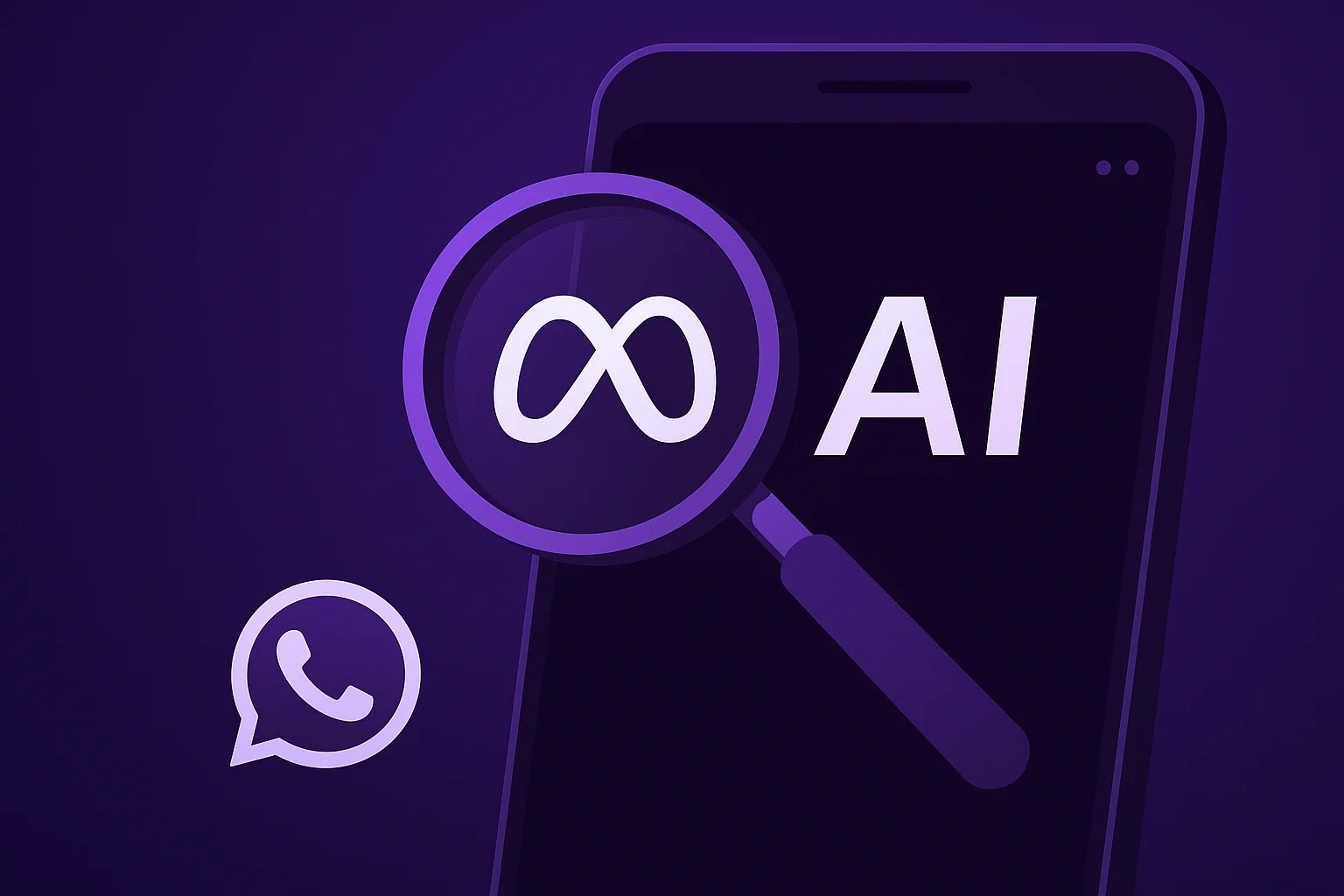
The European Commission has opened a high-stakes antitrust probe into Meta’s decision to favor its in‑house “Meta AI” assistant over rival chatbots on WhatsApp. The move thrusts one of the world’s most popular messaging apps into the center of a battle over the future of AI competition and platform power in Europe. At issue is whether Meta is unfairly using WhatsApp’s reach to crowd out competitors in fast‑growing AI services.
At the same time, Italy’s competition authority is running its own national investigation, creating a rare split in enforcement across the EU and signaling just how politically sensitive AI integration on messaging platforms has become. With billions of messages and millions of European businesses relying on WhatsApp, any change to who can offer AI services inside the app could reshape the market for chatbots and virtual assistants.
What Triggered the EU Probe into Meta AI on WhatsApp?
On 4 December 2025, the European Commission announced a formal antitrust investigation into Meta’s new policy governing AI providers’ access to the WhatsApp Business Solution. The policy, introduced in October 2025, effectively bans third‑party AI chatbots from using WhatsApp when AI is their primary service, while allowing Meta’s own Meta AI to remain integrated. Regulators are asking whether this is a textbook case of a dominant platform favoring its own product.
The investigation covers the entire European Economic Area (EEA), with one major exception: Italy, which is pursuing its own probe. EU officials say they are particularly concerned that Meta’s rules could “prevent third‑party AI providers from offering their services through WhatsApp in the EEA,” potentially foreclosing rivals from a key distribution channel. The case is being treated as a priority, though there is no formal deadline for completion.
If the Commission ultimately concludes that Meta has abused a dominant position under Article 102 of the Treaty on the Functioning of the European Union (TFEU), the company could face fines of up to 10% of its global annual turnover. Based on Meta’s reported 2024 worldwide revenue of around $164.5 billion, that theoretical maximum would amount to more than $16 billion, on top of any behavioral remedies the EU might impose.
How Meta’s New WhatsApp AI Policy Works
Meta’s policy change is centered on the WhatsApp Business Solution, an API and suite of tools that allow companies to communicate with customers over WhatsApp at scale. From 15 October 2025, new AI providers whose core business is AI chatbots have been blocked from integrating via this channel. From 15 January 2026, existing AI chatbot providers will also be cut off, triggering a forced exit of several major players.
Under the new rules, businesses can still use AI on WhatsApp for what Meta calls “ancillary” functions, such as automating customer service, handling basic FAQs, or managing workflows, so long as AI is not the core product they are selling. In practice, this means that a retailer using AI to triage customer questions might be allowed, while a startup whose main offering is a general‑purpose AI assistant delivered over WhatsApp would not.
Critically, the policy does not apply to Meta AI itself, which remains natively embedded for consumers inside WhatsApp’s interface. In the eyes of regulators, this asymmetry, banning independent AI chatbots while keeping Meta’s own assistant in a privileged position, raises red flags about self‑preferencing and foreclosure of rivals. For users and businesses that have grown accustomed to third‑party AI bots on WhatsApp, the change amounts to a major shift in what the platform will allow.
Who Is Being Pushed Out of WhatsApp, and Why It Matters
The fallout from Meta’s policy is being felt most acutely by rival AI providers that have built large user bases on WhatsApp. Reports indicate that OpenAI’s ChatGPT, which had reportedly attracted more than 50 million WhatsApp users, is preparing to cease operations on the platform a of the 15 January 2026 cut‑off. Microsoft’s Copilot is taking similar steps, effectively abandoning WhatsApp as a distribution channel.
Other AI tools, such as search‑oriented or specialized chatbots (for example, services like Perplexity or Poke), face the same structural barrier: if their primary business is to offer AI conversation or assistance, they can no longer rely on WhatsApp Business Solution to reach customers in most of Europe. In a messaging ecosystem where network effects are strong and users tend to stick with one or two dominant apps, losing access to WhatsApp can significantly reduce an AI startup’s visibility and growth potential.
With major competitors pulling out, Meta AI is on track to become the dominant or even sole general‑purpose chatbot accessible directly within WhatsApp across the EEA. That prospect is central to the Commission’s concern about “irreparable harm” to competition, if rivals lose contact with WhatsApp’s massive user base now, regulators fear they may never be able to regain a foothold, even if policies are later reversed.
Regulators’ Concerns: Foreclosure and “Irreparable Harm”
European regulators are framing the case as a test of whether a dominant digital platform can use its control over a critical interface, here, WhatsApp, to tilt the AI playing field in favor of its own assistant. The Commission suspects that by blocking AI‑first providers from the WhatsApp Business Solution, Meta might be foreclosing competition in adjacent markets for AI chatbots and virtual assistants, leveraging its power in messaging to gain an edge in AI.
EU Executive Vice‑President Teresa Ribera has emphasized that booming AI markets require “vigilance” to ensure that “dominant digital incumbents” do not crowd out innovative newcomers. In particular, she warned that if Meta’s policy leads to rivals being shut out of WhatsApp now, the resulting damage to competition could be difficult, or impossible, to reverse later. That possibility of “irreparable harm” is one reason both Brussels and national authorities are moving quickly.
The Italian competition authority (AGCM) has voiced similar concerns, arguing that Meta’s new WhatsApp Business Solution Terms risk excluding rival AI developments from more than 37 million WhatsApp users in Italy alone. By exploiting consumer inertia and the stickiness of messaging apps, regulators say, Meta could slow or redirect the technical development of AI services in a way that ultimately hurts innovation, choice, and quality for users.
Meta’s Defense: Technical Limits and “Ample Alternatives”
Meta, for its part, has rejected the antitrust concerns as “baseless.” WhatsApp representatives argue that the Business API “was never designed to be used for AI chatbots” at massive scale, and that recent surges in AI usage have strained the underlying systems. From this perspective, limiting AI‑first providers is framed less as a power grab and more as a necessary technical safeguard to maintain reliability and performance for business messaging.
The company also insists that competition in AI services remains robust because users and businesses can easily access rival tools outside of WhatsApp. Meta points to app stores, search engines, web browsers, email, operating system integrations, and dedicated mobile apps as alternative channels where ChatGPT, Copilot, and others can still thrive. WhatsApp, they contend, is just one of many possible gateways to AI, not an essential facility.
Regulators, however, seem unconvinced that these theoretical alternatives fully compensate for losing access to WhatsApp’s entrenched user base. The Commission is likely to examine not only whether alternative channels exist in principle, but also how practical and effective they are in reaching the same audiences, given users’ habits, switching costs, and the convenience of interacting with AI tools directly inside their primary messaging app.
Italy’s Parallel Probe: Consent and Exclusionary Effects
Italy’s AGCM was actually a of Brussels in scrutinizing Meta AI on WhatsApp. On 22 July 2025, it opened an investigation into whether the integration of Meta AI into WhatsApp, rolled out from March 2025, constituted an abuse of dominance. A key concern was that WhatsApp users were effectively having Meta AI “imposed” on them via pre‑installation, without clear and informed consent, potentially limiting their ability to choose alternative AI tools.
On 25 and 26 November 2025, the Italian watchdog expanded its case to cover the new WhatsApp Business Solution Terms that exclude AI chatbot providers, aligning its focus more closely with the EU Commission’s concerns about exclusionary effects. At the same time, AGCM launched interim (precautionary) proceedings, signaling that it might adopt temporary measures if it believes immediate action is needed to prevent serious harm to competition while the investigation continues.
Unlike the Commission’s open‑ended timetable, the Italian procedure has a clear deadline: AGCM must conclude its investigation by 31 December 2026. Italy’s emphasis on both market foreclosure and user consent highlights how AI integration on messaging platforms touches multiple legal fronts, competition law, consumer protection, and data privacy, often simultaneously.
EU vs. Italy: A Split Map of Enforcement
The European Commission’s new probe explicitly excludes Italy, where the AGCM is already active, creating a geographic split in enforcement. In practice, this means that the Commission will assess Meta’s conduct across the rest of the EEA, while Italy handles similar questions within its own borders. Both authorities are relying primarily on Article 102 TFEU theories of abuse of dominance, and their analyses may overlap significantly.
From Meta’s standpoint, the split complicates compliance strategy. The company faces the possibility of parallel findings and remedies, potentially different, though likely coordinated, across neighboring jurisdictions. It also raises the prospect of divergent interpretations of what is acceptable conduct for a dominant messaging platform integrating AI services, even under a shared EU legal framework.
For other digital platforms and AI providers, these dual proceedings are a signal that European regulators are willing to pursue complex, multi‑jurisdictional actions when they view a new technology trend, such as embedded AI assistants, as particularly sensitive. The WhatsApp, Meta AI saga thus becomes an important test case for how enforcement powers will be exercised across EU institutions and national authorities in the AI era.
Legal Foundations: Article 102 TFEU, Not the DMA
Notably, both the EU Commission and the Italian AGCM have chosen to anchor their probes in classic competition law, specifically Article 102 TFEU, rather than leaning primarily on the newer Digital Markets Act (DMA). Article 102 prohibits firms that hold a dominant position from abusing that power in ways that restrict competition, such as by foreclosing rivals or limiting technical development to the detriment of consumers.
In this case, regulators are examining whether Meta is using its dominance in messaging (via WhatsApp) to distort neighboring markets for AI chatbots and virtual assistants. The alleged abuses include favoring its own Meta AI service while cutting off competing providers, and potentially locking users into Meta’s ecosystem through pre‑installation and default settings. If proven, such conduct could be seen as self‑preferencing and exclusionary behavior prohibited under Article 102.
The DMA is still highly relevant in the background, however. WhatsApp is rolling out interoperability with third‑party messaging apps in Europe to comply with DMA obligations, allowing external messengers to exchange end‑to‑end encrypted messages with WhatsApp users. But this interoperability does not currently extend to AI chatbot access, illustrating a key point: even as the DMA opens up some aspects of the messaging ecosystem, traditional antitrust law remains the main tool for tackling alleged AI‑related self‑preferencing.
Privacy and Data Use: The Other Regulatory Front
Alongside competition concerns, Meta AI on WhatsApp has attracted scrutiny from privacy regulators. When Meta AI was rolled out in Europe in March 2025, the Irish Data Protection Commission (DPC), Meta’s lead privacy regulator in the EU, said it still had “open questions” about how the assistant would use and process personal data. In particular, there were concerns about whether the training of large language models on user data complied with the General Data Protection Regulation (GDPR).
The DPC has indicated that non‑compliance with GDPR could result in significant fines, adding another layer of risk for Meta on top of potential antitrust penalties. The regulator is coordinating with other European data protection authorities, reflecting the cross‑border nature of WhatsApp’s user base and the sensitivity of AI systems that are deeply integrated into widely used communication platforms.
This convergence of antitrust and privacy investigations underscores how AI services cannot be evaluated in isolation. When an AI assistant is embedded inside a dominant messaging app, questions about market power, user choice, and technical design become inseparable from questions about data collection, transparency, and consent. For Meta, the challenge is to satisfy multiple regulatory regimes, competition, privacy, and sector‑specific rules, at the same time.
As Brussels and Rome intensify their probes into Meta AI on WhatsApp, the stakes reach far beyond one company or one app. The outcome will influence how dominant platforms can integrate AI into their services, what opportunities remain for independent AI providers to reach users, and how robust Europe’s competition and privacy frameworks prove to be in the age of large language models. For businesses that rely on WhatsApp and for users who have adopted third‑party chatbots, the coming months may bring significant changes to the tools they can access inside their everyday messaging environment.
Regardless of how the investigations conclude, the message from European regulators is clear: embedding AI assistants into core digital infrastructure like messaging apps is not a purely technical or product decision; it is a matter of public interest that will be closely scrutinized. For AI startups, incumbents, and policymakers alike, the Meta AI case is a preview of the regulatory battles that will shape the next phase of AI deployment across digital platforms.