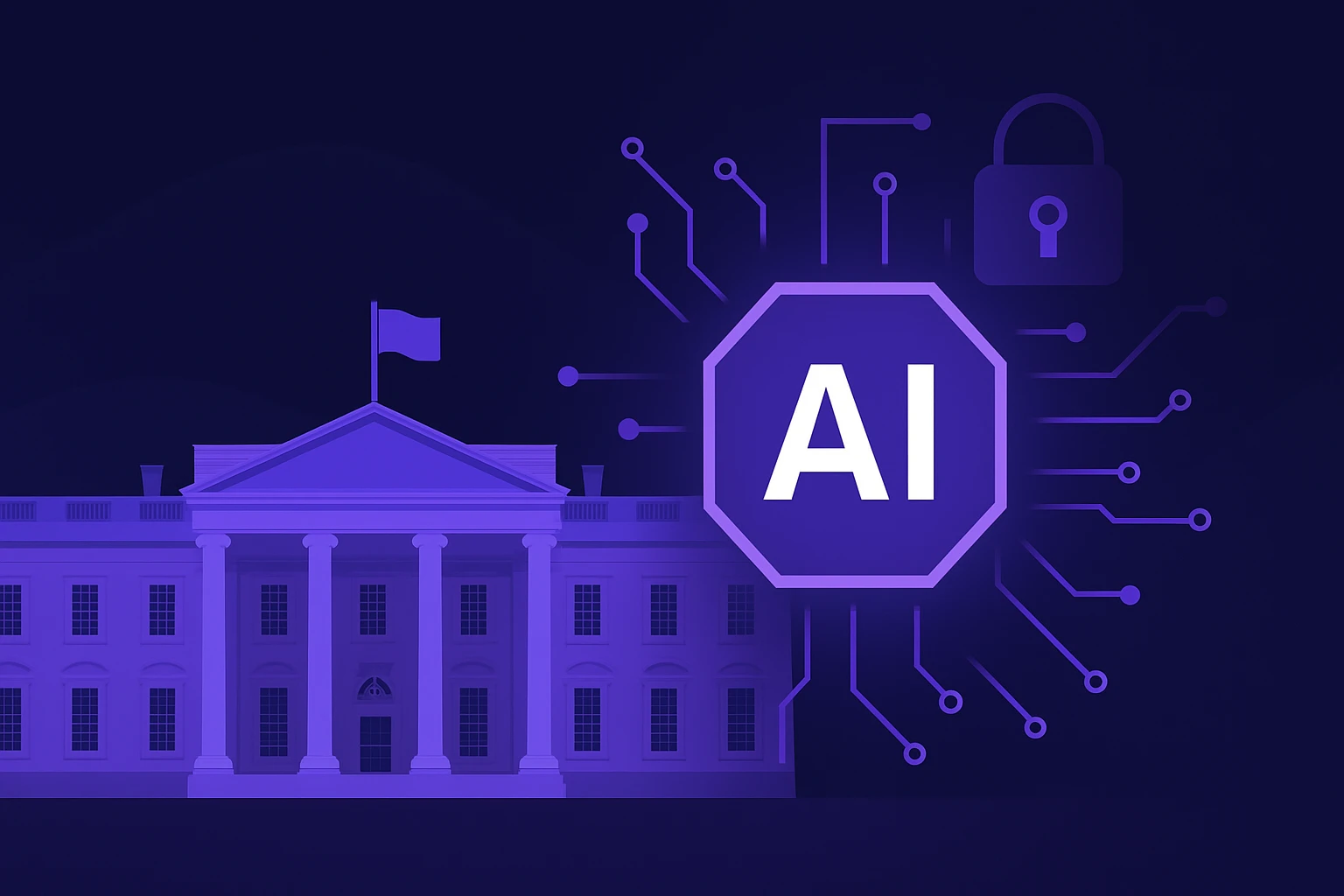
The White House’s decision to keep its frontier AI review framework private has opened a new chapter in the debate over how governments should oversee powerful artificial intelligence systems. Recent reporting indicates that the administration has reviewed an internal evaluation approach with major technology firms including Meta, Nvidia, Microsoft, OpenAI, Anthropic, and smaller companies, yet it does not plan to publish the framework for the broader public. That choice places one of the most important emerging policy tools in AI governance largely behind closed doors.
At the center of the issue is a tension between national security and democratic transparency. The administration argues that advanced AI models, especially those with significant cyber capabilities, require careful handling and close collaboration with private developers. Critics, however, contend that a secretive process could shape the future of frontier AI without meaningful public scrutiny, even as the government insists that the framework is voluntary rather than a licensing system.
A private framework for a public technology
Reuters-reported coverage says the White House has no plans to publicly release the AI model evaluation framework it has been discussing with major developers. That means the standards, triggers, and practical expectations guiding pre-release engagement remain unknown to the public, even though the technology involved could affect businesses, governments, and everyday users across the economy.
The private nature of the framework is particularly striking because frontier AI is not a niche issue. These advanced systems increasingly sit at the heart of cybersecurity, defense planning, software development, and information ecosystems. When the government develops a review structure for such tools without sharing its details, it raises basic questions about who gets to understand the rules and who does not.
At the same time, the administration appears to see confidentiality as a feature, not a flaw. By keeping the framework private, officials may believe they can reduce the risk of exposing sensitive assessment methods or revealing exactly how advanced models are judged for dangerous capabilities. In that sense, secrecy is being presented as a practical safeguard in an area where misuse could have serious consequences.
Why the policy focuses on frontier AI
The current debate is not about all artificial intelligence systems. The White House approach, as described in recent reporting and in the June 2026 executive order, is centered on frontier AI: the most advanced models, especially those with cyber capabilities or broader national-security implications. That narrower focus matters because it distinguishes cutting-edge systems from ordinary consumer tools and routine enterprise software.
The administration has also used frontier AI language in wider national-security policy. A June 2026 fact sheet emphasized that key guidance should be reviewed annually to keep pace with the rapidly advancing AI frontier. This reflects a view inside government that the highest-end models are evolving too quickly to be managed with static rules or slow-moving oversight systems.
By narrowing the scope to frontier AI, the White House can argue that it is not trying to regulate every chatbot or machine-learning application. Instead, it is aiming at a smaller class of systems that may have outsized strategic significance. Still, because there is no public framework, it remains unclear how the government defines the boundary between a normal advanced model and one that qualifies for special review.
Voluntary in law, influential in practice
A key point in the June 2026 executive order is that there will be no mandatory governmental licensing, preclearance, or permitting requirement for new AI models, including frontier models. The White House has framed the process as voluntary collaboration rather than a formal approval regime. Officials have emphasized that private companies are not being forced to obtain permission before launching a model.
That public position has been reinforced by statements from administration officials. A White House official told CNBC, as cited in Reuters-linked coverage, that the government does not provide approvals for private AI launches and that the engagements are voluntary. The wording is important because it seeks to distance the policy from the image of a licensing office controlling access to innovation.
Yet critics argue that labels do not always determine reality. If leading developers believe nonparticipation could damage their relationship with national-security agencies or invite future regulatory pressure, then a voluntary process could become mandatory in practice. This concern is amplified by the fact that the details are unpublished, making it difficult to assess how much discretion companies really have.
The reported 30-day review window
Reporting on the planned framework says developers of frontier AI models could be expected to notify the U.S. government a of major releases, with companies reportedly given up to 30 days before release to submit models for review. That timeline suggests a structured pre-release engagement process, even if it is not officially described as preclearance.
A 30-day window could have meaningful practical effects. For companies racing to deploy competitive models, a month-long review period may influence launch strategies, investor expectations, and product roadmaps. It could also create pressure to involve government earlier in development cycles, especially for firms building systems that might be interpreted as frontier models.
From a policy standpoint, supporters might say this lead time is reasonable given the stakes. If a model has advanced cyber capabilities, a short but deliberate review period could help identify high-risk traits before public deployment. Detractors, however, may see the same window as evidence that the government is establishing a shadow approval process without openly calling it one.
National security agencies are driving the process
The White House’s approach is being implemented through security agencies rather than a public civilian review board. The Treasury Department, the NSA, and DHS through CISA were tasked with building the process, with consultation from White House and NIST officials. That institutional design underscores how strongly the administration views frontier AI through a national-security lens.
The June 2026 executive order also directs national-security agencies to develop and maintain a classified benchmarking process. This process is intended to assess the advanced cyber capabilities of AI models and determine when a model qualifies as a covered frontier model. Classification, by definition, limits outside visibility, but it also aligns with the government’s concern that detailed benchmarks could be sensitive in themselves.
Because security agencies are at the center, the resulting framework is likely to prioritize threat assessment, resilience, and adversary misuse over broader social concerns such as bias, labor disruption, or consumer protection. That does not mean those issues are unimportant, but it does mean the current White House model-review architecture is being built primarily to answer security questions first.
Collaboration with industry as official policy
The administration’s defense of this approach rests heavily on collaboration with the private sector. The June 2, 2026 executive order explicitly states that U.S. policy is to promote AI innovation and security by working collaboratively with private companies to modernize systems and harden them against threats. In other words, the White House is presenting industry engagement not as an exception but as the governing principle.
This helps explain why major firms were briefed early. Reuters reported that the Office of the National Cyber Director began briefing AI firms in May 2026 on plans for an executive order that would empower agencies to review advanced AI models before release. That early outreach suggests the administration wanted to socialize the framework with developers before formal implementation.
For supporters, this collaborative posture is more flexible than heavy-handed regulation. It can encourage information sharing, rapid adaptation, and tailored safeguards for cutting-edge systems. For skeptics, however, close government-industry coordination conducted in private can look like policymaking by invitation only, where the most powerful companies gain privileged access while the public is left with limited visibility.
The transparency and accountability debate
The strongest criticism of the White House stance is that secrecy reduces transparency and public accountability. If the frontier AI review framework remains private, then citizens, researchers, civil society groups, and smaller market participants cannot easily evaluate whether the standards are fair, effective, or consistently applied. This matters because frontier AI could shape national power, economic competition, and public safety for years to come.
Critics also worry that unpublished rules can create uneven influence. Large firms that are already in the room may be better positioned to interpret expectations and adapt to them, while smaller developers may struggle to navigate a process they cannot fully see. A private review architecture, even if formally voluntary, may therefore reinforce existing power imbalances in the AI sector.
Still, supporters argue that too much openness could undermine the purpose of the framework. If adversaries knew precisely how the government benchmarked advanced models for cyber capability, they might design around those tests or exploit the information to identify vulnerabilities. In that view, keeping parts of the frontier AI review process confidential is not an attack on accountability but a necessary tradeoff in a high-risk environment.
The dispute over the White House and frontier AI is unlikely to fade soon because it sits at the intersection of two powerful imperatives: protecting national security and preserving public oversight. By insisting there will be no mandatory licensing while also organizing a private, security-led review structure, the administration is attempting to chart a middle course. Whether that balance will prove durable depends on how much trust companies, lawmakers, and the public are willing to place in a framework they cannot fully inspect.
For now, the White House appears committed to a model of quiet coordination with leading developers rather than a transparent public rulebook. That may help the government move quickly in response to fast-changing frontier AI risks, but it also ensures continued scrutiny over legitimacy, fairness, and accountability. As frontier AI becomes more capable and more consequential, the demand for clarity around this hidden review system is almost certain to grow.